15 Creative Patchwork Sweatshirt DIY Projects to Try in 2026
Creating a patchwork sweatshirt is one of the easiest ways to give old clothing a fresh, personalized look. Whether you enjoy quilting, embroidery, or upcycling fabric scraps, patchwork designs add color, texture, and character to everyday sweatshirts.
The key to a successful project is choosing the right materials and construction method. From statement back designs to simple heart patches, these ideas offer plenty of inspiration for beginners and experienced crafters alike.
Key Takeaways
- Cut-away stabilizer is the best choice for most sweatshirt embroidery projects.
- Patchwork sweatshirts are a great way to use leftover fabric scraps.
- Fusible web helps secure fabric before stitching.
- Layered fabric designs create texture and visual interest.
- Large motifs work best on flat sweatshirt areas.
- Quilted patches add extra dimension and durability.
- Proper stabilizing prevents stretching and distortion after washing.
What Is the Best Stabilizer for Sweatshirt Embroidery?
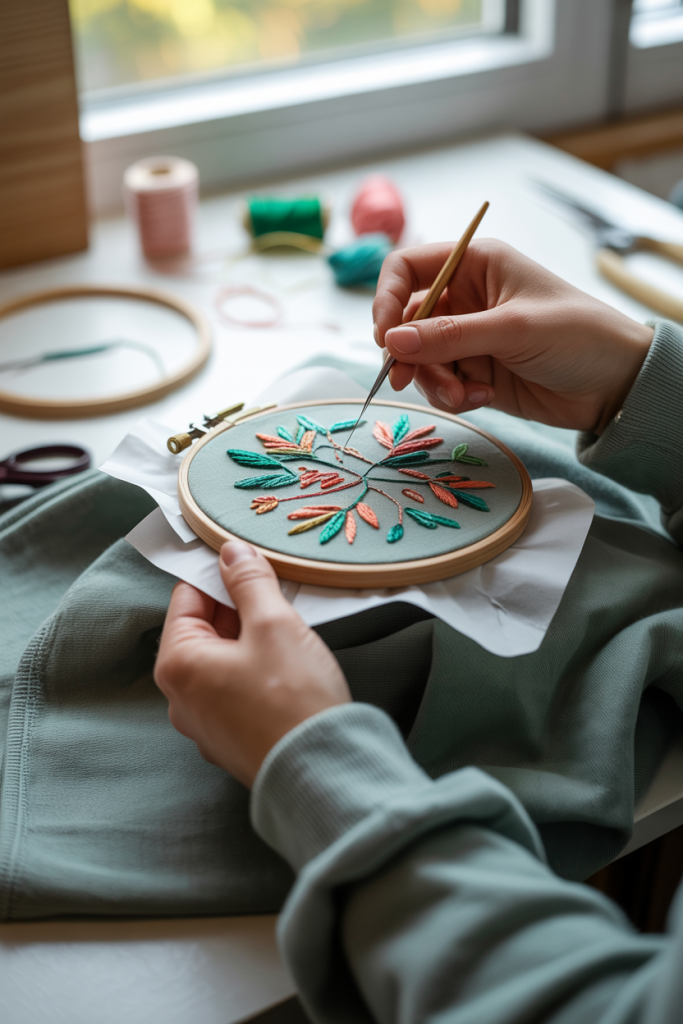
A cut-away stabilizer is usually the most reliable option when embroidering sweatshirts because it remains behind the stitches and supports stretchy fabric over time. Unlike tear-away stabilizers, it continues protecting the design through repeated wear and washing. For thicker fleece sweatshirts, a medium or heavy cut-away works well, while dense embroidery designs may require additional layers for extra stability.
Pro Tip: Always match the stabilizer strength to the fabric stretch level—the more stretch, the more support your embroidery needs.
Appliqué Back Design
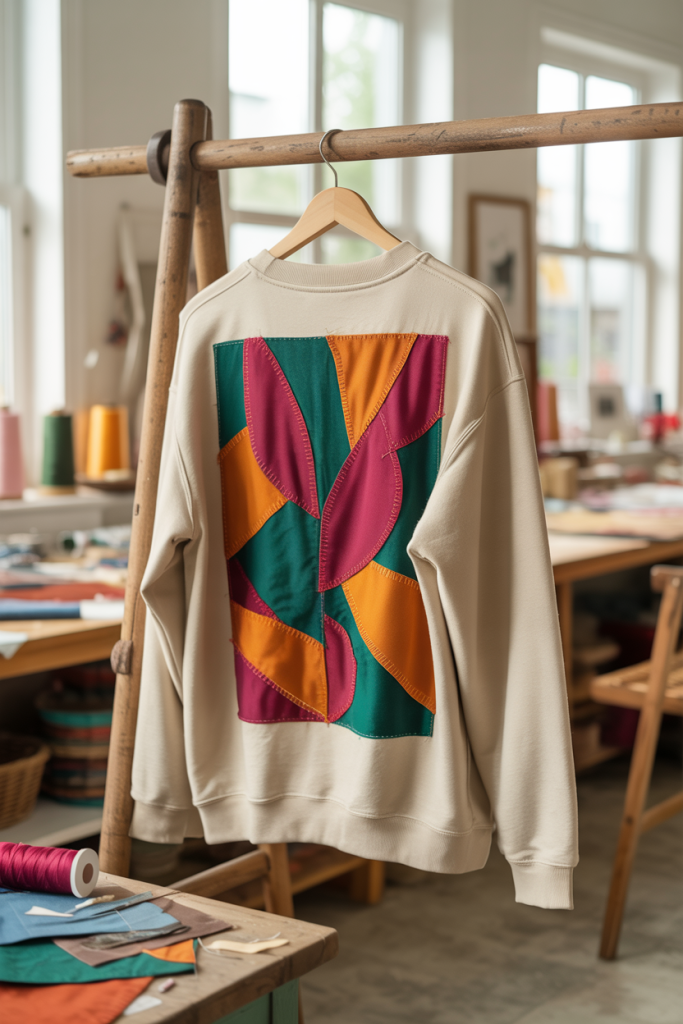
Large appliqué motifs create a striking focal point on the back of a sweatshirt. Start with a solid-colored base and build the design using cotton fabrics secured with fusible web. Stitch around each fabric layer to keep everything in place while maintaining flexibility and comfort for daily wear.
Pro Tip: Press each fabric layer before stitching to achieve cleaner edges and a more professional finish.
Patchwork Character Panel

Character-inspired patchwork panels stand out beautifully on the front of a plain sweatshirt. Assemble small fabric scraps into a balanced composition before cutting the final shape. Once attached, outline stitching helps secure the design while highlighting its unique details.
Pro Tip: Use contrasting fabrics to make character shapes more recognizable from a distance.
Quilted Heart Patch

A quilted heart patch adds softness and texture while creating a charming handmade appearance. Piece together fabric scraps, add a thin batting layer, and quilt the panel before trimming it into a heart shape. Secure it firmly to the sweatshirt with neat edge stitching.
Pro Tip: Lightweight batting helps create dimension without making the sweatshirt feel bulky.
Colorblock Statement Hoodie

Colorblock hoodies make a bold fashion statement by combining contrasting fabric sections. Large panels placed across sleeves and body areas create a modern look, while appliqué details can add extra personality without overwhelming the design.
Pro Tip: Choose three complementary colors to keep the finished hoodie visually balanced.
Raw-Edge Heart Design

A raw-edge heart offers a relaxed and textured style that becomes even more interesting over time. Create the heart from patchwork fabric squares, then stitch it directly onto the sweatshirt without fully finishing the edges, allowing subtle fraying to develop naturally.
Pro Tip: Use dense edge stitching to control fraying while preserving the handmade look.
Wreath Patch Arrangement

Circular patchwork wreaths bring symmetry and balance to the center chest area. Arrange fabric wedges into a ring shape before attaching them to the sweatshirt. Individual stitching around each section helps maintain the design’s structure and visual appeal.
Pro Tip: Alternate light and dark fabrics throughout the wreath to create depth and contrast.
Geometric Quilt Star

Geometric quilt stars add a classic quilting element to modern sweatshirts. Construct the star on a separate fabric panel to maintain precise angles, then attach the completed block as one piece to prevent distortion during assembly.
Pro Tip: Accurate cutting is essential for keeping geometric points sharp and aligned.
Patchwork Name Letters

Custom fabric letters turn any sweatshirt into a personalized statement piece. Build each letter using coordinated fabric scraps, then fuse and stitch them onto the sweatshirt. This approach creates a colorful design while ensuring each letter remains easy to read.
Pro Tip: Use simple block-style lettering for the cleanest and most professional appearance.
Layered Star Patches

Layered stars create dimension and visual interest around the neckline or upper chest area. Cut stars in varying sizes from contrasting fabrics and stack them to build depth. Secure each layer with edge stitching for a polished finish.
Pro Tip: Combining solid and patterned fabrics helps each star layer stand out clearly.
Patchwork Phrase Letters
Patchwork words and phrases make sweatshirts feel unique and expressive. Assemble small patchwork panels first, then cut individual letters and arrange them across the front. Careful spacing and stitching help keep the message clear and attractive.
Pro Tip: Lay out all letters before attaching them to ensure proper alignment.
Scrappy Heart Block

A scrappy heart block is a fun way to use leftover fabric pieces while creating a playful design. Join narrow strips into a mini quilt block, cut out the heart shape, and attach it as a single patch to maintain clean lines and stability.
Pro Tip: Mixing various fabric prints creates a lively, eye-catching effect.
Mixed Logo Patch
Patchwork can also refresh existing logo sweatshirts by framing graphics with colorful fabric accents. Build a patchwork background around the logo while preserving its visibility. Layered fabrics and sturdy stitching help the updated design feel intentional and cohesive.
Pro Tip: Keep patchwork additions slightly muted if the logo already contains bold colors.
Mixed Fabric Lettering

Using different fabrics for each letter creates a vibrant and creative design. Select fabrics that contrast well with one another, fuse them into position, and stitch carefully around each shape for durability and long-lasting wear.
Pro Tip: Limit the number of fabric patterns to avoid a cluttered appearance.
Center Patchwork Panel
A center patch panel works especially well on boxy or cropped sweatshirts. Build the patchwork block separately, layering fabric frames inward until the design feels balanced. Attach the completed panel as one piece for a neat and structured result.
Pro Tip: Symmetrical layouts often create the most visually pleasing patchwork panels.
Patchwork Tree Design

Seasonal tree motifs showcase patchwork beautifully by combining multiple fabrics into one recognizable shape. Construct the patchwork panel first, cut out the tree silhouette, and attach it as a single unit to maintain consistency and clean edges.
Pro Tip: Choose fabrics with similar color tones for a more cohesive seasonal design.
FAQs
Can I Embroider a Sweatshirt Without Stabilizer?
While it is possible, skipping stabilizer often leads to stretched fabric, uneven stitching, and poor long-term results. A cut-away stabilizer helps maintain the shape of both the fabric and embroidery design after repeated use and washing.
Pro Tip: Even small embroidery designs benefit from stabilizer support on stretchy fabrics.
Should I Hoop the Sweatshirt or Float It?
Hooping works well for lightweight and stable sweatshirts, while floating is often better for thicker or oversized garments. Floating helps prevent hoop marks and reduces the risk of stretching the fabric during embroidery.
Pro Tip: Secure floating projects with temporary adhesive spray or basting stitches for added stability.