18 Heavy Duty DIY Storage Bin Rack Ideas to Maximize Garage Space in 2026
Keeping storage bins organized can be challenging when they’re stacked on top of each other. Reaching one container often means moving several others first, creating clutter and frustration. Over time, overloaded stacks can also damage lids and make storage areas feel unsafe.
A sturdy DIY storage bin rack solves these problems by giving every tote its own dedicated space. Whether you’re organizing a garage, basement, shed, or outdoor area, the right rack can improve accessibility, maximize storage capacity, and keep everything neatly arranged.
Key Takeaways
- Use strong 2×4 lumber for maximum durability.
- Support bin edges with rails instead of relying on lids.
- Anchor tall racks to wall studs for safety.
- Keep heavier bins on lower levels.
- Match rack dimensions to your storage tote sizes.
- Add lighting to improve visibility and accessibility.
- Mobile rack designs make garage organization more flexible.
- Outdoor storage solutions help protect bins from weather.
How to Build a DIY Storage Bin Rack That Supports Heavy Loads
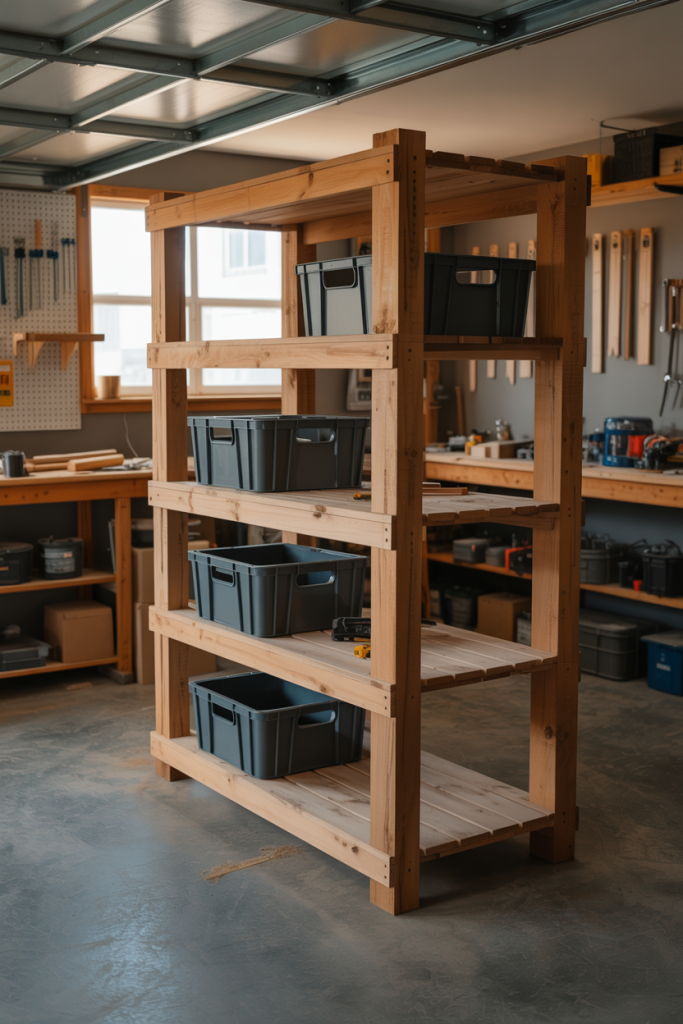
A strong storage bin rack starts with a solid frame built from durable 2×4 lumber. Measure each tote carefully and create enough clearance for smooth sliding without excessive movement. Install sturdy rails or cleats beneath the bin lips and secure them using structural screws for long-term strength. Adding wall anchors, back panels, or diagonal bracing helps eliminate wobbling and keeps the structure stable even when fully loaded.
Pro Tip: Always place the heaviest storage bins on the bottom rows to improve stability and reduce stress on upper supports.
Rolling Grid Tower
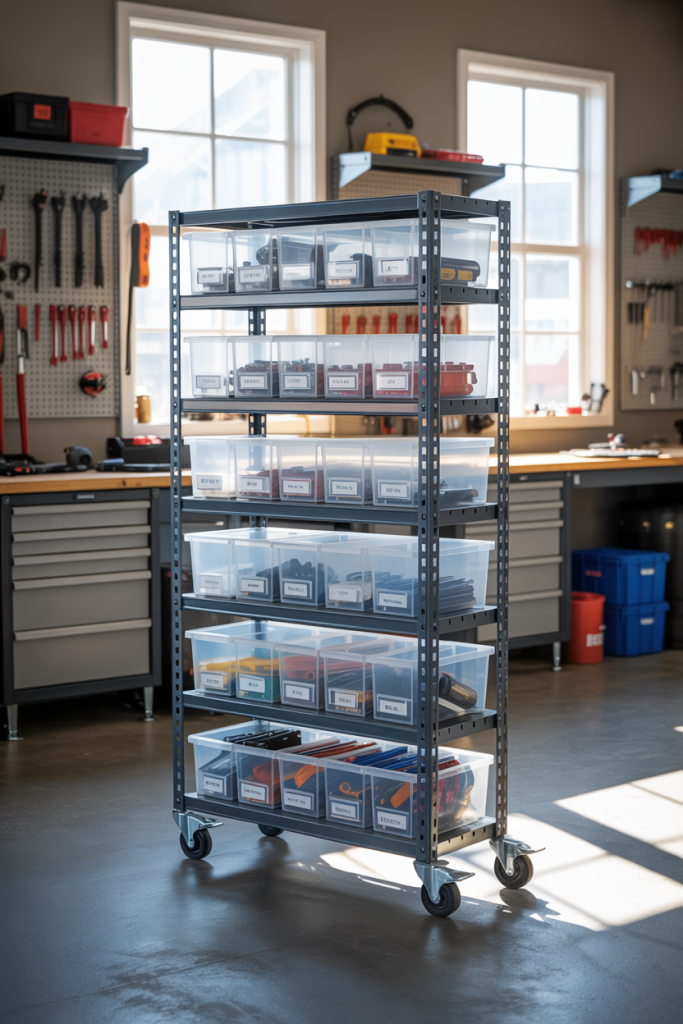
A rolling grid tower is ideal for garages and workshops where flexibility matters. Individual cubbies keep totes organized while heavy-duty locking casters allow the entire unit to move when needed. The open design improves airflow and makes labels easier to identify without removing containers.
Pro Tip: Use oversized locking casters rated for heavy loads to ensure smooth movement and better stability.
Heavy Shelf Frame

A heavy shelf frame works well when you use storage bins of different sizes. Wide shelves provide flexibility while reinforced cross supports help distribute weight evenly across the structure. Positioning the unit against a wall further improves strength and security.
Pro Tip: Install plywood shelf tops over the frame to prevent sagging and increase load capacity.
Compact Rail System

For narrow garages, sheds, or storage units, a compact rail system offers efficient organization without taking up unnecessary space. Storage bins slide directly onto rails, allowing easy access while maximizing available wall depth.
Pro Tip: Maintain consistent spacing between rails to keep totes aligned and prevent binding.
Double Row Units

Double row storage racks transform unused wall space into a highly organized storage station. Building two matching units side by side creates a clean appearance while significantly increasing storage capacity for seasonal items, decorations, and household supplies.
Pro Tip: Leave a small gap between units to improve airflow and simplify cleaning.
Full Wall Storage

A full wall storage system utilizes vertical space from one end of the garage to the other. Horizontal rails support multiple rows of bins while distributing weight evenly across the wall structure. This design keeps floors clear and maximizes storage efficiency.
Pro Tip: Store the heaviest totes on the lowest levels to maintain a safe center of gravity.
Workbench Base Storage

Combining storage with a functional workspace makes this design highly practical. The lower section houses storage bins while the upper surface serves as a durable workbench. This setup is perfect for garages where every square foot matters.
Pro Tip: Use thick plywood for the workbench top to handle tools and heavy projects comfortably.
Wire Shelf Upgrade
Existing wire shelving can be strengthened by adding plywood panels over each shelf level. This simple upgrade spreads weight more evenly and prevents wire grids from bending under heavy storage totes.
Pro Tip: Secure plywood panels to the wire shelves to stop shifting during use.
Vertical Corner Stack

Unused corners often provide valuable storage opportunities. A tall vertical rack fits neatly into tight spaces while creating multiple levels for organized bin storage. Proper anchoring keeps the structure safe despite its height.
Pro Tip: Install corner racks where they won’t interfere with doors or walkways.
Mobile Work Island
A mobile work island combines storage and mobility in one versatile solution. Bins remain accessible underneath while the top surface functions as a workstation for projects, repairs, or crafting tasks.
Pro Tip: Choose locking casters that prevent movement while working on the countertop.
Ceiling Height Wall Storage

Taking storage all the way to the ceiling dramatically increases capacity without sacrificing floor space. This design works particularly well for seasonal items and long-term storage needs.
Pro Tip: Reserve upper rows for lightweight items that require less frequent access.
Slim Wall Columns
Slim wall columns provide an organized appearance while maintaining a small footprint. Their vertical design makes them ideal for finished garages where a cleaner, more modern look is preferred.
Pro Tip: Secure each column individually to prevent movement or tipping.
Raised Platform Rack

Adding a platform above a storage rack creates a dual-purpose station for larger items. The lower section stores totes while the upper surface can hold bicycles, equipment, or bulky gear.
Pro Tip: Reinforce center spans to prevent flexing under additional platform weight.
Angled Slide Frame

A slight forward tilt allows storage bins to slide more smoothly in and out of the rack. This design improves accessibility while maintaining strong support through a reinforced frame.
Pro Tip: Keep the angle minimal to avoid unintended bin movement.
Open Rail Frame
Open rail frames use fewer materials while still offering excellent support. Since there are no enclosed cubbies, modifying spacing later becomes much easier when storage needs change.
Pro Tip: Build a wider base to improve stability on uneven floors.
Reinforced Cubby Frame
This design focuses on strength by creating rigid cubbies supported by thick framing components. Each compartment holds substantial weight while maintaining structural integrity across the entire unit.
Pro Tip: Install double rails beneath bin edges for additional support.
Outdoor Concealment Cabinet

An outdoor concealment cabinet protects storage bins while blending into landscaping. Ventilated sides improve airflow and help reduce moisture buildup, making it ideal for backyard storage.
Pro Tip: Elevate the cabinet slightly above ground level to prevent water damage.
Fence Line Storage
Fence line storage offers a simple outdoor solution without requiring a large structure. Organizing bins neatly along a fence creates a cleaner appearance while keeping frequently used items accessible.
Pro Tip: Use ground anchors to prevent bins from shifting during strong winds.
Roofed Utility Station

A roofed utility station shields storage bins and other outdoor supplies from rain and sun exposure. Ventilation keeps air moving while the roof extends the lifespan of stored items.
Pro Tip: Install a sloped roof to improve drainage and weather protection.
FAQs
How Much Weight Can a DIY Bin Rack Hold?
The weight capacity depends on lumber dimensions, span length, and overall construction quality. A properly built 2×4 rack with reinforced supports can safely hold heavy storage totes filled with tools, books, and other dense materials. Strong bracing and proper load distribution significantly increase durability.
Pro Tip: Avoid long unsupported spans that may sag over time.
Should I Anchor My Storage Rack to the Wall?
Yes, anchoring is strongly recommended for tall storage racks. Securing the frame to wall studs reduces wobbling, prevents tipping, and improves safety when removing heavily loaded bins from upper levels.
Pro Tip: Use lag screws directly into wall studs for the strongest connection.