Game Night Ideas for Adults: Easy Hosting Tips, Games, Snacks & Setup
Planning an adult game night is less about having a huge collection of games and more about knowing how to keep the evening moving. The right mix of games, food, drinks, seating, and timing can turn a simple get-together into a night everyone enjoys.
A little planning also helps avoid the most common problems, like awkward beginnings, games that take too long, greasy snacks on cards, or guests waiting around while the host decides what comes next.
Whether you have four friends or a much larger group, these game night ideas for adults focus on practical hosting choices that make the evening relaxed, social, and easy to manage.
Key Takeaways
- Use a 3-game arc with an icebreaker, main event, and short closer.
- Choose games according to your group size and personality.
- Keep adult game night snacks dry, easy to hold, and mostly one-handed.
- Set up a self-serve drink station so you can enjoy the party too.
- Use warm lighting, comfortable seating, and a protected game table.
- Competitive groups may enjoy tournaments and structured scoring.
- Casual groups often prefer quick, funny, low-pressure games.
- Themed game nights can make planning food, music, and decorations easier.
- A small trophy can turn a tournament into a recurring tradition.
- You do not need to spend a lot of money to host a memorable game night.
What This Game Night Guide Is Really About

A successful adult game night does not require a shelf full of expensive board games. What matters more is the hosting plan, including how the evening flows, where everyone sits, what food is available, and whether the games actually suit the people in the room.
Many game nights lose momentum because the host starts with something too complicated, serves messy food at the game table, or waits until everyone arrives before deciding what to play. Good planning removes those awkward pauses and lets the evening feel much more natural.
Pro Tip: Choose your games before guests arrive so you can spend the evening playing and socializing instead of making decisions on the spot.
What Is the 3-Game Arc, and Why Does It Work So Well?

The 3-game arc gives your evening a simple beginning, middle, and ending: start with an easy icebreaker, move into a longer main game, and finish with a short, energetic closer. This structure helps guests settle in before asking them to concentrate on a more involved game.
It also gives you a natural way to manage changing energy levels throughout the night. Instead of trying to force one game to carry the entire evening, each part has a specific purpose and length.
Pro Tip: Write your three planned games down before the party starts so you always know what should come next.
1. The Icebreaker Opener: 5–15 Minutes

The opening game should be quick, simple, and easy enough to explain while guests are still getting comfortable. A basic party card game, a fast guessing activity, or two-truths-and-a-lie can work well because nobody needs to make a serious commitment.
The goal is not to choose the most impressive game in your collection. The opener simply needs to get people talking, laughing, and participating without making them sit through a long rules explanation.
Pro Tip: Save complicated strategy games for later and begin with something guests can understand within a couple of minutes.
2. The Main Event: 45–90 Minutes

Once everyone is relaxed, bring out the main game of the evening. This can be a strategy board game, team trivia, a hidden-role game, or another activity that gives guests something more substantial to focus on.
This is usually the longest part of the night, but you do not need to purchase something new just for the occasion. A game you already own can work perfectly if it fits the group and keeps everyone involved.
Pro Tip: Choose one reliable main game rather than buying several new options that nobody has learned before the party.
3. The Wind-Down Closer: 20–30 Minutes

The final game should be shorter and easier than the main event. Ending with another lengthy strategy game can make the evening feel like it is dragging, especially when guests are beginning to get tired or think about heading home.
A quick, funny, low-stakes game gives everyone one last chance to laugh together before leaving. Finishing with energy instead of exhaustion can make the entire night feel more memorable.
Pro Tip: Keep your closer short enough that guests can finish a complete round without feeling like they are starting another major event.
How Many People Do You Need for a Game Night?
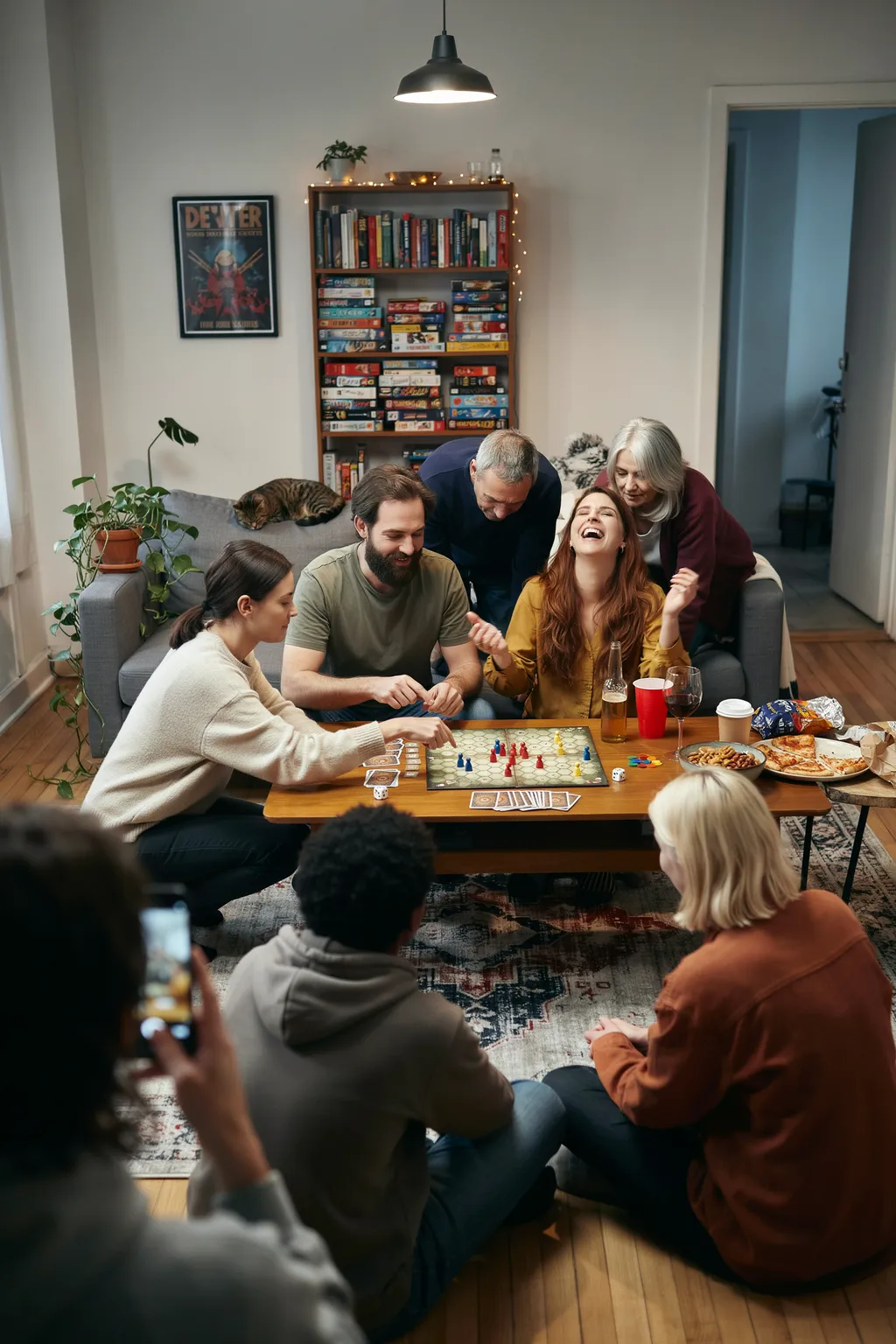
You can host a fun adult game night with around four people or expand it to a group of fifteen or more. The important part is matching the game format to the number of people rather than expecting one game to work equally well for every group.
Smaller groups usually have more room for strategy and longer turns, while larger gatherings often work better with teams, trivia, social games, or activities where everyone participates at the same time.
Pro Tip: Decide your guest count first, then choose the game format that fits instead of selecting a game and trying to squeeze your guests into it.
| Group Size | Best Game Format | Typical Duration | Best For | Budget |
|---|---|---|---|---|
| 4–6 people | Strategy, trick-taking, cooperative games | 60+ minutes | Close friends and competitive groups | $15–$40 |
| 7–10 people | Team games, hidden-role, party games | 30–45 minutes | Mixed personalities | $20–$35 |
| 11–14 people | Team party games, team trivia | 20–40 minutes | Larger casual groups | $20–$40 |
| 15+ people | Two game tables running simultaneously | Varies | Large, energetic gatherings | $30–$60 |
Small Group: 4–6 People
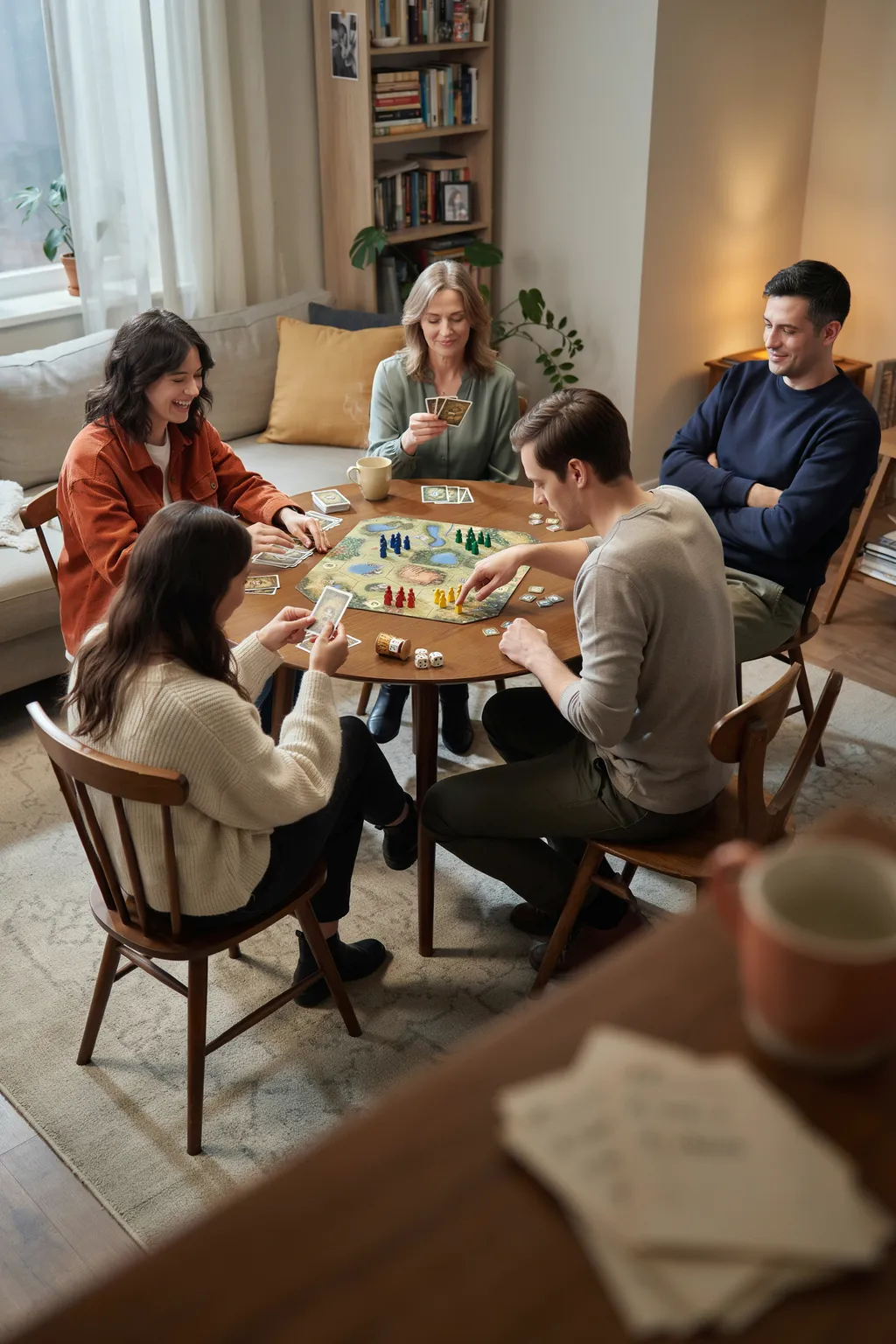
A four-to-six-person gathering is a strong choice for strategy board games, trick-taking card games, and cooperative games. Turns usually come around quickly, so everyone stays involved instead of spending long stretches waiting for other players.
This group size also works well when your guests genuinely enjoy competition and want a game with more depth. You can spend roughly $15–$40 if you need something new, although games already in your collection can work just as well.
Pro Tip: For four to six players, choose games where every person has frequent turns and meaningful decisions to make.
Medium Group: 7–10 People
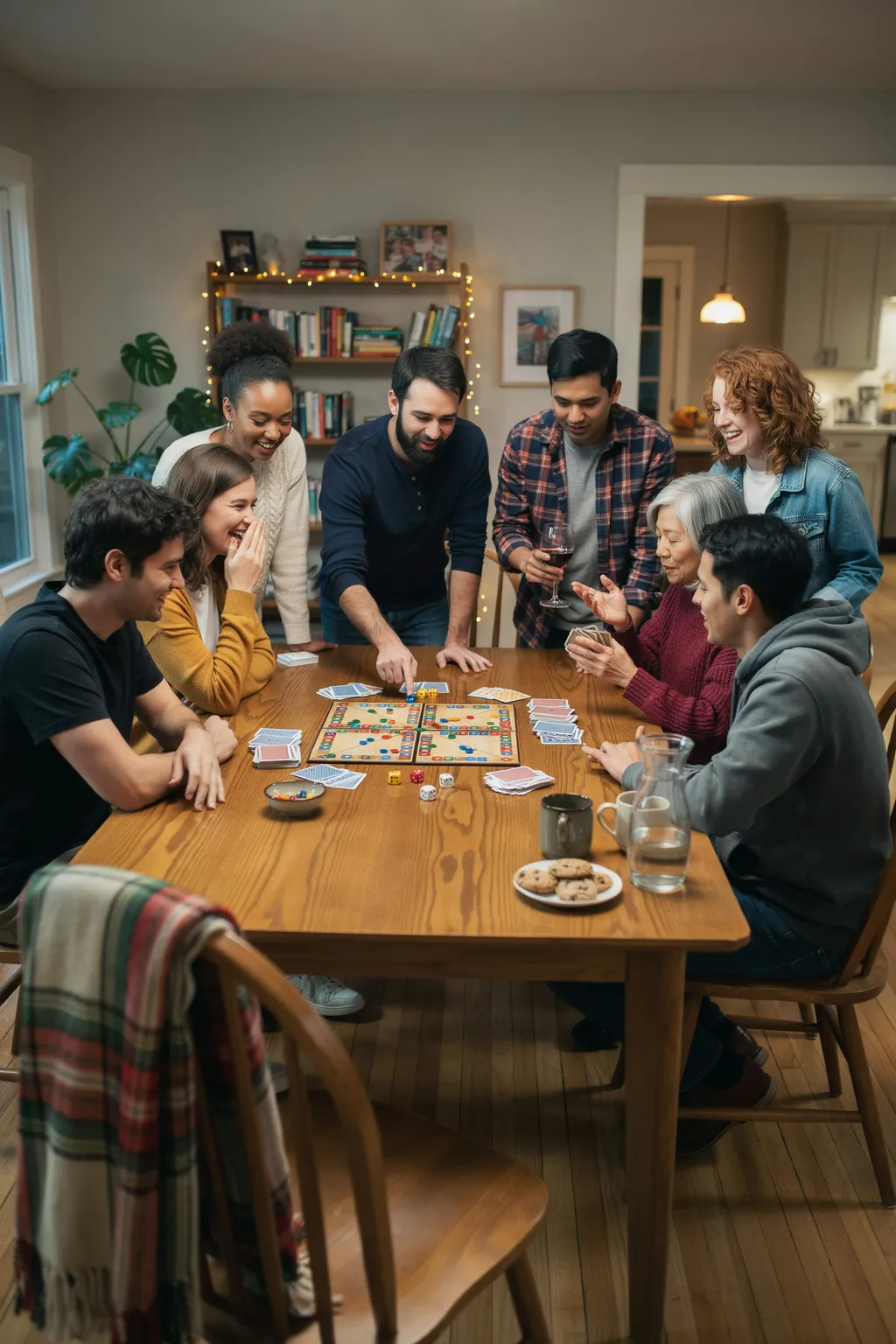
Groups of seven to ten are well suited to team games, social deduction, trivia, and party games. Splitting players into teams helps accommodate different personalities because quieter guests can participate alongside more outgoing players.
This format also prevents one person from carrying the entire game. With teams, guests can talk, laugh, and make decisions together without putting too much attention on any single player.
Pro Tip: Use team-based games when your guest list includes people who do not all know each other well.
Large Group: 11+ People
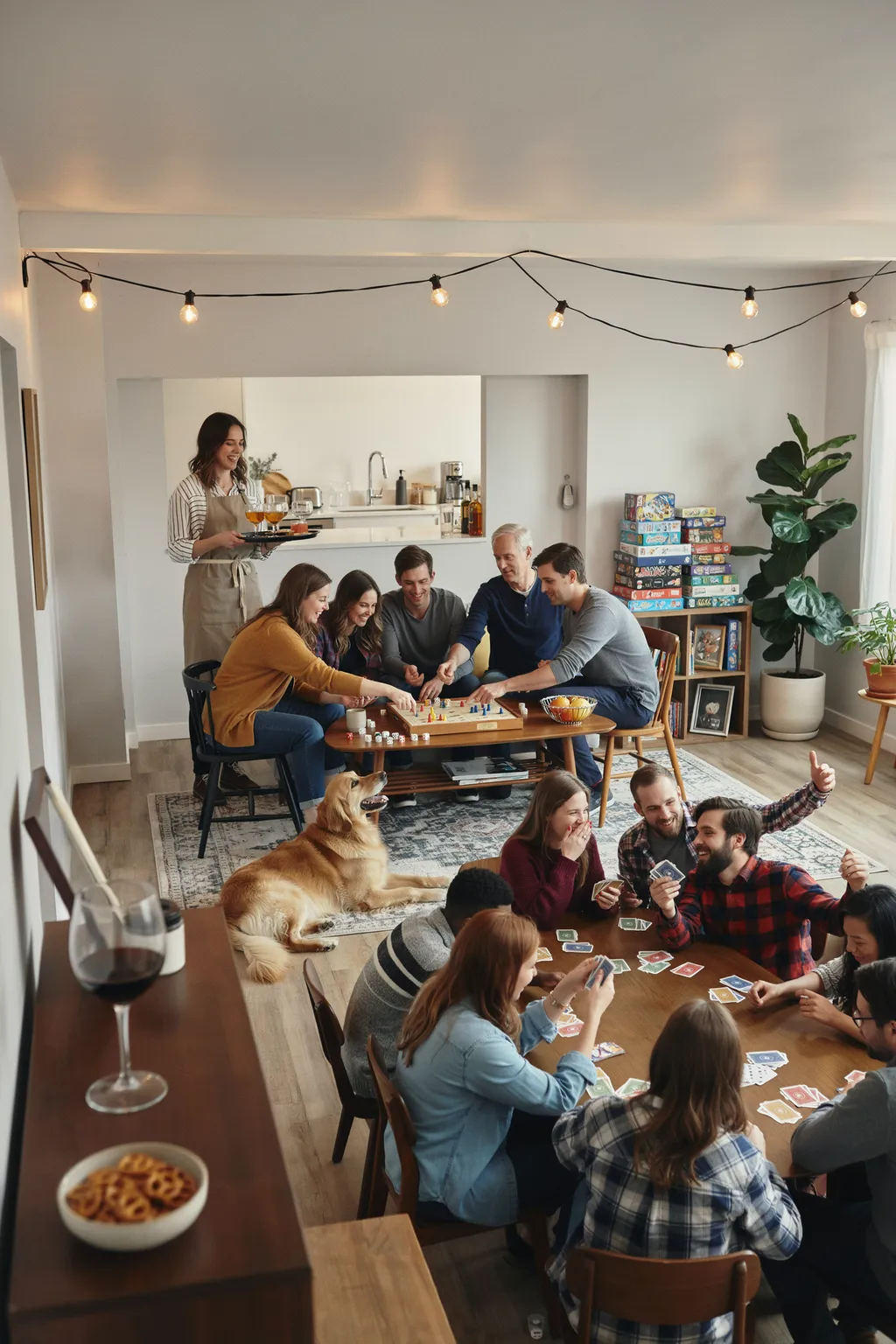
Large groups need games where guests can participate without spending long periods waiting for individual turns. Team trivia, party games, and simultaneous-play activities are usually easier to manage than games built around slow individual turns.
Once your guest list gets beyond roughly fourteen people, consider running two game tables instead of forcing everyone into one game. This gives people more room and prevents half the group from becoming spectators.
Pro Tip: For large gatherings, prioritize games where nobody has to sit out for long stretches.
Competitive Crowd vs. Casual Crowd: How Do You Read the Room?
Before selecting a game, think about the personality of your guests. Competitive players may enjoy strategy, scoring, and higher stakes, while casual guests may be more interested in conversation, laughter, and games that require little preparation.
A competitive crowd may happily listen to detailed rules and spend time discussing strategies after a round. A casual crowd may lose interest quickly if the setup takes too long or every move requires careful planning.
Pro Tip: If your guests have different preferences, use the 3-game arc to give each type of player a moment they can enjoy.
Competitive Crowd
Competitive players often appreciate clear rules, meaningful decisions, scoring, and a reason to care about the final result. Strategy games, tournaments, team competitions, and games with a clear winner can give this group the challenge they are looking for.
These guests may even enjoy discussing plays and strategies after the round has ended. If everyone in your group enjoys friendly competition, a structured tournament can give the night an extra sense of purpose.
Pro Tip: Add simple scoring or a tournament bracket when your guests enjoy keeping track of wins and losses.
Casual Crowd
Casual groups usually want games that support conversation rather than interrupt it. Funny card games, easy party games, quick guessing activities, and low-pressure challenges allow people to participate without spending most of the evening learning rules.
For this type of gathering, the game is often a reason to spend time together rather than the entire purpose of the event. Keeping the rules simple can make everyone feel more comfortable.
Pro Tip: If guests are more interested in talking than competing, choose games that can be learned quickly and played casually.
How Do You Plan a Game Night Tournament?
A simple game night tournament can use three or four short games, a basic bracket, and a points system that carries through each round. At the end, the player with the highest score or the final winner can be recognized as the champion.
A tournament gives the evening a clear structure and gives competitive guests something to work toward. You do not need a professional bracket system; a printed template or a sheet of paper with names and scores is enough.
Pro Tip: Keep each individual game short so the tournament stays energetic instead of turning into one long competition.
The $10 Trophy
A small trophy can become one of the most memorable parts of a recurring game night. A simple thrift-store or inexpensive trophy can be awarded to the winner, who then brings it back for the next tournament.
The prize does not need to be expensive to matter. Having something physical to defend creates an inside joke and gives returning guests a fun reason to compete again.
Pro Tip: Let the winner keep the trophy until the next game night and make bringing it back part of the tradition.
What Are Some Themed Game Night Ideas?
Themed game nights can make planning easier because the theme naturally guides your music, food, decorations, and overall atmosphere. Decade parties, international snack nights, and casino-inspired evenings are simple ways to give a regular game night a stronger identity.
A theme is especially useful for birthdays, holidays, or occasions when you want an ordinary gathering to feel more like an event. You do not need every game to match the theme for the idea to work.
Pro Tip: Choose a theme that helps you make decisions instead of creating extra work for yourself.
Decade Night
A decade night works well when your group enjoys nostalgia and music. Choose a decade such as the 1980s, 1990s, or early 2000s, then build the atmosphere around its music, snacks, colors, and optional dress code.
The games themselves do not have to come from that era. The playlist, food, and overall atmosphere can provide enough of the theme while keeping your game choices flexible.
Pro Tip: Use nostalgic snacks and a decade-specific playlist to create most of the atmosphere without buying lots of decorations.
Around-the-World Snacks Night
For a food-loving group, an around-the-world snack night can make the food part of the entertainment. Choose four or five countries and serve a small bite inspired by each one, such as dumplings, tacos, tapas, or a simple international dessert.
Guests can sample different foods between games, which naturally creates conversation. This idea requires more preparation than a bowl of pretzels, but it can work especially well when your guests enjoy trying new foods.
Pro Tip: Keep each international snack small and easy to pick up so the food still works alongside the games.
Casino Night
A casino-style game night can create an adult atmosphere with playing cards, chips, and a few casino-inspired games. A simple chip set and a dedicated table can provide much of the visual effect without requiring elaborate decorations.
You can keep the focus on friendly entertainment and house rules rather than making the evening dependent on real-money gambling. The goal is to recreate the social feel of a casino night in a comfortable home setting.
Pro Tip: Use play chips instead of real money to keep the focus on friendly competition and avoid complicated betting logistics.
What Snacks Are Best for a Game Night?
The best game night snacks are easy to pick up, require little mess, and can be eaten with one hand. Pretzels, popcorn cups, skewers, snack mix, cheese cubes, vegetable cups, cookies, and small grazing-board items are practical choices.
Think about what guests are doing while they eat: holding cards, moving pieces, writing scores, or reaching across the table. Food that leaves greasy fingerprints or requires a fork and plate can quickly become inconvenient.
Pro Tip: Test every snack by asking whether someone could eat it with one hand while holding cards in the other.
What to Serve
Good choices include skewers, individual popcorn cups, pretzels, dry snack mixes, cheese cubes with toothpicks, vegetable cups, cookies, brownies, and grazing boards. These foods can sit out for guests to grab between rounds without demanding constant attention from the host.
A grazing board is particularly convenient because guests can help themselves throughout the night. Depending on your group size and menu, plan around $35–$70 for the board and additional snacks.
Pro Tip: Portion messy or crumbly foods into small individual servings so guests do not have to reach across the game board.
What to Skip
Wings, nachos, heavily sauced foods, and greasy snacks are harder to manage during card and board games. They may be perfect for a casual dinner, but they can leave oily fingers, spills, and crumbs on cards and game pieces.
Foods that require a fork, plate, or full sit-down meal can also interrupt the flow of the evening. If you want to serve them, consider doing so before or after the main games rather than during play.
Pro Tip: Keep messy foods away from the game table and save them for a separate meal or snack period.
The Self-Serve Drink Station
A self-serve drink station allows you to remain part of the game instead of spending the entire night refilling glasses. Prepare one batch drink ahead of time, provide a good non-alcoholic option, add plenty of ice, and place cups where guests can easily find them.
The setup can be as simple as a small table or counter with drinks, ice, cups, napkins, and any extras guests need. A $25–$50 budget can cover a basic setup depending on what you already have.
Pro Tip: Label the drink area clearly and place everything guests need together so you are not repeatedly interrupted during the games.
Seating, Lighting, and Table Setup
The physical arrangement of your game night affects how comfortable people feel and how easily they can participate. Everyone should be able to reach the game, see the other players, and sit comfortably without leaning across someone else.
A round or square table often works well because players are closer together. Lighting should be bright enough for reading cards while still feeling warm and social, and a washable cloth or placemats can protect the table from spills.
Pro Tip: Before guests arrive, sit in each main seat yourself and check whether you can comfortably see the game, reach the table, and see everyone else.
The Opt-Out Corner
An opt-out corner gives guests a comfortable place to step away from a game without making a formal announcement. A couch, armchair, or quiet corner can be enough for someone who wants to take a break or skip a particular round.
This small feature can make mixed groups feel more relaxed because guests know they are not obligated to participate in every activity. Giving people the freedom to step away often makes them more comfortable joining in when they want to.
Pro Tip: Make the opt-out area comfortable and nearby so taking a break feels completely normal rather than like leaving the party.
Common Mistakes That Kill a Game Night
- Starting with the hardest game: Give guests time to settle in with an easy opener before introducing complicated rules.
- Ending with a long game: Save a short, energetic activity for the final round instead of ending on a two-hour strategy game.
- Serving greasy snacks at the card table: Keep oily and saucy foods away from cards and game pieces.
- Using one game for a mismatched group: Consider whether your guests prefer competition, conversation, strategy, or casual fun.
- Playing bartender all night: Set up drinks in advance so guests can serve themselves.
- Ignoring group size: A game designed for four people may not work well for twelve, so choose the format around your headcount.
Pro Tip: Most game-night problems can be prevented by planning the flow, food, drinks, and game format before guests arrive.
Quick Game Night Summary
An adult game night can work especially well for groups of four to fifteen people when the games and hosting setup are planned around the guests. You can keep the budget low by using games you already own and spending more attention on timing, snacks, drinks, and comfort.
A three-to-four-hour evening gives enough room for an opener, main event, and closer without making the night feel rushed. For competitive groups, a two-to-three-hour tournament can provide a separate format with scoring and a simple prize.
Pro Tip: If you only have time to plan a few things, decide the three games, prepare the snacks, and set up the drinks first.
Frequently Asked Questions
What Are Good Game Night Ideas for Adults?
Good adult game night ideas focus on the overall flow rather than simply collecting games. A short icebreaker can help guests relax, a longer main game can provide the main activity, and a quick closer can finish the evening with energy.
You can also add a theme such as a decade night or organize a tournament when you want the gathering to feel more special. Group size and personality should guide the final choices.
Pro Tip: Plan the night around how you want guests to feel at each stage instead of choosing games randomly.
How Many People Do You Need for a Game Night?
Around four people is enough for a strong game night, while groups of up to fifteen or more can work with the right game format. Four to six players are well suited to deeper strategy games, while seven to ten often work well with teams and party games.
For groups of eleven or more, choose games that keep everyone participating. Very large groups may work better when divided between two game tables.
Pro Tip: Think of your guest count as the starting point for choosing the game, not as something you need to work around afterward.
What Snacks Are Best for Game Night?
The most practical game night snacks are dry, easy to pick up, and simple to eat with one hand. Popcorn cups, pretzels, snack mix, skewers, cheese cubes, cookies, vegetable cups, and grazing boards all work well.
Avoid greasy or heavily sauced foods such as wings and nachos during card games because they can damage cards and make the table messy. Save those foods for a meal or separate eating area.
Pro Tip: Keep snacks bite-sized and use toothpicks, cups, or small bowls whenever possible.
How Do You Host a Game Night That Is Not Awkward?
Start with an easy icebreaker that can be explained in just a few sentences. A short opening activity gives guests something to do immediately and helps people who do not know one another begin talking.
Have the rest of the games selected before everyone arrives, and make food and drinks self-serve. This removes the common periods of silence where everyone waits for the host to decide what happens next.
Pro Tip: Have the first game ready to go before the first guest arrives so there is no awkward waiting period.
What Are Good Games for Large Groups of Adults?
For groups of eleven or more, choose team-based party games, team trivia, and activities where everyone can participate simultaneously. These formats prevent guests from spending most of the night waiting for individual turns.
If your group grows beyond about fourteen people, two game tables can make the evening much easier to manage. Each table can run its own activity, giving everyone more opportunities to participate.
Pro Tip: Avoid slow turn-based games when most of your guests would spend several minutes waiting between turns.
What Games Are Best for Small Groups of 4–6 People?
Groups of four to six are well suited to strategy board games, trick-taking card games, and cooperative games. Because turns come around quickly, players can stay engaged and enjoy games with more depth.
This size also works well for competitive friends who want meaningful decisions and a clear challenge. You have more flexibility to choose games that would become too slow with a much larger group.
Pro Tip: Use smaller gatherings to bring out your more strategic games because every player has more time to participate.
How Long Should an Adult Game Night Last?
A typical adult game night can run for about three to four hours, with a short opening game, a 45–90-minute main event, and a 20–30-minute closer. This gives guests plenty of time to socialize without making the evening feel endless.
A tournament can run for around two to three hours of actual gameplay, with additional time needed for setup, snacks, breaks, and announcing the winner.
Pro Tip: Leave a little flexibility in your schedule instead of planning every minute of the evening.
What Do You Serve to Drink at a Game Night?
A self-serve drink station can include one prepared batch drink, a non-alcoholic choice, plenty of ice, and cups that are easy to find. Guests can refill their own drinks while you stay involved with the games.
Depending on the number of guests and what you already have at home, a basic drink station may cost around $25–$50. The main goal is convenience rather than an elaborate beverage menu.
Pro Tip: Put drinks somewhere guests can reach without walking through the game area or interrupting players.
How Do You Plan a Game Night Tournament?
Choose three or four short games and create a simple bracket or points system. Players can earn points across the rounds, with the final score determining the champion.
Adding a small $5–$12 trophy can make the tournament feel like a recurring tradition. The winner can take it home and return with it for the next game night.
Pro Tip: Decide the scoring system before the first round so everyone understands how the final winner will be determined.
What Are Some Themed Game Night Ideas?
Popular options include decade-themed nights, around-the-world snack nights, and casino-inspired evenings. A decade night can use nostalgic music and snacks, while an international snack night can feature small bites from several countries.
The value of a theme is that it helps guide your decisions. Once you choose the concept, music, snacks, and even simple decorations become easier to select.
Pro Tip: Pick one clear theme and let it influence only a few details rather than trying to make every part of the party match perfectly.
How Do You Keep Everyone Included at Game Night?
Choose games that match your group size and avoid activities where several people spend most of the time waiting. An opt-out corner can also give guests a comfortable way to take a break without feeling pressured to continue.
The 3-game arc can help mixed groups because the opener can be casual, the main game can offer more competition, and the closer can return to something easy and social.
Pro Tip: Make participation feel optional and comfortable so guests can join, take breaks, and return without awkwardness.
Do You Need to Buy Expensive Games for Game Night?
No, you can host an excellent game night using two or three games you already own. Spending more money on games does not automatically create a better evening because pacing, food, drinks, seating, and group compatibility often have a bigger effect on the experience.
If you do buy something, consider investing in one dependable main game rather than purchasing a large collection at once. A familiar game that suits your group is often more useful than several untested options.
Pro Tip: Check your existing game collection first and build the evening around the games your guests are most likely to enjoy.
How Do You Set Up the Table for Game Night?
A round or square table can help everyone see one another and reach the game more easily. Use lighting that is bright enough to read cards while still keeping the room comfortable, and protect the table with a washable cloth or placemats when needed.
If you have enough space, keep snacks on a separate table so food and drinks do not crowd the playing surface. This also encourages guests to stand up and mingle between rounds.
Pro Tip: Keep the center of the game table as clear as possible so players have enough room for cards, boards, pieces, and drinks.
People Also Ask
Is a Game Night a Good Idea for a Birthday Party?
A game night can be a simple birthday format for adults who prefer spending time together at home. You can add a decade theme, create a birthday tournament, or use a small trophy to give the gathering a special feature without needing an elaborate party setup.
The format is especially flexible because the games can be adjusted to the birthday person’s preferred level of competition. Food, music, and decorations can remain simple while still making the evening feel celebratory.
Pro Tip: Build the birthday theme around the guest of honor’s favorite games, decade, snacks, or type of competition.
What Is a Good First Game to Break the Ice at a Party?
The best opening games are simple enough to explain in two sentences and short enough to finish within five to fifteen minutes. Quick party card games and activities such as two-truths-and-a-lie can work because they encourage conversation without demanding much concentration.
The purpose of the first game is not necessarily to find the most exciting game of the evening. It is to help guests start laughing and interacting before the main activity begins.
Pro Tip: Choose an opener that people can join even if they arrive a few minutes late.
How Much Food Do You Need for a Game Night?
For a grazing-style evening, plan roughly four to six ounces of snacks per person per hour. For eight people playing for three hours, a substantial grazing board combined with two or three additional dry snacks can provide a practical amount of food.
Your exact quantity will depend on whether guests are eating dinner beforehand and how substantial your snacks are. It is better to offer a variety of small, easy-to-eat choices than one large messy dish.
Pro Tip: Ask guests about dietary restrictions before planning the snack menu so everyone has something they can comfortably eat.
Can You Host a Game Night in a Small Apartment?
Absolutely. A small apartment can work well because guests remain close to the game table and conversation can feel more natural. Keep the group around four to eight people, use one compact table, and move snacks to a nearby side surface.
Choose games that do not require people to move around the room or spread out across multiple tables. A smaller space can actually make a relaxed game night feel more connected.
Pro Tip: Clear unnecessary items from the table and nearby seating areas before guests arrive to create more usable space.
Game nights become much easier when you stop worrying about having the perfect collection of games and start planning the experience around your guests. Choose three games, serve food that can be eaten without creating a mess, and make drinks available without needing constant help.
Pay attention to group size, personality, lighting, seating, and pacing, and the evening will have a much better chance of flowing naturally. The goal is not to create a complicated event but to give everyone an easy reason to sit down, laugh, play, and spend time together.
Pro Tip: Start with the games you already own, plan the flow ahead of time, and focus your budget on making guests comfortable rather than buying more games.