Simple Group Games for Kids to Play Anytime, Anywhere
Introduction
Finding fun group games for kids can make birthday parties, school activities, family gatherings, and playdates more enjoyable. The best games are easy to explain, require little preparation, and give children plenty of chances to move, laugh, and interact with one another.
From classic playground favorites to creative guessing games, these activities work for different group sizes and settings. Whether you need indoor group games for a rainy afternoon or outdoor games for an energetic crowd, you will find simple ideas that keep children entertained without expensive supplies.
These 21 easy group games for kids encourage teamwork, listening, creativity, and friendly competition. Choose a few favorites, adjust the rules to suit the children’s ages, and get everyone involved in the fun.
1. Duck, Duck, Goose
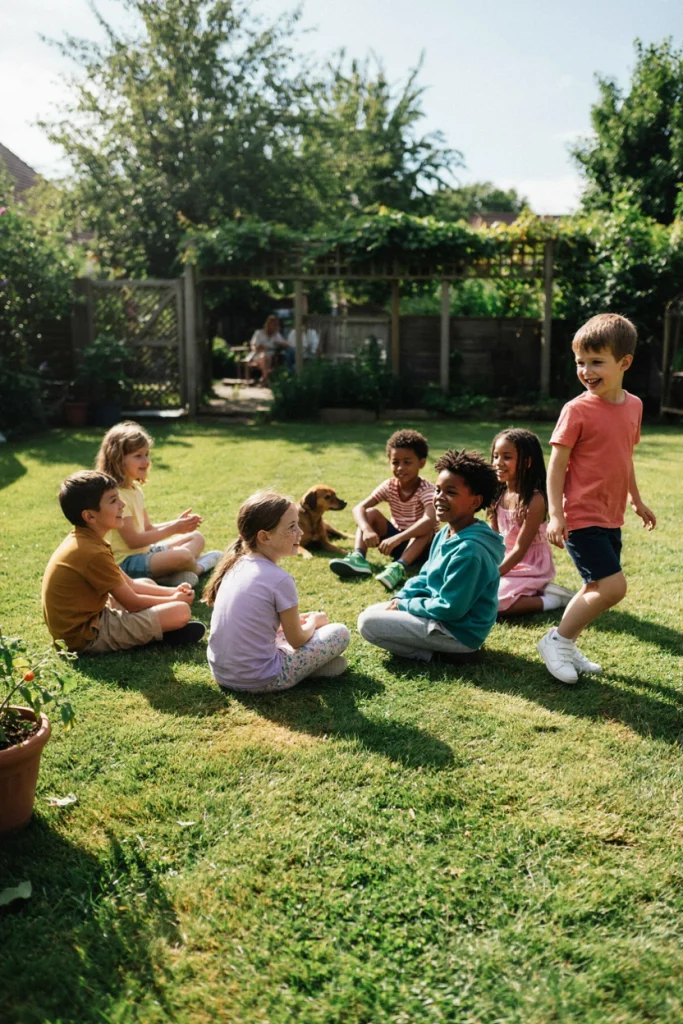
Duck, Duck, Goose is a classic circle game that gets children moving and builds excitement with every turn. Ask the kids to sit in a circle while one player walks around gently tapping each person’s head and saying “duck.” When the player says “goose,” the chosen child jumps up and chases them around the circle.
The first player tries to reach the empty spot before being tagged. If they succeed, the other child becomes the next caller. This simple activity works well at birthday parties, school gatherings, and outdoor playdates because it requires no equipment.
Pro Tip: Leave enough space between players and keep the running area clear to help prevent bumps and falls.
2. Freeze Tag
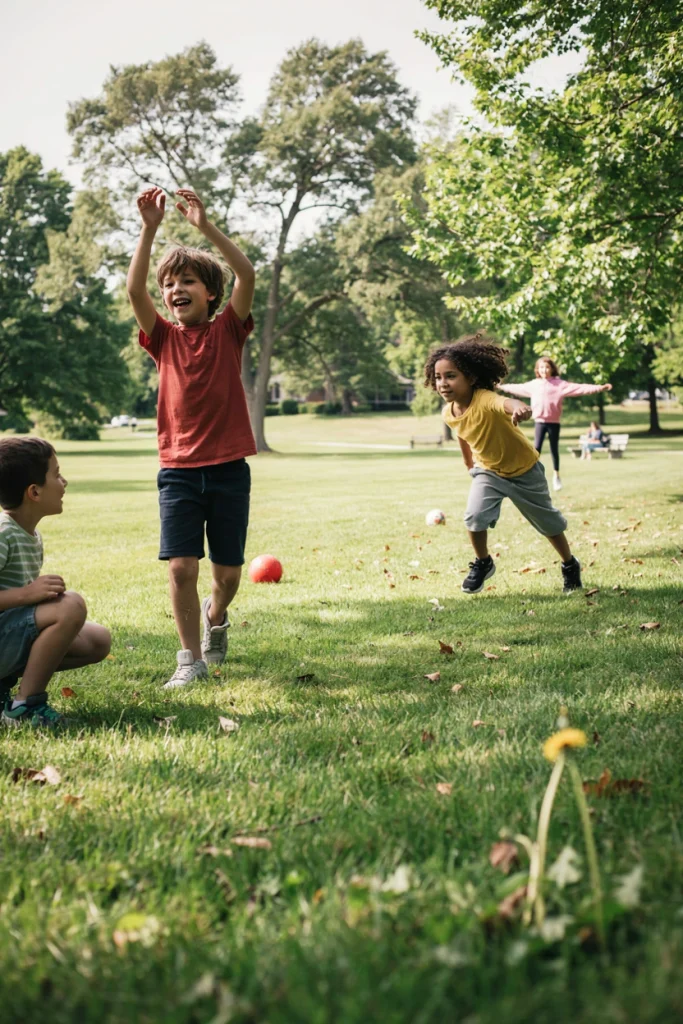
Freeze Tag is an energetic outdoor game that combines running, quick reactions, and teamwork. Choose one player to be “it,” while everyone else spreads out across the playing area. The tagger tries to touch other players, and anyone tagged must freeze in place until another player safely tags them to release them.
The game continues until everyone is frozen or the group decides to switch taggers. Children enjoy escaping the tagger while helping their friends get back into the action. You can play in a backyard, playground, or spacious indoor hall with clear boundaries.
Pro Tip: Set a time limit for each round and rotate the tagger so every child gets a chance to lead.
3. Simon Says
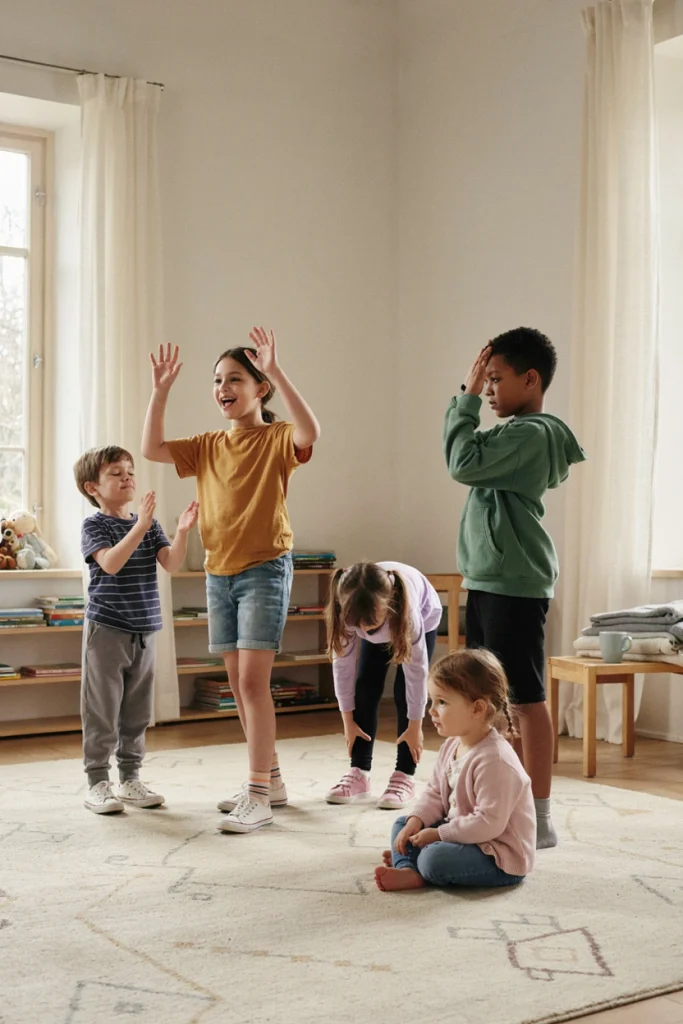
Simon Says is one of the easiest group games for kids because it develops listening skills without requiring any supplies. Choose one child to be Simon, who gives instructions such as “Simon says touch your toes,” “Simon says clap twice,” or “Simon says hop in place.” Players should follow an instruction only when it begins with “Simon says.”
Anyone who follows a command without that phrase can sit out until the next round, or simply continue playing with a friendly reminder. For younger children, focus on simple actions rather than eliminating players. As the group becomes more confident, introduce faster instructions and funny movements.
Pro Tip: Mix easy commands with silly actions, such as pretending to be a penguin, to keep children interested.
4. Red Light, Green Light
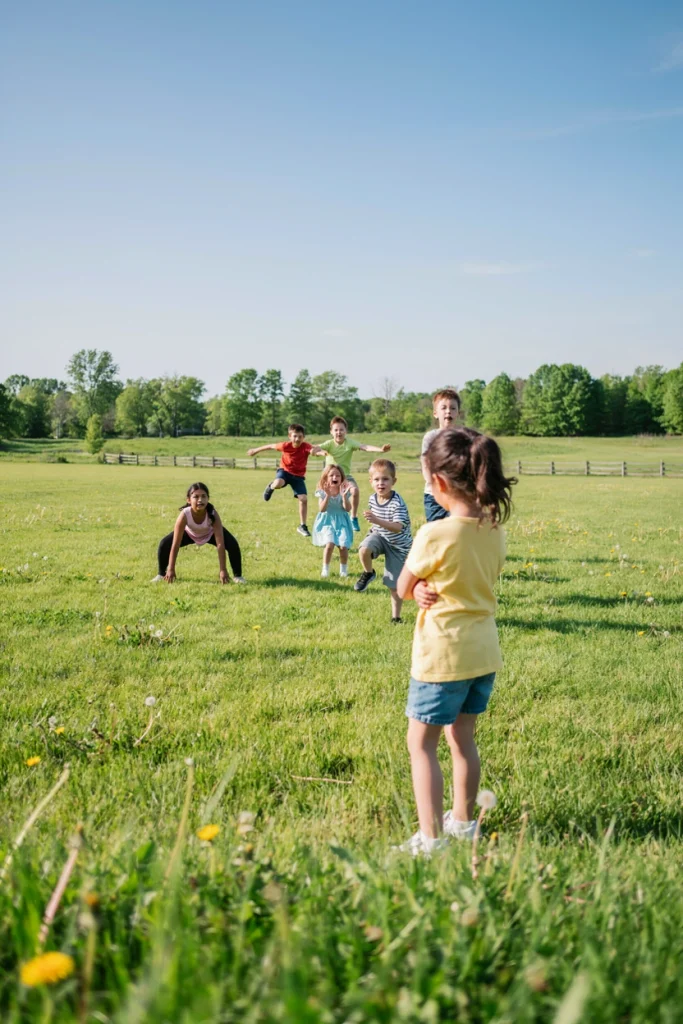
Red Light, Green Light is a simple movement game that helps children practice self-control and follow directions. Choose one player to act as the traffic light and have everyone else stand behind a starting line. When the traffic light calls “green light,” the players move forward. When they hear “red light,” they must stop immediately.
Anyone who continues moving after the stop signal returns to the starting line or takes a small step backward. The first player to reach the traffic light wins and can lead the next round. This game works especially well outdoors, but a spacious indoor room can also be suitable.
Pro Tip: Add “yellow light” for slow-motion movement to make the game more challenging and entertaining.
5. Musical Chairs
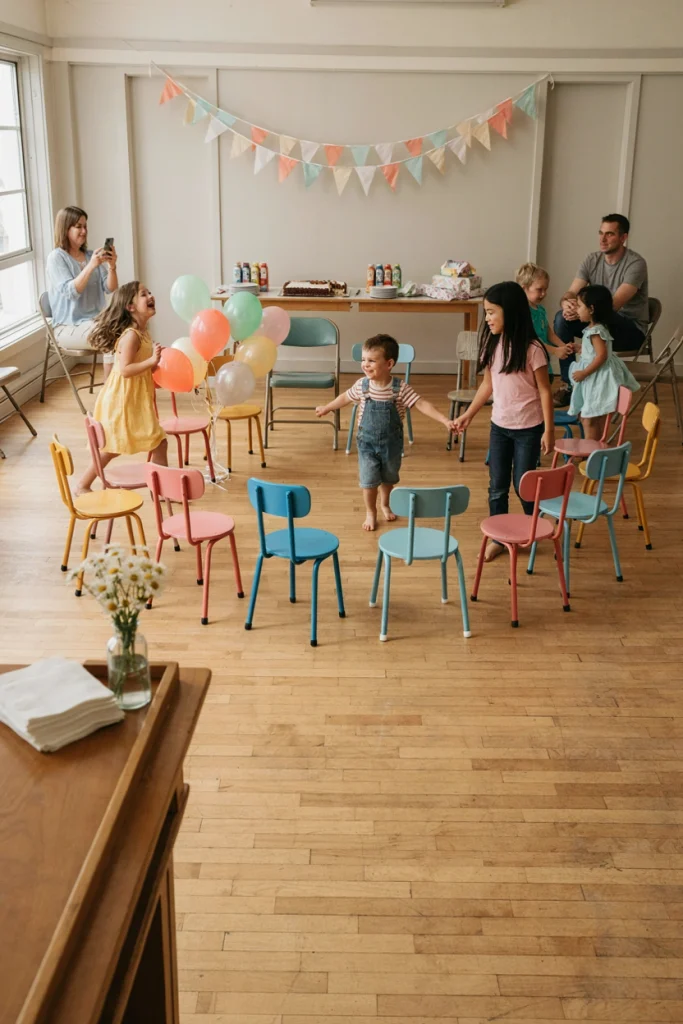
Musical Chairs is a lively party game that combines music, movement, and friendly competition. Arrange chairs in a circle, using one fewer chair than the number of players. Play upbeat music while the children walk around the chairs, then pause the music unexpectedly. Everyone must find a seat, and the player without a chair leaves the round.
Remove one chair before starting the next round and continue until one player remains. For a more inclusive version, keep everyone playing and remove a chair after each round while children work together to share the available seats safely. This makes the activity a good choice for birthday parties and family celebrations.
Pro Tip: Use familiar, child-friendly songs and remind players to walk rather than push when the music stops.
6. Hot Potato
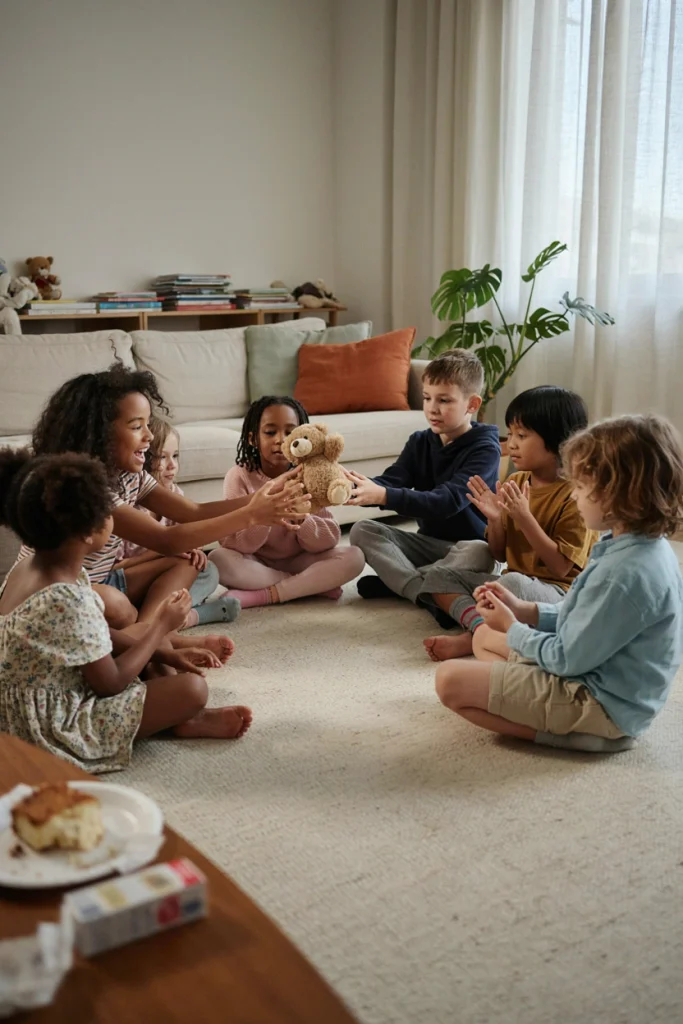
Hot Potato is a quick and exciting group game that needs only a soft ball, beanbag, or stuffed toy. Have the children sit or stand in a circle and pass the object from one person to another while music plays. Stop the music at an unpredictable moment, and the player holding the object completes a funny challenge or sits out for the next round.
You can keep the game going by restarting the music and changing the direction of the passing. Simple challenges, such as naming an animal or doing three claps, make the activity even more entertaining. Hot Potato is ideal for indoor parties, classroom breaks, and rainy-day play.
Pro Tip: Use a soft object and keep the passing gentle so younger children can join comfortably.
7. Capture the Flag
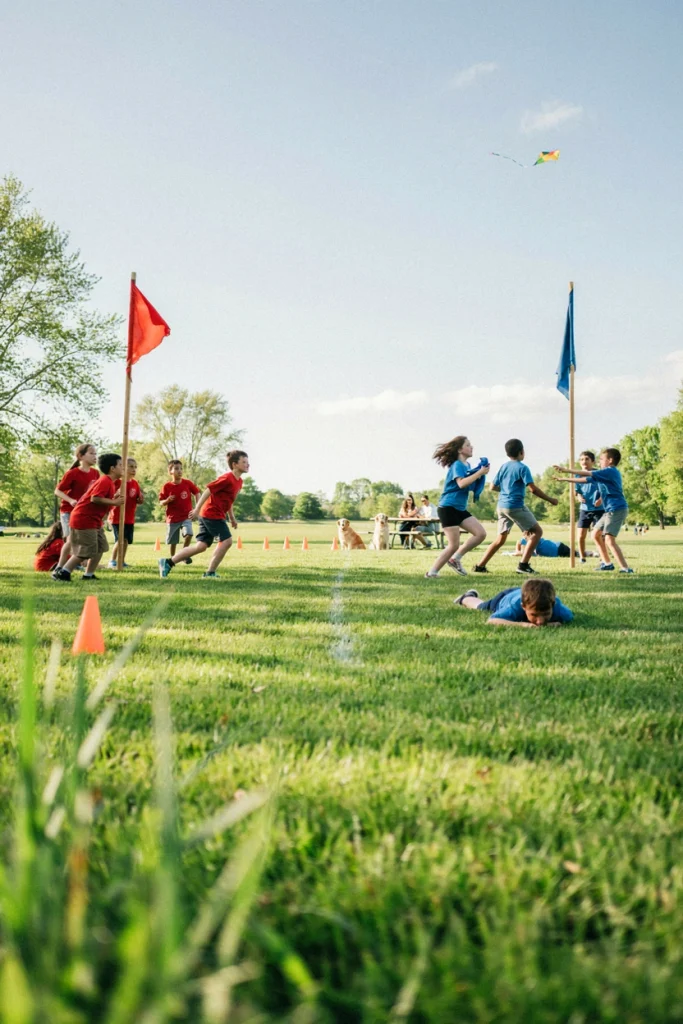
Capture the Flag is an exciting outdoor group game for kids who enjoy strategy, teamwork, and adventure. Divide the children into two teams and give each team a clearly marked territory with a flag or brightly colored cloth. Each team tries to reach the other side, collect the opposing flag, and return it to its own territory without being tagged.
Before starting, explain the boundaries and decide what happens when a player gets tagged. You can have tagged players return to their own territory or visit a designated waiting area before rejoining. This game is best suited to larger groups with enough open space to run safely.
Pro Tip: Use cones to mark boundaries and choose a flag that is easy to spot from a distance.
8. Hide and Seek
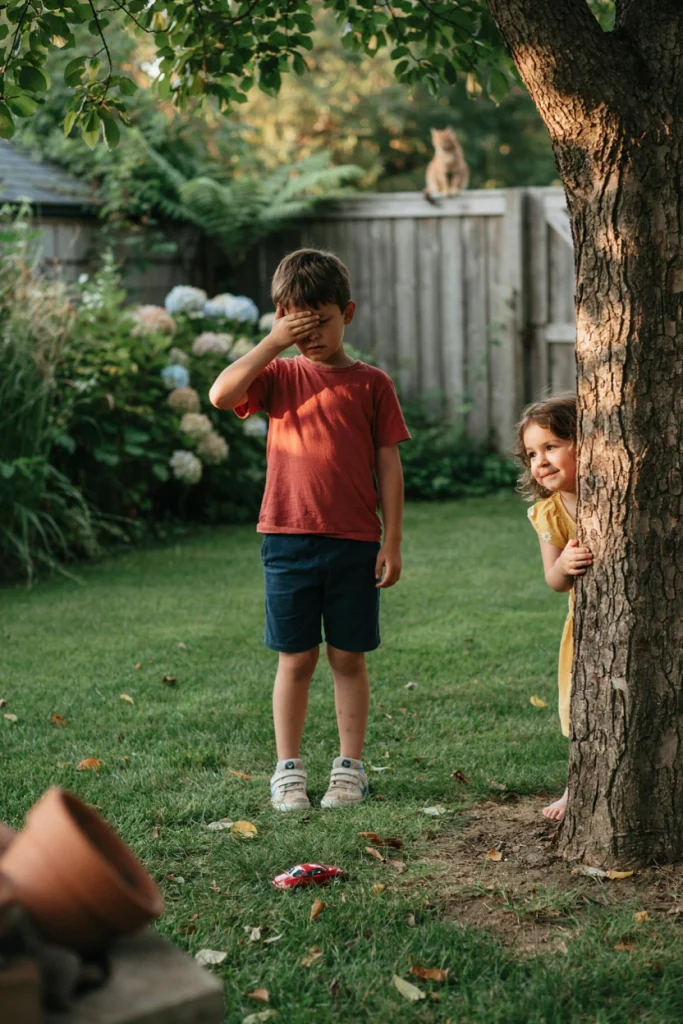
Hide and Seek is a timeless favorite that turns an ordinary room or backyard into an exciting place to explore. One player closes their eyes and counts to an agreed number while everyone else finds a hiding spot. After counting, the seeker looks for the hidden players, and the first person found can become the seeker in the next round.
Choose hiding areas that are safe, accessible, and easy for an adult to supervise. For younger children, use a smaller play area and shorter counting times. Hide and Seek works well for family gatherings, playdates, and outdoor afternoons because it requires no special equipment.
Pro Tip: Set clear boundaries before the game begins, and never allow hiding inside appliances, locked rooms, or unsafe spaces.
9. Balloon Pop Relay
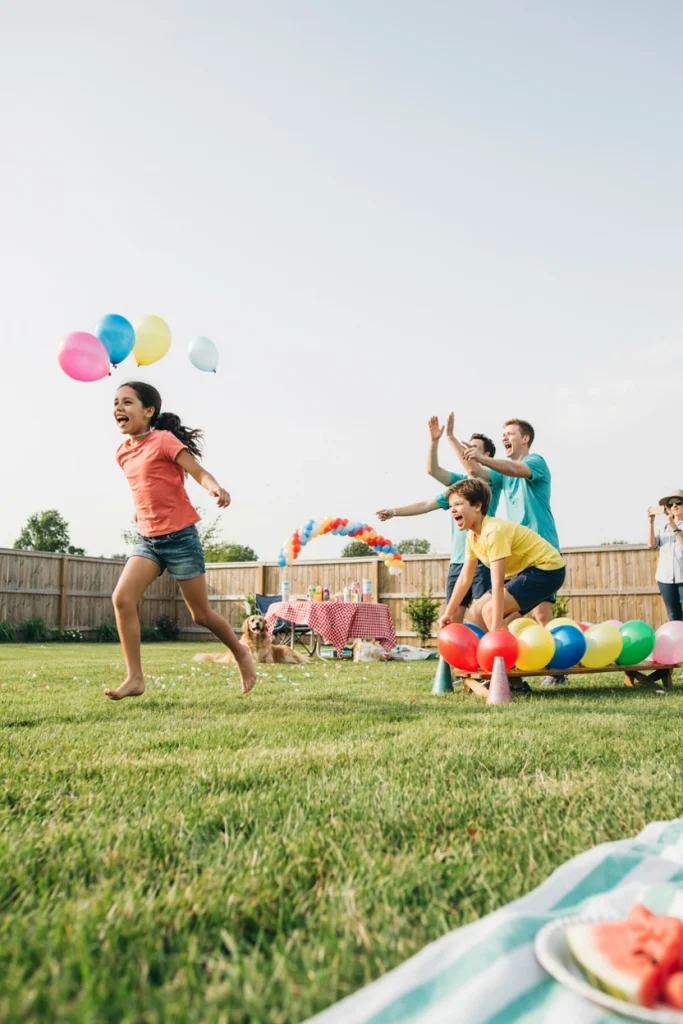
Balloon Pop Relay adds a funny challenge to a traditional team race. Divide the children into teams and give each team an equal number of balloons. Place the balloons at a designated station, then have one player from each team race to the station, pop a balloon by sitting on it, and return to tag the next teammate.
The relay continues until one team completes the challenge. You can change the activity by asking players to carry a balloon between their knees or keep one balanced on their hands instead. This game works best outdoors or in a spacious area where children can move without bumping into furniture.
Pro Tip: Check for latex allergies before using balloons, supervise popping, and collect broken pieces immediately to prevent choking hazards.
10. Tug of War
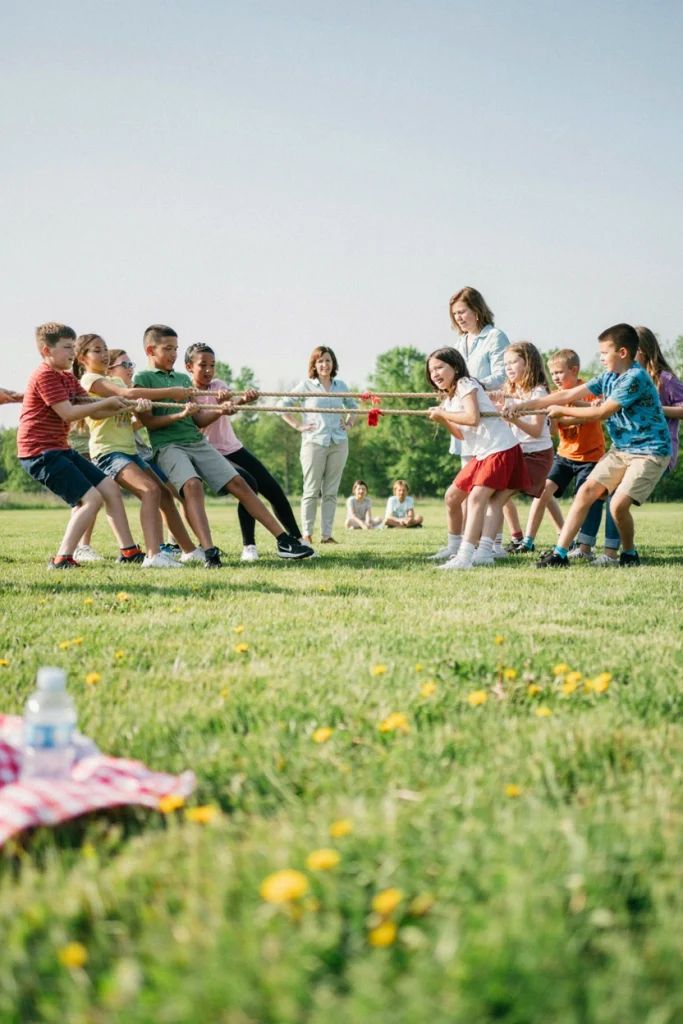
Tug of War is a team game that encourages cooperation and coordination. Divide the children into two reasonably balanced teams and provide a sturdy rope suitable for their size. Mark a center line on the ground, ask both teams to hold the rope with their hands, and have them pull together to move the opposing team across the line.
Choose a flat, open area with a soft surface, such as grass, and explain that players must never wrap the rope around their hands or bodies. Avoid sudden jerking, and stop the game if anyone loses their balance or feels uncomfortable. With clear rules and sensible supervision, Tug of War can be an enjoyable outdoor activity.
Pro Tip: Use a child-appropriate rope and keep the playing surface free of rocks, holes, and other obstacles.
11. Pass the Parcel
Pass the Parcel is a wonderful choice for birthday parties and indoor celebrations. Wrap a small prize in several layers of paper, then ask the children to sit in a circle and pass the parcel while music plays. When the music stops, the child holding the parcel removes one layer before the music starts again.
Continue until the final layer is opened and the main prize is revealed. You can place small surprises, stickers, or activity cards between the layers to keep everyone excited. For a group with different ages, use a shared prize or include enough small treats so every child feels part of the celebration.
Pro Tip: Prepare the parcel before guests arrive and use easy-to-remove wrapping for younger children.
12. Relay Races
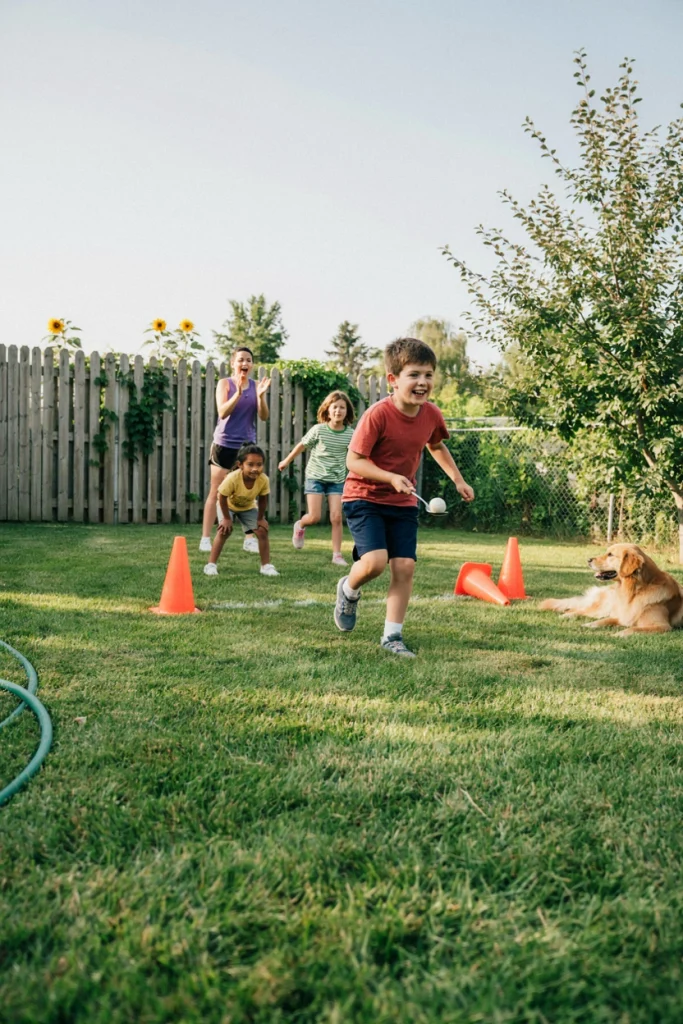
Relay races are flexible group games for kids that encourage movement, cooperation, and friendly competition. Divide the children into teams and create a simple course with a starting line and turning point. The first player completes a challenge, returns to the team, and tags the next person. The team continues until everyone has taken a turn.
Make each round different by adding activities such as hopping, walking backward carefully, balancing a beanbag, or carrying a soft ball on a spoon. Choose challenges that match the children’s ages and abilities, and allow enough space between teams. Relay races are especially useful for field days, school events, and backyard parties.
Pro Tip: Prepare all stations before the race starts and demonstrate each task so everyone understands the rules.
13. Sardines
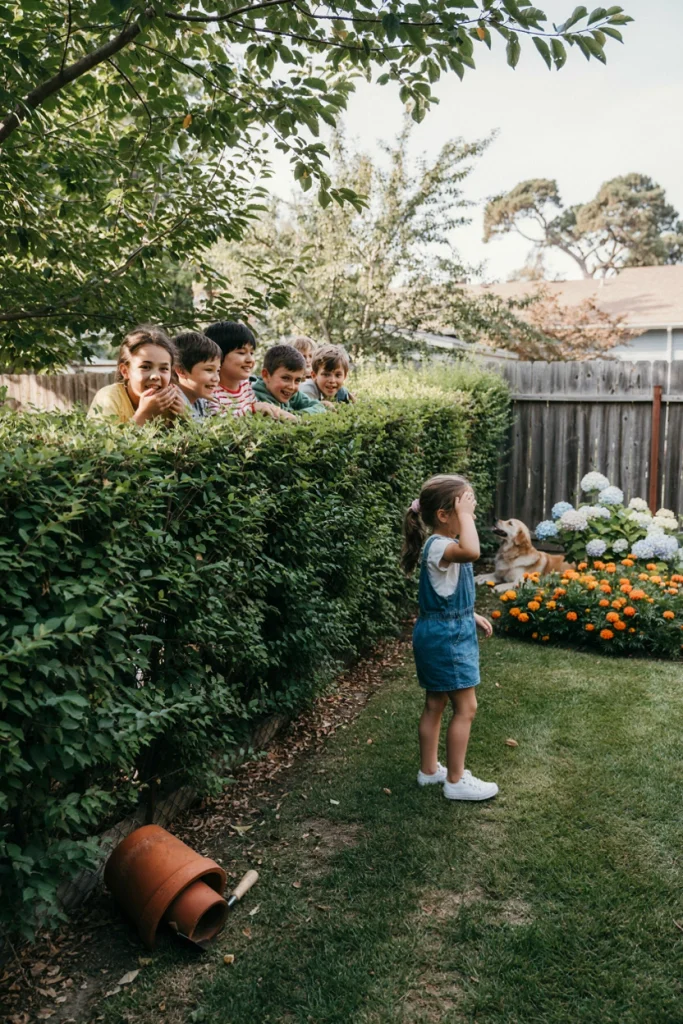
Sardines is a fun twist on Hide and Seek that turns the usual rules around. One player hides while the rest of the group counts and then searches for them. Whenever a player finds the hidden person, they quietly join the hiding spot instead of revealing it to the others.
The game continues as more children discover the hiding place and squeeze into the same general area. The last person to find the group becomes the next hider. Choose a spacious, safe hiding area where children can gather without climbing, squeezing into small spaces, or blocking exits.
Pro Tip: Set a time limit and establish safe hiding boundaries before starting, especially when playing indoors.
Conclusion
The best group games for kids do not need expensive supplies or complicated instructions. Classic favorites like Duck, Duck, Goose and Hide and Seek make active play easy, while Charades, Telephone, and Treasure Hunt encourage creativity, listening, and problem-solving.
When choosing games, consider the children’s ages, the size of your group, and whether you are playing indoors or outdoors. Explain the rules clearly, provide safe boundaries, and adapt competitive activities so everyone has a chance to participate. With a few simple ideas ready, you can make birthday parties, classroom activities, family gatherings, and ordinary afternoons more memorable.