15 DIY Bedroom Ideas for Small Rooms That Look Amazing
Finding the right bedroom ideas for small rooms can make a big difference when you want a space that feels comfortable, organized, and stylish. Even if your bedroom has limited floor space, you can transform it with simple DIY projects, smart storage solutions, and creative decorating ideas that fit your budget.
The secret is to make every corner useful without making the room feel crowded. From DIY wooden wardrobes and floating shelves to cozy lighting and clever under-bed storage, these ideas can help you create a beautiful bedroom that reflects your personality while keeping everyday essentials within easy reach.
Whether you rent a small apartment, share a bedroom, or want to refresh your existing space, these 15 DIY projects offer practical ways to make your room feel bigger and more inviting. You do not need expensive furniture or professional skills to get started; a little planning and creativity can go a long way.
1. Build a DIY Wooden Wardrobe
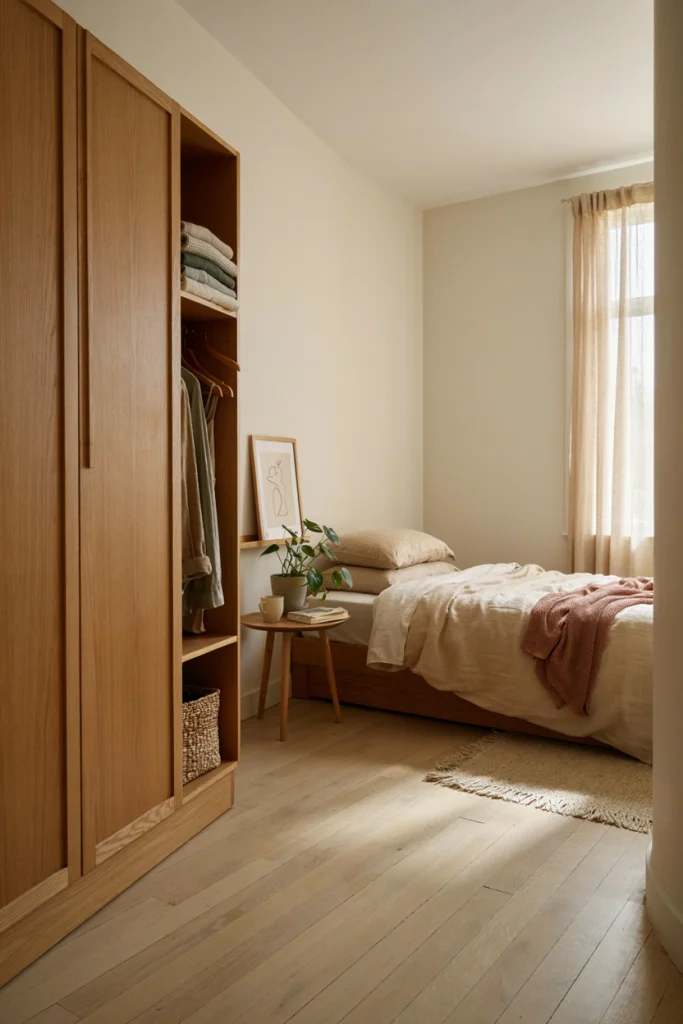
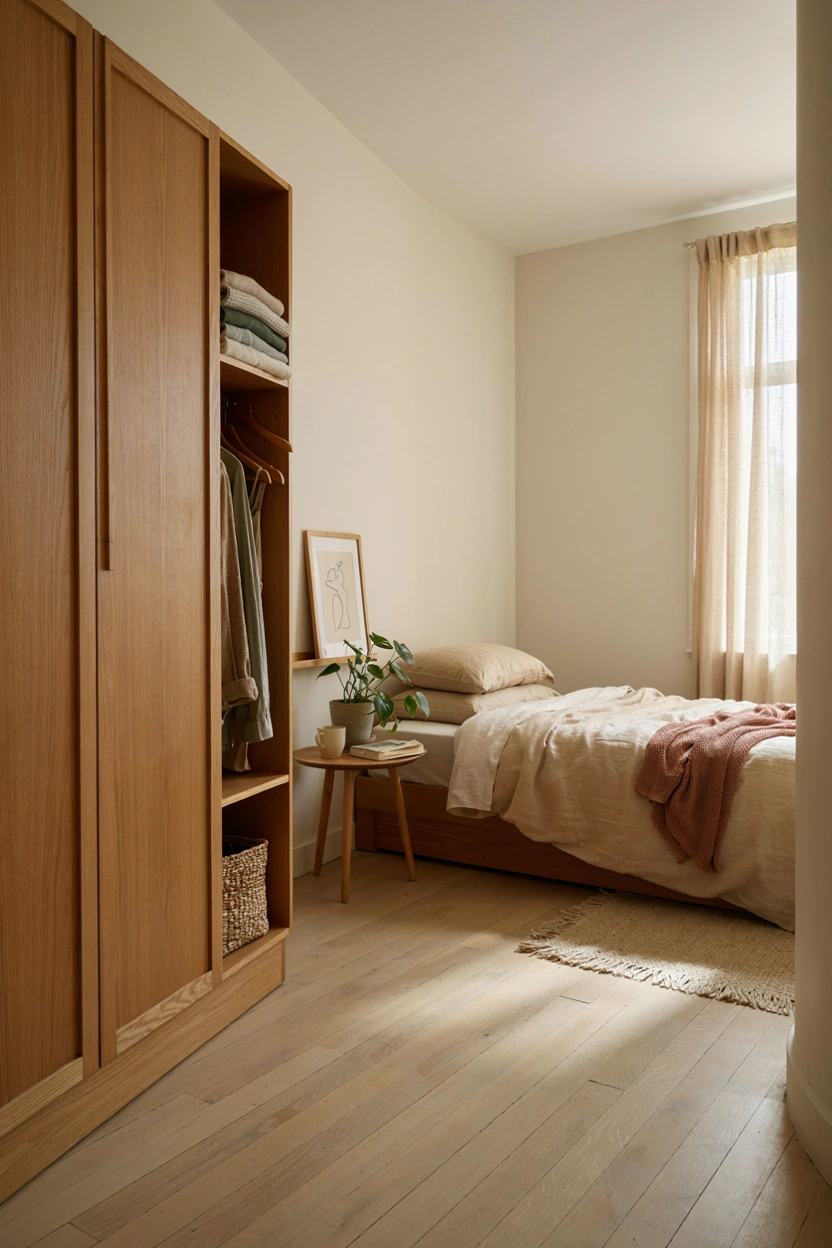
Estimated image placement: A compact wooden wardrobe beside a neatly made bed.
A DIY wooden wardrobe is a practical solution when your small bedroom lacks enough closet space. You can build a simple wardrobe using plywood, wooden boards, hinges, and a sturdy hanging rod. Choose a slim design that fits against one wall without blocking windows, doors, or walking paths.
Light-colored wood creates a warm, natural look, while white paint can make the wardrobe blend into the walls. Add a few shelves inside for folded clothes, bags, and accessories to keep everything organized without needing extra storage furniture.
Pro Tip: Measure your available wall space and the wardrobe’s door swing before cutting any wood to avoid creating a cramped layout.
2. Create a DIY Wood Clothes Storage Rack
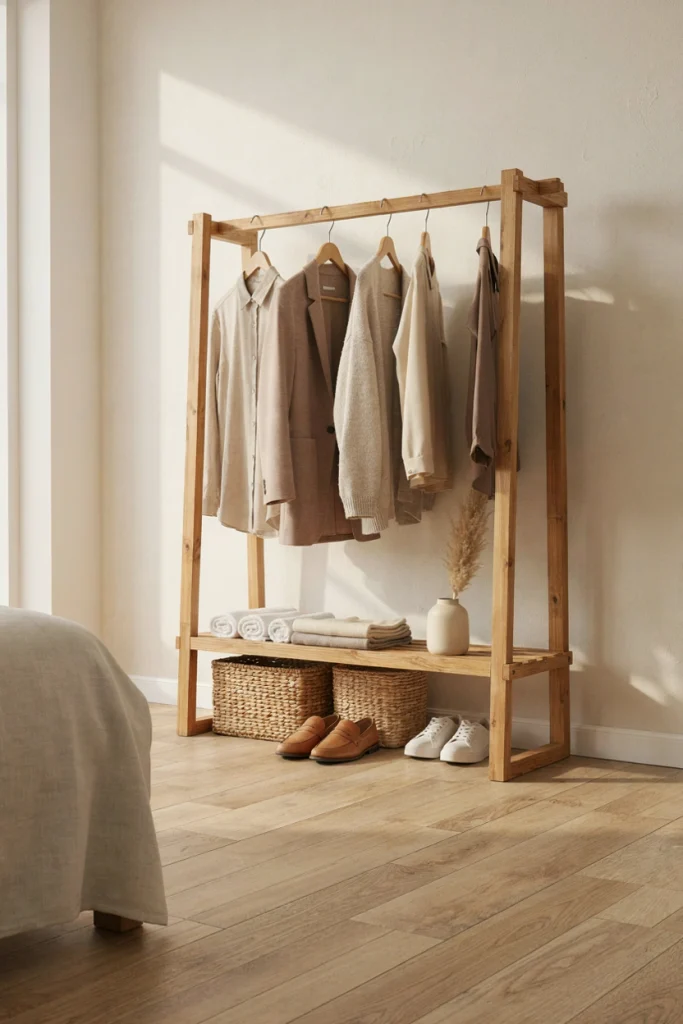
A DIY wood clothes storage rack works well when you need extra hanging space but do not have room for a large wardrobe. Use sturdy wooden dowels or boards to create a simple frame with a horizontal hanging rod. Position it near a wall to keep the rest of the bedroom open.
You can place a small shoe rack underneath and add matching baskets for folded clothes. This open storage design is especially useful for frequently worn outfits, jackets, and bags. Keep the display neat by grouping clothes by color and leaving enough space between hangers.
Pro Tip: Secure the rack properly and check its weight capacity before hanging heavy winter clothing.
3. Install Floating Bedside Shelves
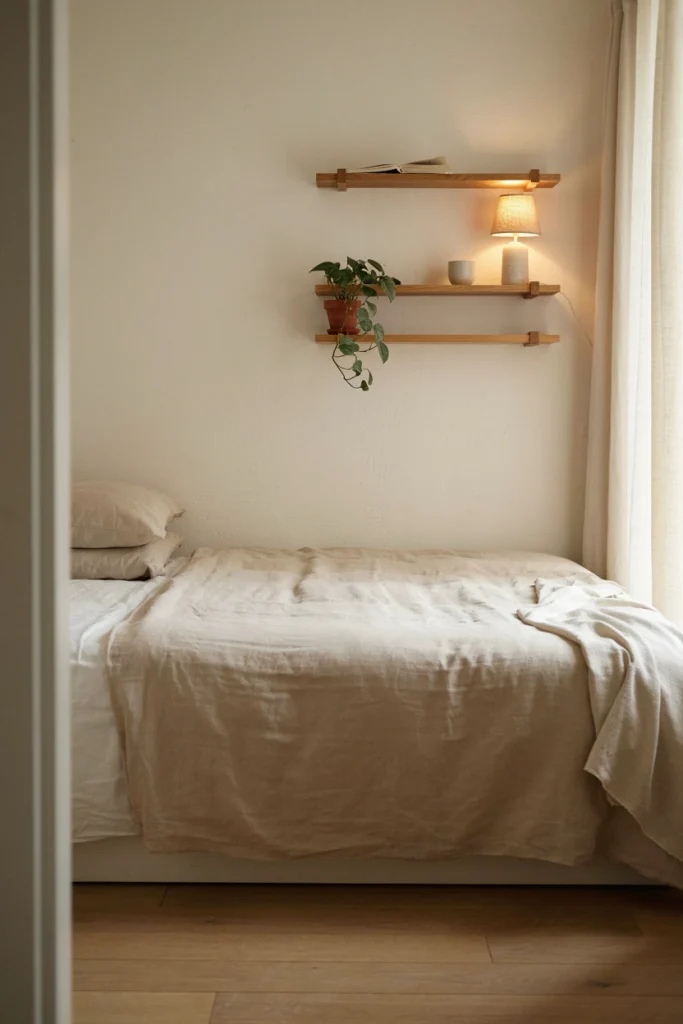
Traditional nightstands can take up valuable floor space in a small bedroom. Floating bedside shelves offer a simple alternative by providing room for a phone, book, glasses, or a small lamp without adding bulky furniture beside the bed.
You can make these shelves from affordable wooden boards, sand them smoothly, and finish them with paint or wood stain. Install one on each side of the bed if space allows, or use a single shelf where the layout is tight. Keep the surface simple to maintain a clean, uncluttered appearance.
Pro Tip: Use wall anchors suitable for your wall type and the expected load, especially if the shelf will hold a lamp or other heavy item.
4. Make a DIY Wooden Closet in an Unused Corner
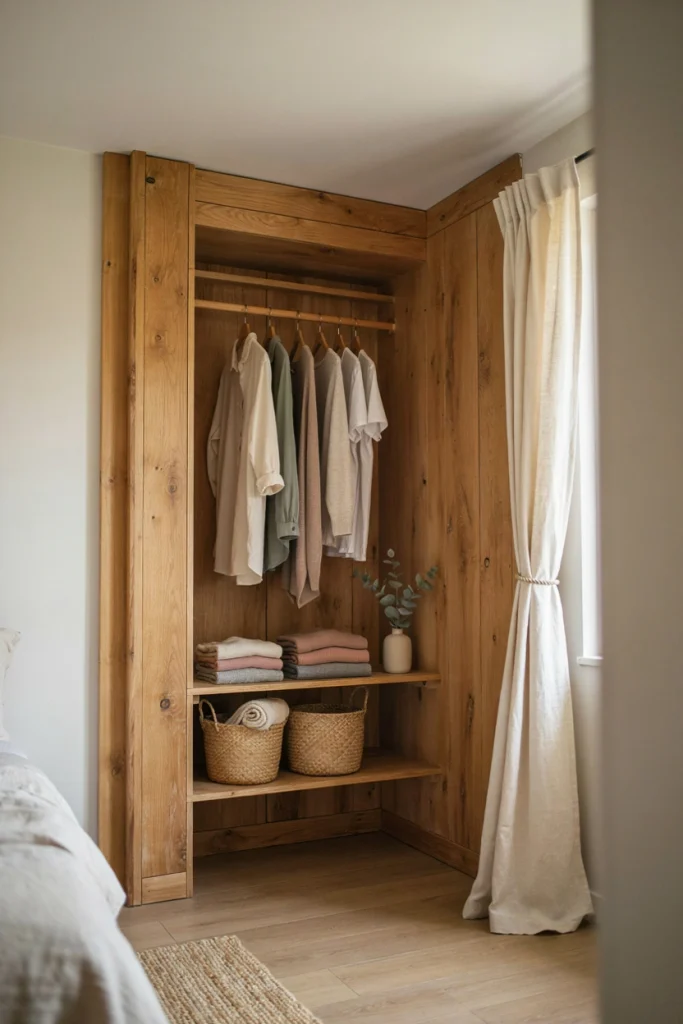
An empty corner can become useful storage space with a DIY wooden closet designed around your room’s dimensions. A narrow frame with a hanging rod and two or three shelves can hold clothing, shoes, and accessories without requiring a full-sized built-in wardrobe.
For a more finished appearance, add a simple curtain or lightweight doors to conceal the contents. Paint the frame to match the walls if you want the closet to blend into the background. This approach is ideal for bedrooms where standard wardrobes are too wide or expensive.
Pro Tip: Leave enough room to open drawers, move hangers, and access stored items comfortably.
5. Use Under-Bed Storage Drawers
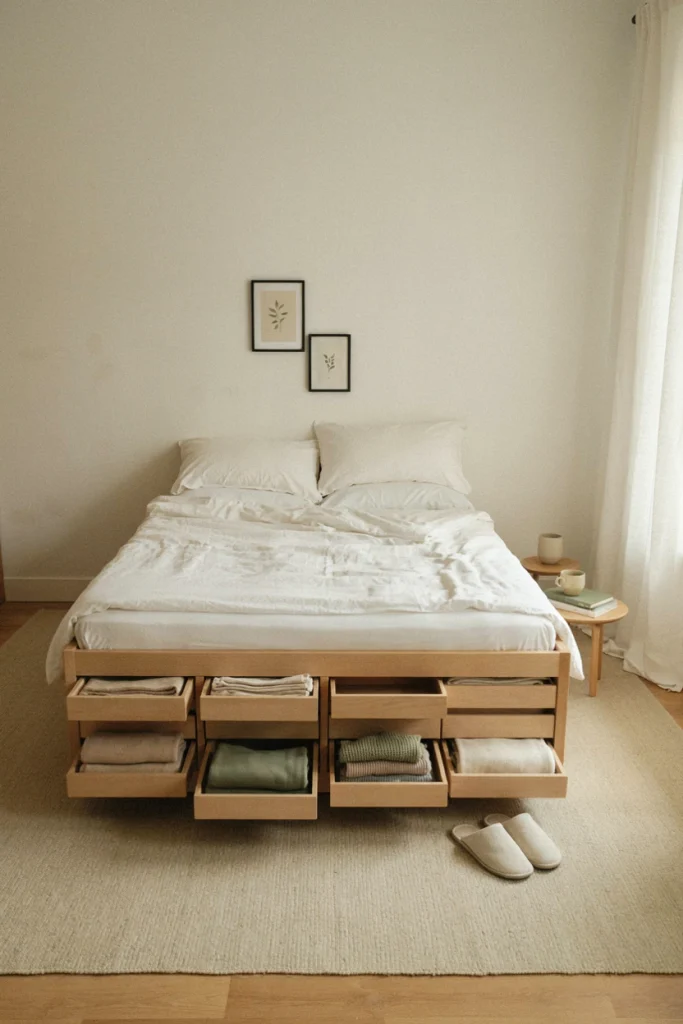
The space beneath your bed is one of the most useful areas for small bedroom storage. Instead of allowing it to collect dust, turn it into an organized storage zone with rolling drawers, shallow boxes, or containers designed to fit beneath your bed frame.
Store seasonal clothes, spare bedding, shoes, or extra pillows in labeled containers. If you are building your own drawers, add smooth-rolling casters and handles for easy access. Choose matching containers to create a tidy appearance, especially if the space beneath your bed is visible.
Pro Tip: Measure the clearance under your bed before buying storage boxes, and use lidded containers to protect clothing from dust.
6. Build a DIY Wooden Rack for Bags and Accessories
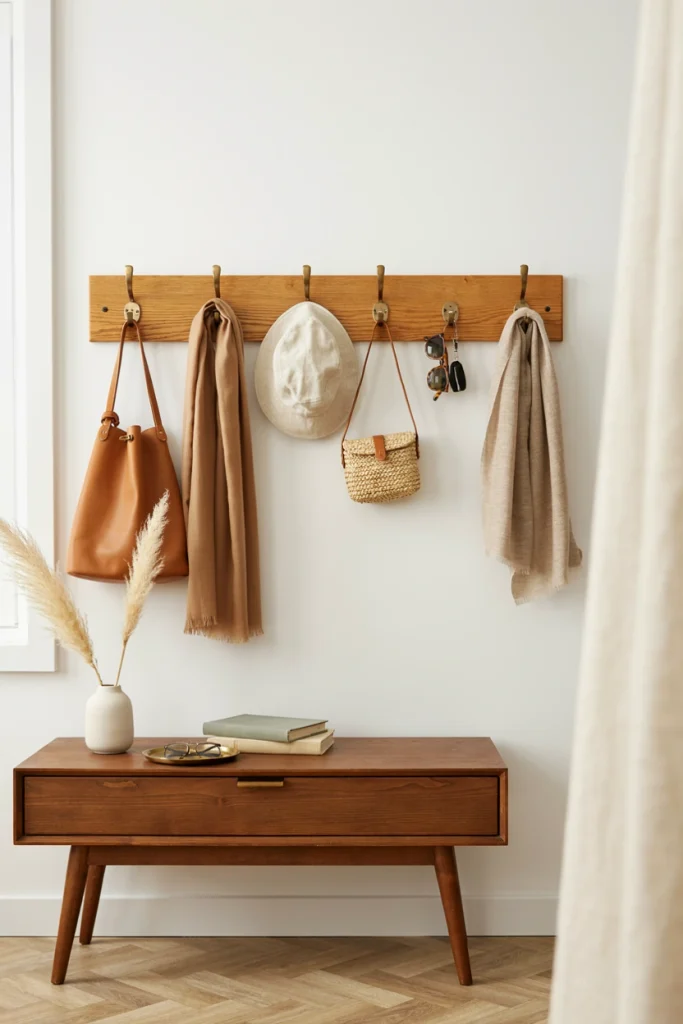
A DIY wooden rack design can help you organize handbags, hats, scarves, belts, and everyday accessories without filling your bedroom with extra furniture. A simple wooden board fitted with sturdy hooks can be mounted behind a door or along an unused wall.
For a coordinated look, stain the wood in a natural finish or paint it to match your bedroom decor. Arrange accessories by size and frequency of use so that your most-used items are easy to reach. This small project can also add a decorative touch to a plain wall.
Pro Tip: Use hooks rated for the weight of your belongings and avoid placing the rack where it could obstruct a doorway.
7. Choose a Light and Neutral Color Palette
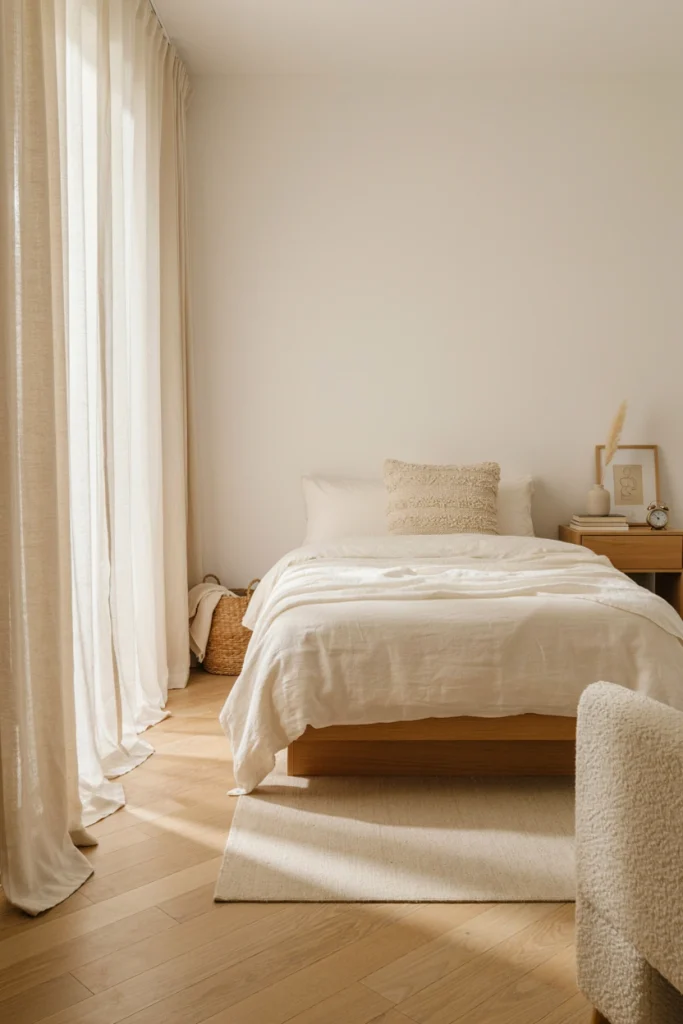
Color can influence how spacious a small bedroom feels. White, cream, pale beige, and soft gray reflect light and help the room appear brighter. You do not need to paint every surface the same shade; adding a gentle accent color through bedding, cushions, or artwork can create depth.
Keep larger surfaces relatively simple and use darker colors in small doses. If you love bold patterns, try incorporating them through one pillow, a throw blanket, or a small framed print rather than covering every wall and fabric.
Pro Tip: Test paint samples in morning and evening light before choosing your final wall color.
8. Create a DIY Pallet Closet
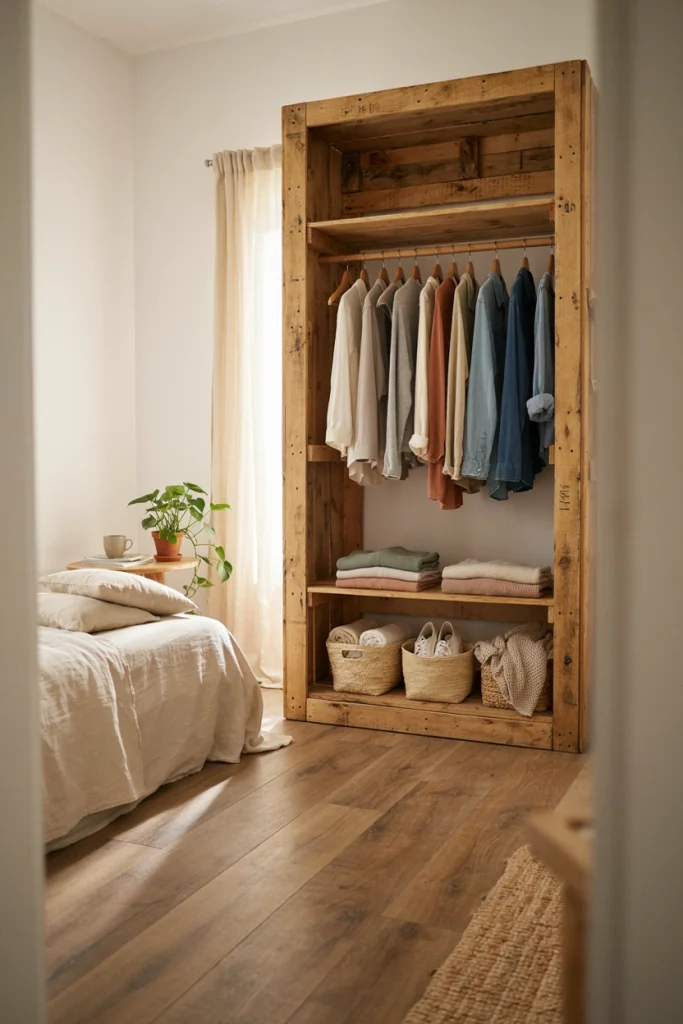
A DIY pallet closet can be an affordable storage project if you can source suitable reclaimed wood. Wooden pallets can sometimes be adapted into shelves, shoe storage, or a simple open closet frame, depending on their condition and dimensions.
Before using reclaimed wood indoors, check its origin and markings, avoid chemically treated or contaminated pallets, and remove splinters, nails, and damaged pieces. Sand the wood carefully and secure the finished structure to prevent tipping. A light stain or clear finish can give the project a simple rustic appearance.
Pro Tip: Never assume an unknown pallet is safe for indoor use; choose clean, traceable wood and inspect every board before building.
9. Add a Mirror to Create a More Open Feel
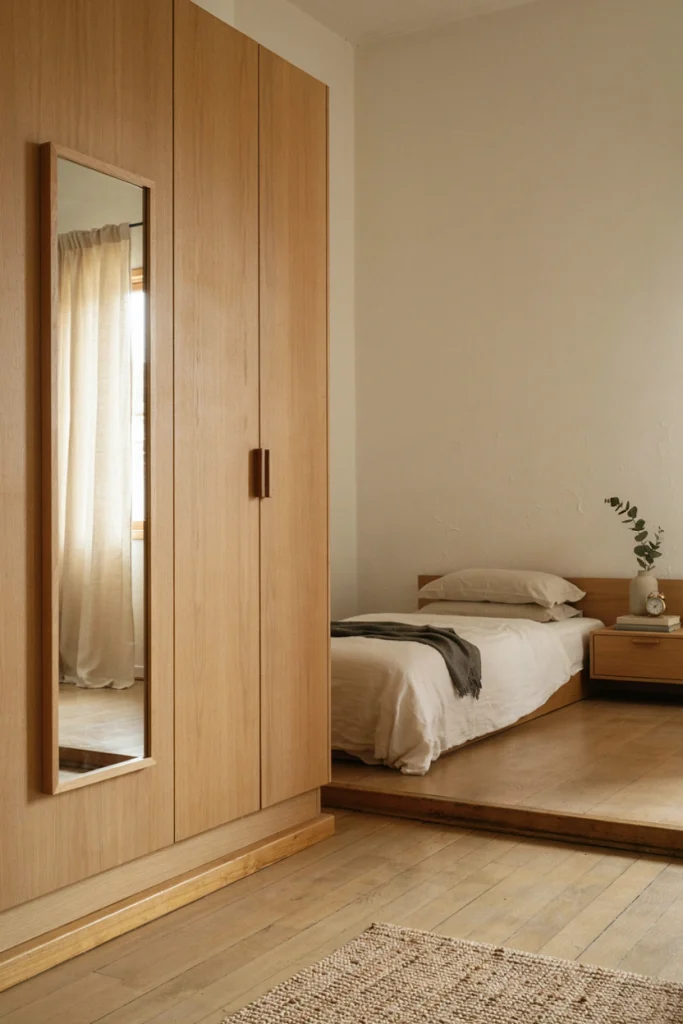
A well-placed mirror can make a compact bedroom feel brighter by reflecting natural light and creating a greater sense of depth. A full-length mirror on a wardrobe door is especially useful because it provides a practical dressing feature without requiring additional floor space.
You can also use a wall-mounted mirror above a small dressing shelf. Choose a simple frame that complements your furniture and avoid placing too many reflective decorations in one area, as this can make the room feel visually busy.
Pro Tip: Position the mirror to reflect a window or another bright part of the room rather than a cluttered corner.
10. Install Wall-Mounted Reading Lights
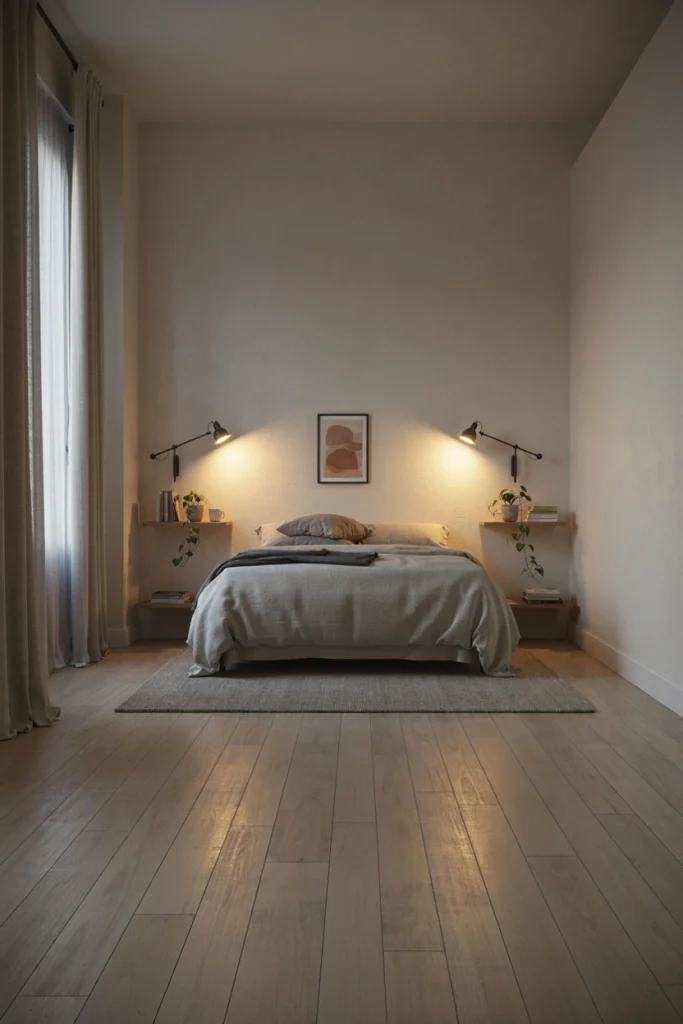
Bedside lamps with large bases can crowd a small nightstand or take up space that could be used for essentials. Wall-mounted reading lights free up the surface while providing comfortable lighting for reading, relaxing, or getting ready for bed.
Choose compact fixtures with adjustable heads so you can direct the light where needed. Warm-white bulbs create a cozy atmosphere, while separate overhead lighting helps illuminate the entire room. If you cannot hardwire a fixture, consider a suitable plug-in wall light with safely managed cords.
Pro Tip: Position reading lights where you can reach their switches easily without stretching across the bed.
11. Make a DIY Headboard With Storage
A DIY headboard can add style and function to a small bedroom. Use a wooden panel, simple upholstered board, or a combination of wood and narrow shelves to create a focal point behind the bed. A shallow shelf can hold a few lightweight decorative items or bedtime essentials.
Keep the design proportional to the bed so it does not overwhelm the room. If you choose a wooden headboard, sand the edges and apply a suitable finish. Secure it properly, especially if you plan to attach shelves or other components.
Pro Tip: Keep anything stored above your head lightweight and securely mounted to reduce the risk of falling objects.
12. Organize Clothes With a DIY Wooden Wardrobe System
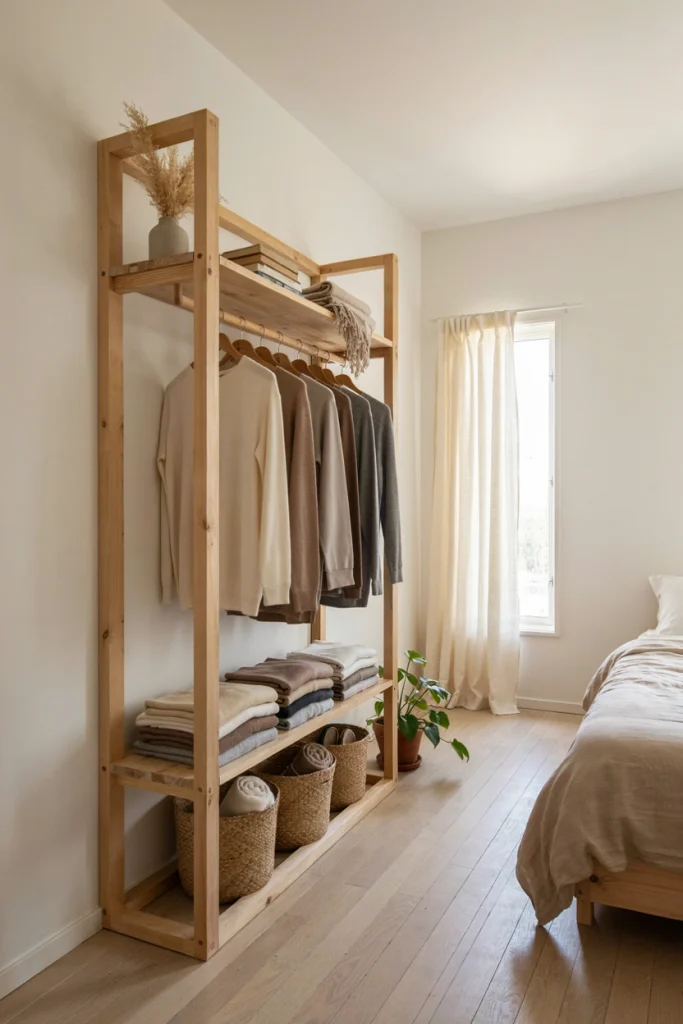
If a full wardrobe is not practical, a modular DIY wooden wardrobe system can make better use of a narrow wall. Combine a hanging rod, open shelves, and a few storage baskets to create separate zones for shirts, trousers, folded clothes, and accessories.
The benefit of a modular system is flexibility. You can start with one section and add more shelves as your needs change. Choose consistent basket sizes and keep everyday items at eye level, placing seasonal belongings on higher shelves.
Pro Tip: Store frequently worn clothes within easy reach and reserve higher shelves for items you use less often.
13. Use Curtains to Divide a Small Bedroom
Curtains can separate different areas of a bedroom without the bulk of a permanent partition. If your room doubles as a workspace or dressing area, a ceiling-mounted curtain track can create privacy while keeping the layout flexible.
Choose lightweight curtains in a similar shade to the walls for a seamless look. When the divider is not needed, pull it completely aside to restore the open feel of the room. This approach is particularly helpful in studio apartments and shared bedrooms.
Pro Tip: Mount the curtain track securely and choose a fabric that is easy to wash and maintain.
14. Add Floating Shelves Above the Desk
When floor space is limited, vertical storage can help keep your bedroom organized. Floating shelves above a compact desk provide space for books, small plants, stationery, and decorative objects without adding another cabinet to the room.
Use two or three shelves rather than covering the entire wall. Arrange heavier items on properly supported shelves and keep the display balanced with a few open areas. If the desk is also used for studying, store supplies in small containers to keep the work surface clear.
Pro Tip: Leave enough clearance above your desk so you can work comfortably without hitting your head or bumping into stored items.
15. Layer Soft Textures for a Cozy Bedroom
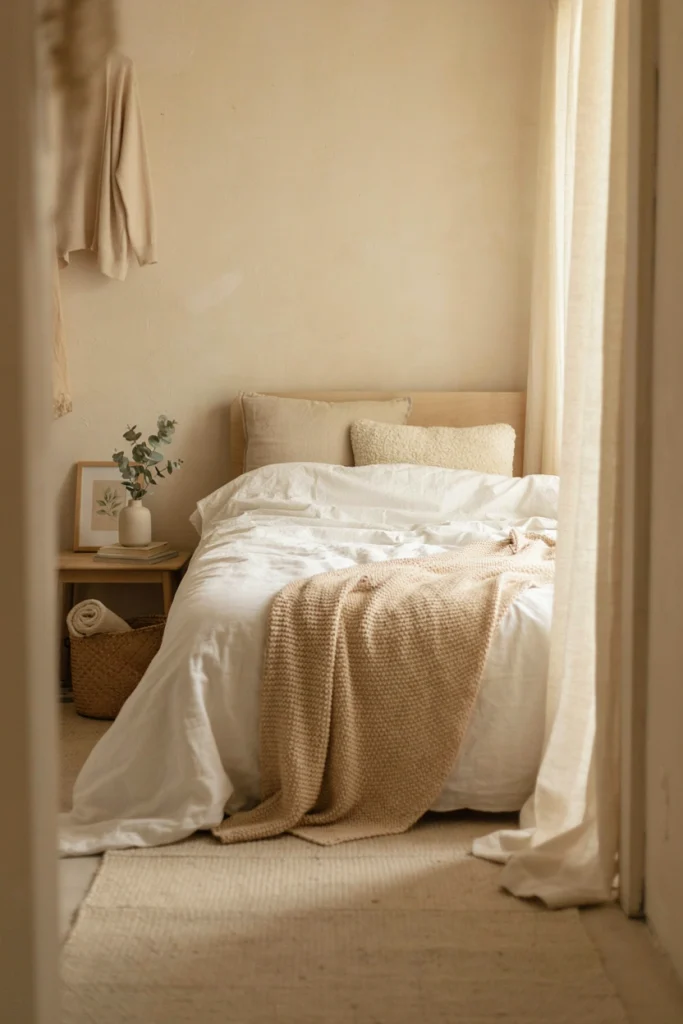
A small bedroom can feel stylish and welcoming without having lots of decorations. Combine soft bedding, a textured throw, a couple of cushions, and a comfortable rug to add warmth and personality. Choose two or three coordinating colors to make the room feel cohesive.
Natural textures such as cotton, linen, woven baskets, and wood work well together. Keep larger decorative pieces to a minimum so that the bed remains the main focal point. A carefully chosen combination of textures can make even a simple room feel thoughtfully designed.
Pro Tip: Choose bedding that is easy to wash and a rug sized to fit the available walking space without creating a tripping hazard.
Conclusion
The best bedroom ideas for small rooms combine smart storage, simple DIY projects, and thoughtful decorating choices. You can build a DIY wooden wardrobe, create a DIY wood clothes storage rack, install floating shelves, or use under-bed drawers to make better use of the space you already have.