How to Host a Murder Mystery Party: Themes, Setup, Timeline & Hosting Tips
Hosting a murder mystery party is a fun way to turn an ordinary gathering into an interactive evening where everyone has a role to play. With the right game format, character assignments, theme, and schedule, you can keep guests involved without making the planning overwhelming.
Most successful parties do not require expensive decorations or complicated entertainment. A suitable kit, clear instructions, simple themed details, and a little preparation can create an engaging night that lasts around two and a half to three hours.
- Choose a murder mystery format that matches your guest count and planning time.
- Most groups work well with about 6–14 players.
- Give guests their characters and costume guidance before the party.
- Use the theme to coordinate decorations, food, music, and costumes.
- Plan clue rounds around dinner or refreshments to maintain momentum.
- Let the host take a neutral role so the game is easier to manage.
- Keep the mystery moving instead of overloading guests with rules.
- A simple setup can be just as memorable as an expensive one.
What Is a Murder Mystery Party?
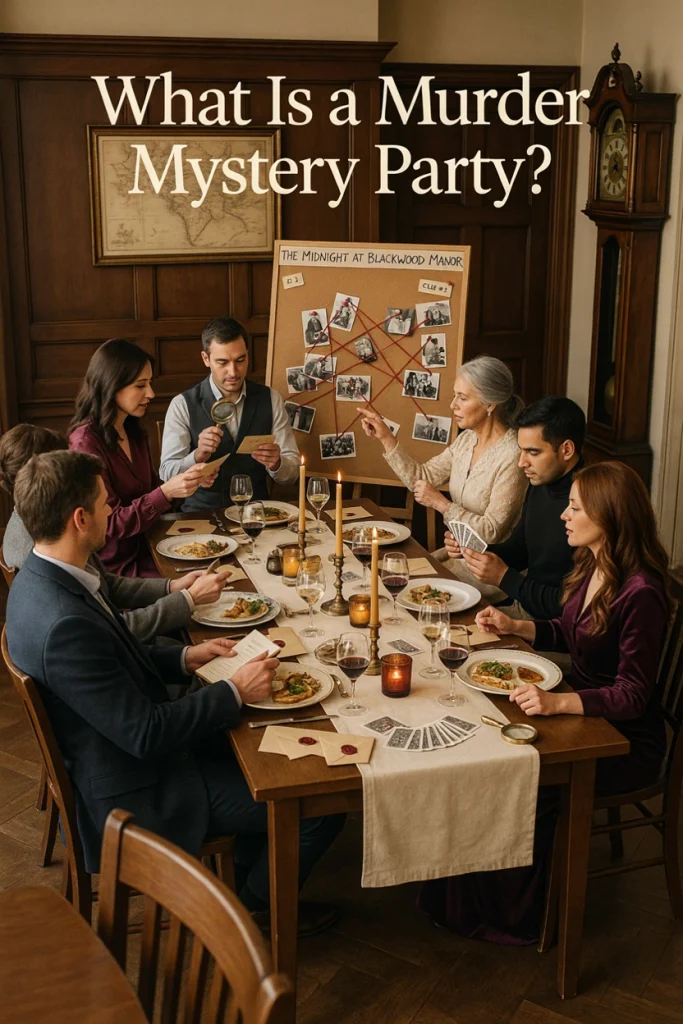
A murder mystery party is a guided group game in which every guest receives a character, background details, and secrets while one character is secretly responsible for the fictional crime. Guests interact, share clues, question one another, and gradually piece together the mystery before the final reveal. You do not need professional acting skills because the game structure provides most of the direction.
Pro Tip: Give nervous guests straightforward characters with fewer secrets so they can participate comfortably without feeling pressured to perform.
Which Murder Mystery Kit Format Should You Use?
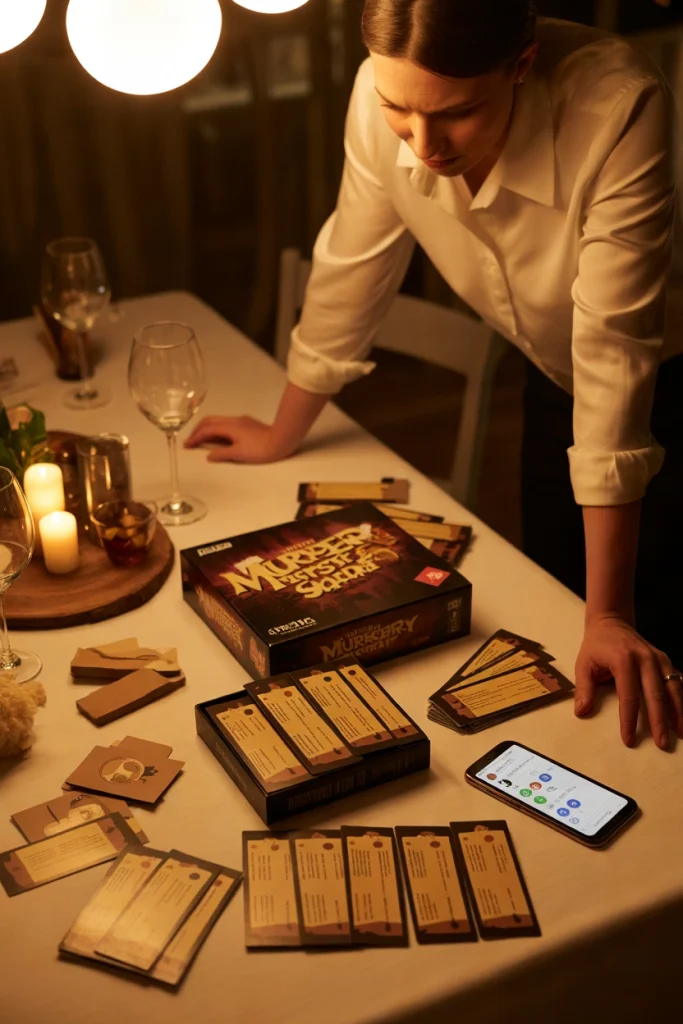
Choosing the game format should come before buying decorations or planning costumes because each option requires a different amount of money and preparation. You can use a ready-made boxed game, printable download, completely DIY mystery, or app-based format. Think about your group size, available preparation time, and how much control you want over the evening before deciding.
Pro Tip: Confirm your expected player count first so you do not purchase a game that cannot comfortably accommodate your final guest list.
1: Boxed Physical Kit
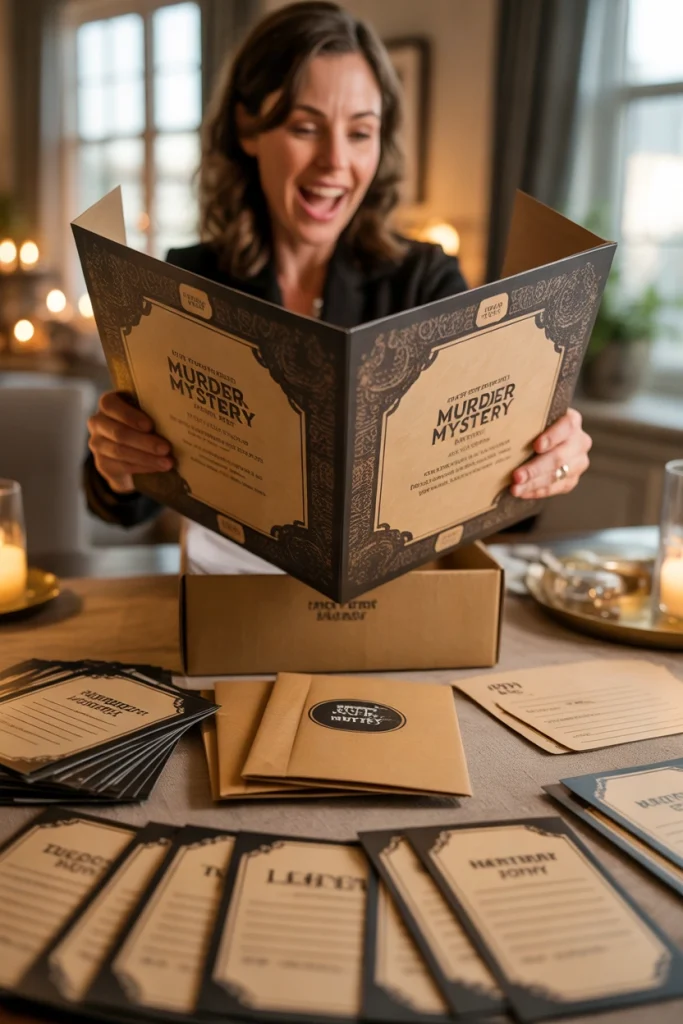
A boxed murder mystery game usually arrives with printed character information, invitations, name tags, clues, and instructions for the host. These kits commonly cost around $25–$45 and can require relatively little preparation once you understand the host guide. They are particularly convenient for first-time hosts who want the game structure already organized.
Pro Tip: Read the host instructions before guests arrive and mark the important clue or announcement points so you are not searching through the booklet during the party.
2: Printable / Download Kit

Printable murder mystery games are usually purchased as digital files that you print at home, making them a lower-cost option for many hosts. Expect to spend roughly $10–$30, along with additional time for printing, cutting, organizing, and preparing character materials. Their flexibility can be useful when you need a game that accommodates different player counts.
Pro Tip: Print and organize every character packet several days early so a printer problem does not become a last-minute party emergency.
3: DIY-Your-Own Mystery
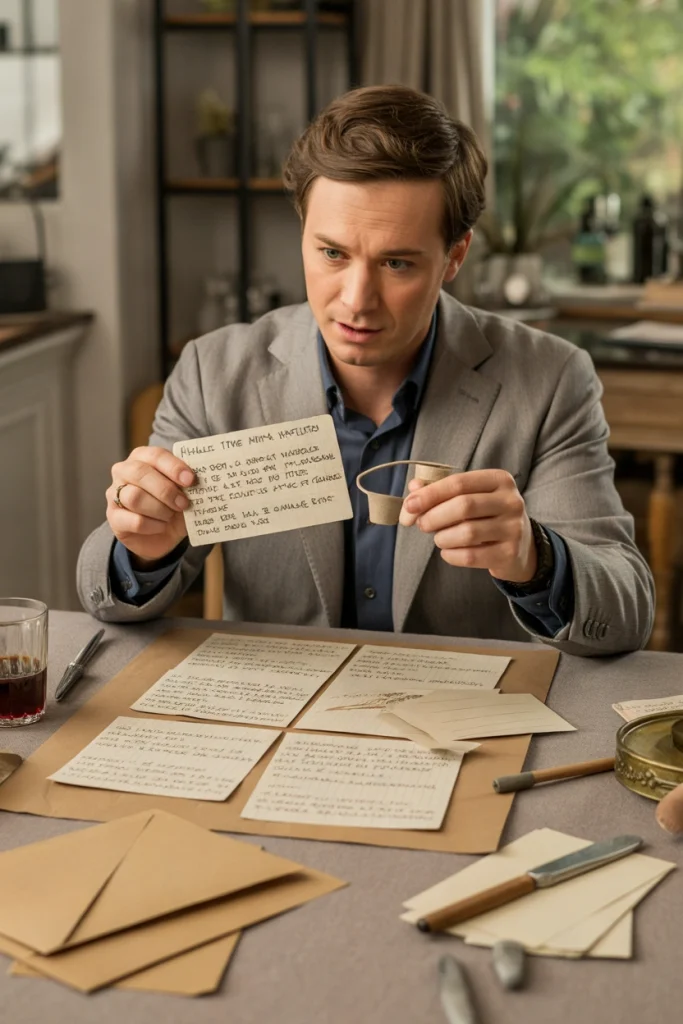
Creating your own mystery gives you complete control over the setting, characters, motives, clues, and ending, but it requires substantially more preparation. Basic materials may cost only $0–$15, while developing a complete story can take roughly 8–15 hours. This approach works particularly well for experienced hosts or groups with unusual player counts.
Pro Tip: Create a clear clue timeline before writing individual character stories so every secret contributes naturally to the final solution.
4: App / Streaming-Based
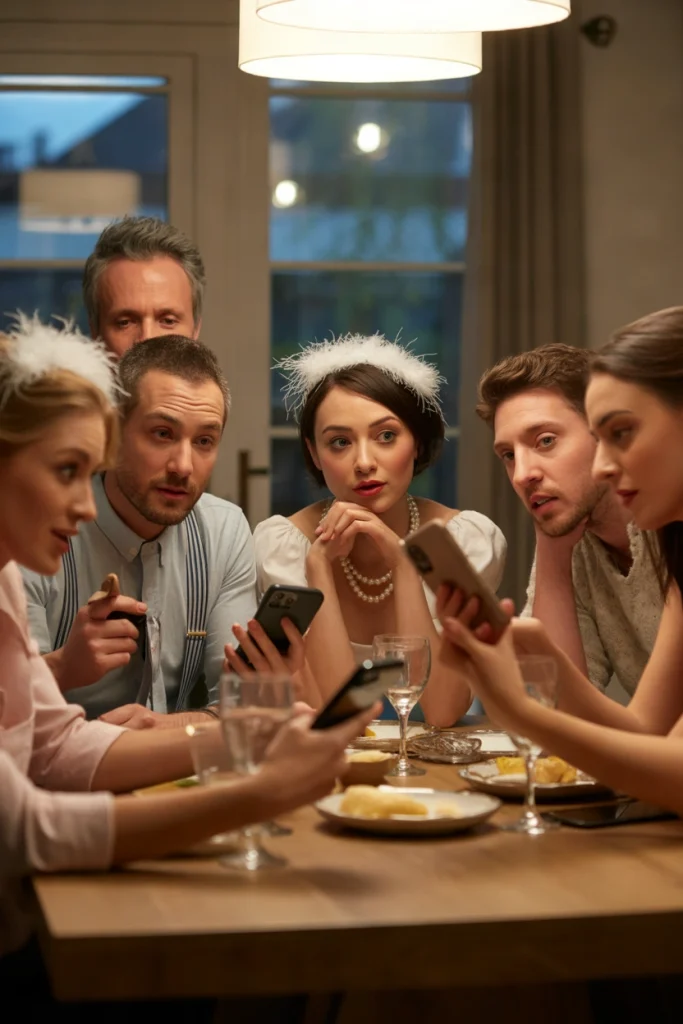
App-guided murder mystery games can provide instructions, clues, and game progression through phones or another connected device. They generally require little physical preparation and can cost around $15–$30, making them convenient for casual gatherings. The tradeoff is that guests may have less of the physical character material that adds atmosphere to a traditional game.
Pro Tip: Make sure everyone has a charged phone and understands how the game platform works before the first round begins.
5: Kit Format Comparison
| Kit Type | Cost | Prep Time | Player Flexibility | Best For |
|---|---|---|---|---|
| Boxed physical | $25–$45 | About 30 min | Fixed count | First-time hosts, 6–8 players |
| Printable / PDF | $10–$30 | 1–2 hrs | Often scalable | Budget hosts, flexible counts |
| DIY-your-own | $0–$15 | 8–15 hrs | Fully custom | Experienced hosts, unusual group sizes |
| App / streaming | $15–$30 | Minimal | Varies by app | Casual, low-effort gatherings |
Pro Tip: Match the game to your confirmed guest count before choosing a theme because adding unexpected players can make a fixed-character mystery difficult to manage.
8 Murder Mystery Party Themes Worth Trying
The theme can guide nearly every other party decision, from costumes and decorations to music and food. Choosing a recognizable setting gives guests an easy starting point for their characters while helping the room feel connected to the mystery. These eight settings offer different styles for everything from dressy evenings to relaxed seasonal gatherings.
Pro Tip: Choose a theme that naturally fits your guests’ personalities and the type of atmosphere you want rather than spending heavily on decorations.
6: 1920s Speakeasy
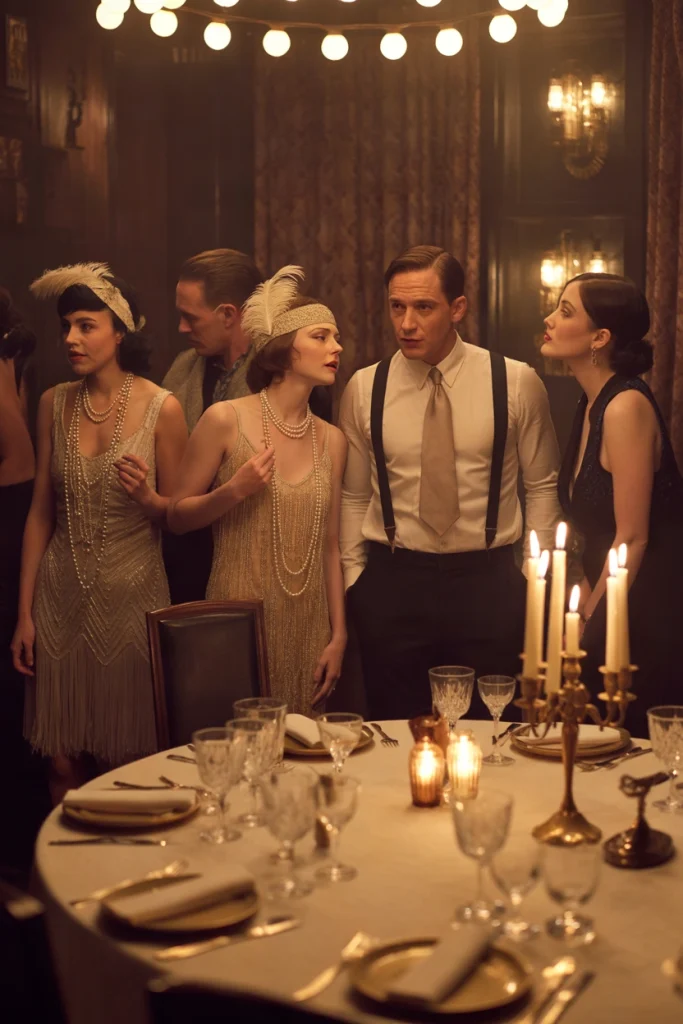
A 1920s speakeasy brings together flapper-inspired outfits, suspenders, jazz music, pearls, feathers, and a secret password at the entrance. You can create the atmosphere with roughly $30–$60 in decorations, using string lights, vintage-style signs, and simple table details. It also gives guests an easy costume direction without requiring elaborate outfits.
Pro Tip: Put the secret password on the invitation and ask guests to use it when they arrive to make the theme begin at the door.
7: Dinner Train
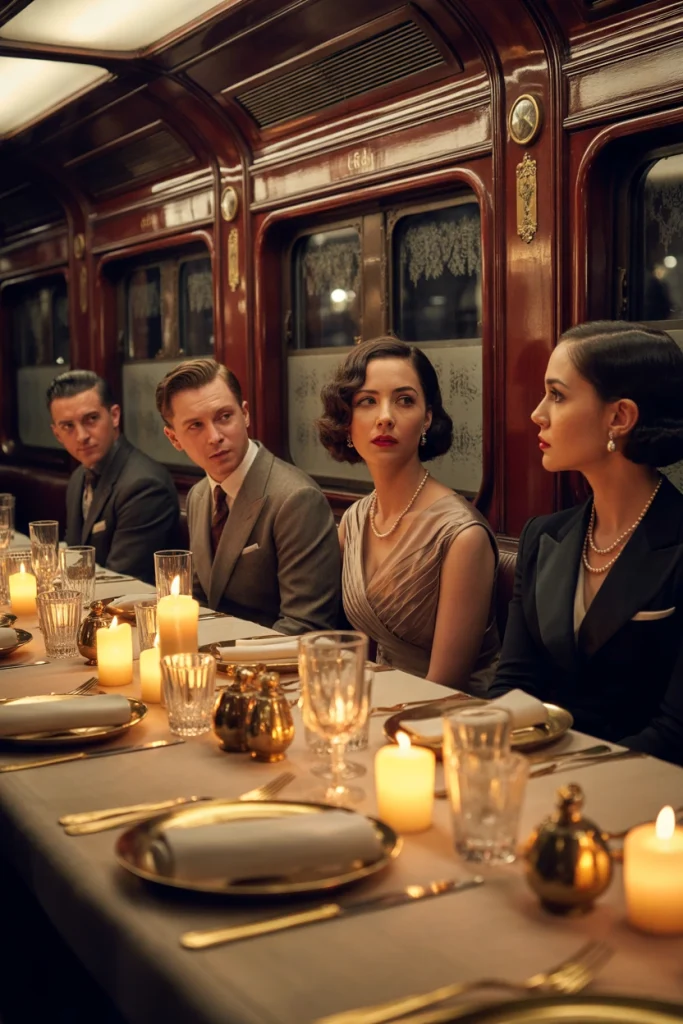
A dinner train setting creates the feeling of an elegant journey where every passenger may have something to hide. You can keep decorations around $25–$50 by focusing on table settings, printed tickets, seating cards, and details that suggest a classic railway carriage. A seated meal also fits naturally into the story and gives guests plenty of time to interact.
Pro Tip: Assign seats carefully so characters with important connections or clues have opportunities to interact during the meal.
8: Masquerade Ball
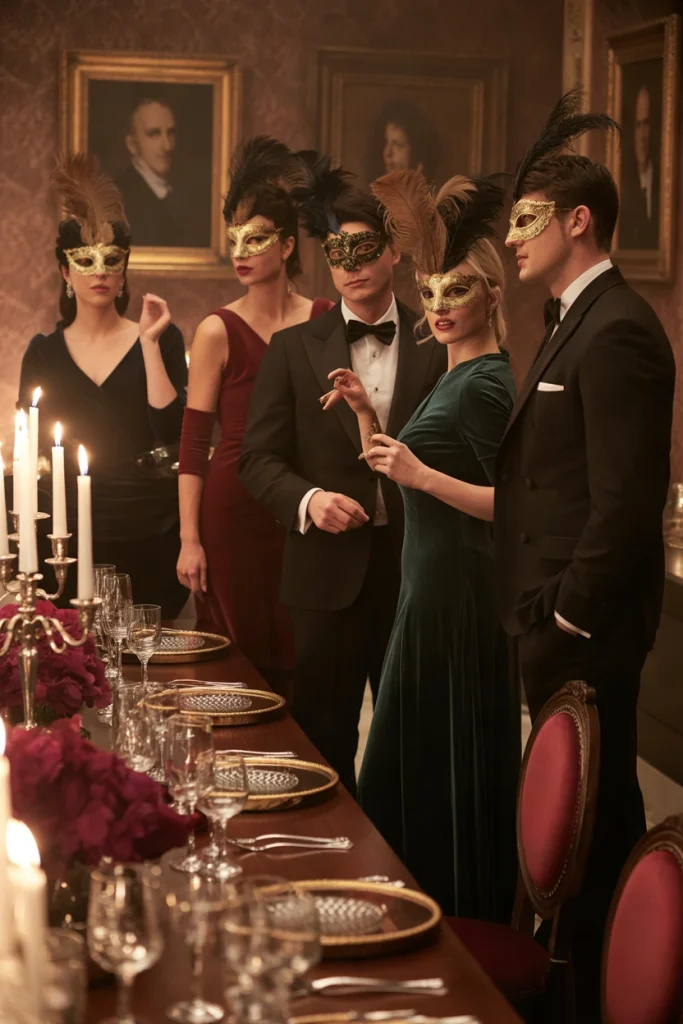
A masquerade mystery combines elegant costumes with masks that conceal identities and immediately create a dramatic atmosphere. Decorations can stay around $20–$45 with masks, candles, dark table linens, and soft lighting. The format can also work well for larger gatherings because guests can mingle rather than remaining at one table.
Pro Tip: Keep a few spare masks available for guests who arrive without one so everyone can participate in the visual theme.
9: Haunted ManorZ
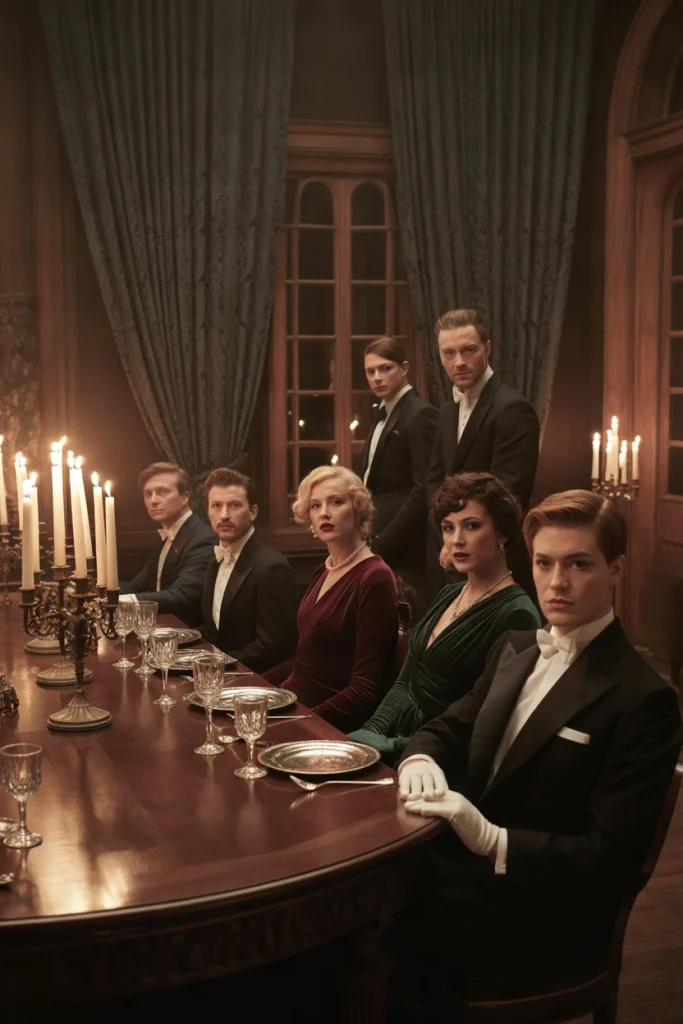
A haunted manor theme works especially well for autumn gatherings and Halloween celebrations, using a fictional old estate, mysterious family secrets, and a dramatic inheritance or will. Candles, dark fabrics, vintage-looking objects, and low lighting can create the atmosphere for around $30–$55. The setting feels atmospheric without requiring elaborate props.
Pro Tip: Use warm, low lighting around the room while keeping walkways well lit so the spooky atmosphere does not make movement difficult.
10: Hollywood Premiere

Turn the party into a glamorous movie premiere with a red carpet, gold accents, press-style name badges, and a fictional celebrity at the center of the mystery. A simple setup can cost around $25–$50 while also creating an easy photo area for guests. The theme is especially flexible because characters can range from actors and directors to journalists and producers.
Pro Tip: Create a simple photo entrance with a red runner and backdrop so guests immediately feel like they are arriving at a premiere.
11: Roaring Casino Night

A casino-inspired mystery adds card tables, playing chips, glamorous outfits, and a high-stakes atmosphere to the evening. Expect to spend around $40–$70 on themed details such as felt table coverings, cards, chips, and lighting. The setting works particularly well when the fictional crime is connected to money, secrets, or a risky wager.
Pro Tip: Use inexpensive playing cards and poker chips as table decorations rather than spending your budget on large props.
12: Tropical Cruise

A tropical cruise theme turns the mystery into a vacation that has taken an unexpected turn. Leis, tropical greenery, beach-inspired lighting, and simple tiki details can create the setting for approximately $25–$45. It is a relaxed choice for summer gatherings and allows guests to dress casually while still following the theme.
Pro Tip: Serve tropical-inspired appetizers and drinks so the food reinforces the cruise setting without adding complicated preparation.
13: Winter Lodge
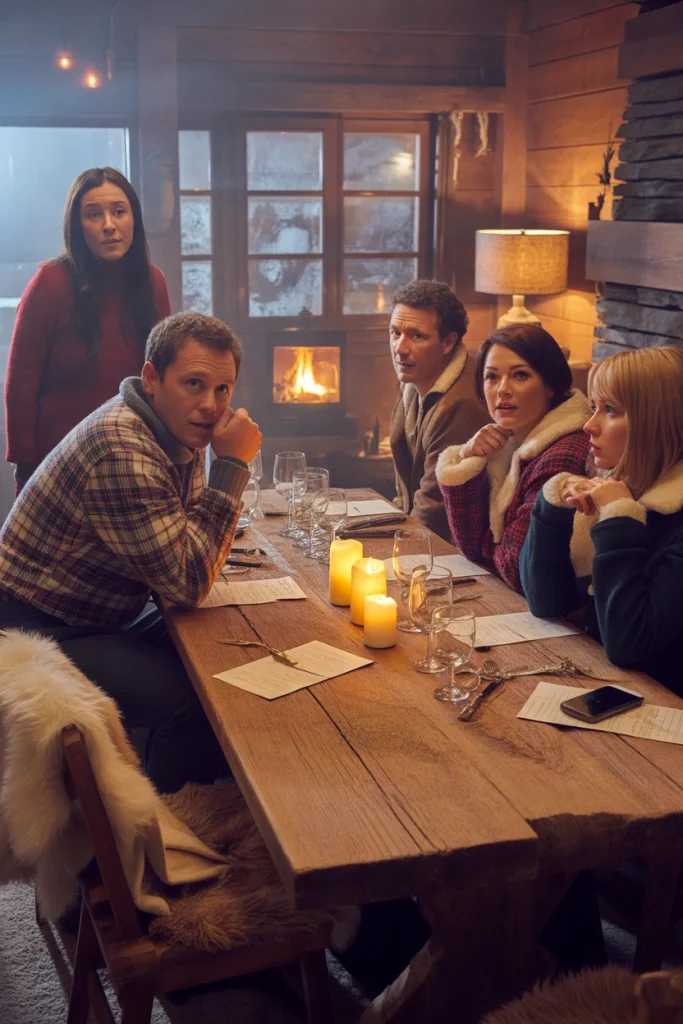
A winter lodge mystery places guests in a cozy mountain retreat where bad weather keeps everyone together while secrets begin to surface. Faux-fur throws, warm lighting, blankets, candles, and fireplace details can create the atmosphere for around $20–$40. It is a natural fit for winter parties and holiday gatherings.
Pro Tip: Keep the menu warm and comforting, such as soup, baked dishes, or hot drinks, to make the lodge atmosphere feel consistent from start to finish.
How Do You Assign Characters Without Stressing People Out?
Character assignments can have a major effect on how comfortable guests feel during the game, so consider personality when handing out roles. Give quieter guests manageable characters with fewer demanding interactions, while outgoing friends may enjoy more dramatic roles. Send character information and costume guidance before the event so everyone knows what to expect.
Pro Tip: Share enough character information in advance to help guests prepare while keeping private clues and the identity of the murderer confidential.
The host should also consider taking a neutral or supporting role instead of becoming the central suspect. A detective, narrator, or minor character allows you to keep an eye on the schedule, answer questions, and help the game move forward. Avoid making yourself the murderer if doing so would require you to protect a major secret while simultaneously managing the entire event.
Pro Tip: Choose a host role that gives you enough information to guide the game but does not require you to control every major plot moment.
What Is the Right Timeline for a Murder Mystery Dinner Party?
A clear timeline helps the mystery feel organized without making the evening seem overly structured. A typical party can run for about two and a half to three hours, with character introductions, clue rounds, food, accusations, and the final reveal spaced throughout the night. The exact timing can be adjusted to match your kit and group.
| Phase | Time | What Happens |
|---|---|---|
| Arrival & character introductions | 30 min | Guests arrive, get comfortable, and introduce their characters |
| Round 1 clues | 20–30 min | Initial clues appear and guests begin questioning one another |
| Dinner, course 1 | 30 min | Guests eat and continue conversations in character |
| Round 2 clues & accusations | 30 min | New information appears and theories begin developing |
| Dinner, course 2 / dessert | 30 min | Guests continue discussing suspects while eating |
| Final accusation round | 20 min | Everyone identifies a suspect and explains their reasoning |
| The reveal | 15 min | The mystery is solved and the murderer is revealed |
Pro Tip: Leave a little flexibility between activities so guests have time to finish conversations and food without feeling rushed from one clue round to the next.
Common Mistakes That Can Ruin the Game
Two frequent problems are revealing important information too quickly and overwhelming guests with rules before the game even begins. Let clues arrive according to the planned sequence, and introduce only the instructions players need for the current round. Other issues include choosing the wrong player count, failing to explain costumes ahead of time, and spending too much time decorating while neglecting the actual game flow.
Pro Tip: Prioritize character materials, clue organization, food, and timing before spending extra money on decorative props that do not affect gameplay.
A successful murder mystery depends more on participation and pacing than on an elaborate room transformation. Guests are likely to remember the characters they played, surprising accusations, funny conversations, and the final reveal long after they forget individual decorations. Keep the setting simple enough that your attention stays on hosting and helping the mystery progress.
Pro Tip: Prepare the game materials in clearly labeled envelopes or folders so you can find every clue quickly when the next round begins.
Frequently Asked Questions
How Do You Host a Murder Mystery Party?
Choose a game format and theme that fit your group, send invitations with character and costume information, prepare the space, and organize the evening into clue rounds and social time. A simple schedule can include introductions, clues during dinner, a final accusation round, and the reveal. The host mainly needs to manage timing and answer questions rather than perform.
Pro Tip: Keep your host instructions nearby throughout the party so you can check the next step without interrupting the atmosphere.
How Many People Do You Need for a Murder Mystery Party?
Many murder mystery games are designed for approximately 6–14 players, with smaller or larger options available depending on the specific kit. Groups around 8–10 can be particularly manageable for seated formats, while mingling-style games may accommodate larger numbers. Always use the player range provided by the game you choose.
Pro Tip: Build your final guest list around the kit’s supported character count instead of assuming extra guests can simply be added.
How Long Does a Murder Mystery Party Last?
A typical murder mystery party takes around two and a half to three hours from guest arrival through the final reveal. This time can include character introductions, multiple clue rounds, dinner or refreshments, accusations, and the ending. The pace should leave enough time for conversations without allowing the mystery to lose momentum.
Pro Tip: Use your meal courses as natural pauses between clue rounds to keep the evening moving without making it feel rushed.
Do You Need a Kit for a Murder Mystery Party?
You do not have to use a kit, but a ready-made game can simplify the planning process by providing characters, clues, instructions, and a prepared storyline. Printable and boxed options reduce the amount of writing required, while a DIY game gives you complete creative control. Creating your own mystery can require several hours of preparation.
Pro Tip: If this is your first time hosting, a ready-made kit can leave you more time to focus on guests, food, and the party atmosphere.
What Do You Serve at a Murder Mystery Dinner Party?
Choose food that can be served without disrupting the clue rounds, such as a simple appetizer, main course, and dessert or an easy buffet. You can also match the menu to your theme, such as vintage-inspired bites for a speakeasy or tropical snacks for a cruise setting. Foods that can be prepared ahead of time make hosting easier.
Pro Tip: Avoid meals that require constant attention in the kitchen because the host should be available when important clues or announcements occur.
What Should Guests Wear to a Murder Mystery Party?
Guests should dress according to both their assigned character and the overall party theme. A speakeasy might call for flapper-inspired dresses and suspenders, while a masquerade calls for formal clothing and masks. Sending the costume direction with the invitation gives everyone enough time to prepare.
Pro Tip: Keep costume instructions simple and specific so guests know the expected style without feeling that they need to buy an entirely new wardrobe.
Can You Do a Murder Mystery Party With Kids?
Yes, but choose a game specifically designed for children or families and avoid adult themes. Kid-friendly mysteries often use gentler scenarios involving missing objects, stolen prizes, or other age-appropriate situations. Simple characters and straightforward clues also make it easier for younger players to follow the story.
Pro Tip: Keep the number of clues manageable and use short character descriptions so younger guests can stay involved from beginning to end.
How Much Does a Murder Mystery Party Cost?
The game itself can cost roughly $10–$45 depending on whether you choose a printable, boxed, or other format. Decorations may add another $20–$70, while food is an additional expense. With a simple theme and budget-friendly supplies, it is possible to keep the entertainment and decor portion of the party below $100.
Pro Tip: Spend your budget on the game and practical party essentials first, then add themed decorations only if there is money left over.
Can the Host Also Play a Character?
Yes, and a neutral character can make hosting much easier. A narrator, detective, or supporting role lets you interact with guests while still keeping an eye on the schedule and answering questions. Avoid giving yourself a central secret that you must protect if doing so makes it difficult to manage the game.
Pro Tip: Choose a character with enough involvement to keep you part of the fun but not so much responsibility that you cannot host effectively.
Are Murder Mystery Parties Good for Large Groups?
They can work well for larger gatherings when the game is specifically designed for many participants. Mingling and masquerade-style formats can be easier to scale than tightly structured seated dinners, where too many players can make conversations and clue exchanges harder to manage. Check the recommended group size before choosing a game.
Pro Tip: For a large party, choose a game that clearly supports your guest count instead of trying to expand a smaller mystery yourself.
What Is a Good Murder Mystery Theme for Beginners?
A 1920s speakeasy provides an easy starting point because the costume style is recognizable and the decor can be created with simple vintage-inspired details. Jazz music, pearls, feathers, string lights, and a password at the entrance can quickly establish the atmosphere. Pairing this setting with a ready-made kit can simplify the planning process.
Pro Tip: Choose a theme with an obvious visual style so guests immediately understand what to wear and how to participate.
How Do You Make a DIY Murder Mystery Game?
Begin with a setting, fictional victim, and central problem, then create one character for each guest with a motive, secret, and connection to the story. Plan clues across two or three rounds and make sure the evidence eventually points toward a clear solution. A complete DIY mystery can take roughly 8–15 hours to write and test.
Pro Tip: Test the clue sequence yourself before the party to make sure guests can reach the intended solution without needing information that was never provided.
Can You Have a Murder Mystery Party With a Small Group of 4–6?
Yes, but use a game specifically designed for a smaller group. Games created for ten or more players may lose important relationships or clues when several characters are removed. A small-group kit keeps the remaining roles meaningful and makes the mystery easier to follow.
Pro Tip: Look for a game that lists 4–6 players as its intended range rather than adapting a large-group game at the last minute.
People Also Ask
Do Murder Mystery Parties Have to Include Dinner?
No, dinner is optional. A mystery can be played during a cocktail-style gathering with appetizers and drinks, or guests can mingle throughout the game without sitting down for a formal meal. Dinner simply provides a convenient structure for spacing out clue rounds.
Pro Tip: If you skip dinner, use snacks, drinks, or scheduled clue breaks to create natural pauses between parts of the mystery.
How Far in Advance Should You Send Invitations?
Sending invitations around two to three weeks before the event gives guests time to understand their characters, plan costumes, and confirm their attendance. This is especially helpful when the theme requires specific clothing or accessories. Earlier notice can be useful for larger groups or more elaborate costumes.
Pro Tip: Include the date, arrival time, theme, costume direction, and any important character preparation in the initial invitation.
What Happens If a Guest Cancels at the Last Minute?
Check whether your mystery identifies essential and optional characters before assigning roles. If a non-essential player cancels, their character can often be removed without changing the main storyline. If an essential character is unavailable, the host or another guest may need to take over the role depending on the game’s instructions.
Pro Tip: Keep a backup plan for essential characters so one cancellation does not force you to rewrite the entire mystery.
Are Murder Mystery Parties Fun for People Who Hate Acting?
They can be, because most games rely on reading clues, asking questions, sharing information, and staying in character rather than performing a scripted theatrical role. Guests who are uncomfortable acting can receive simpler characters with fewer dramatic requirements. The structure gives everyone something specific to do.
Pro Tip: Tell guests before the party that professional acting is not expected so shy players arrive feeling more comfortable