17 Halloween Scavenger Hunt Ideas for Kids, Teens, and Halloween Parties
A Halloween scavenger hunt is an easy way to turn an ordinary October afternoon or party into an activity kids will remember. With clue cards, small prizes, glow sticks, pumpkins, or everyday household items, you can create a hunt without spending much money.
The best format depends on the age of the hunters and where you are hosting it. Younger children can follow picture clues or simple rhymes, while older kids and teens can handle riddles, mystery envelopes, and timed challenges.
These ideas work indoors, in the backyard, around the neighborhood, or as part of a Halloween party. Most require only a little preparation, making them practical when you want a fun activity without a complicated setup.
- Suitable for children ages 3–17, depending on the hunt
- Indoor, backyard, neighborhood, and party-friendly options
- Most hunts take 20–40 minutes to prepare
- Glow sticks, pumpkins, paper ghosts, and small prizes add easy Halloween excitement
- Rhyming clues work well for younger readers
- Picture clues are useful for preschoolers who cannot read yet
- Teen hunts can use harder riddles and object-based clues
- Writing clue chains backward helps prevent setup mistakes
- A master hiding-spot list makes hosting much easier
- Candy-free prizes are a useful alternative for group celebrations
How Do You Make a Halloween Scavenger Hunt for Kids?
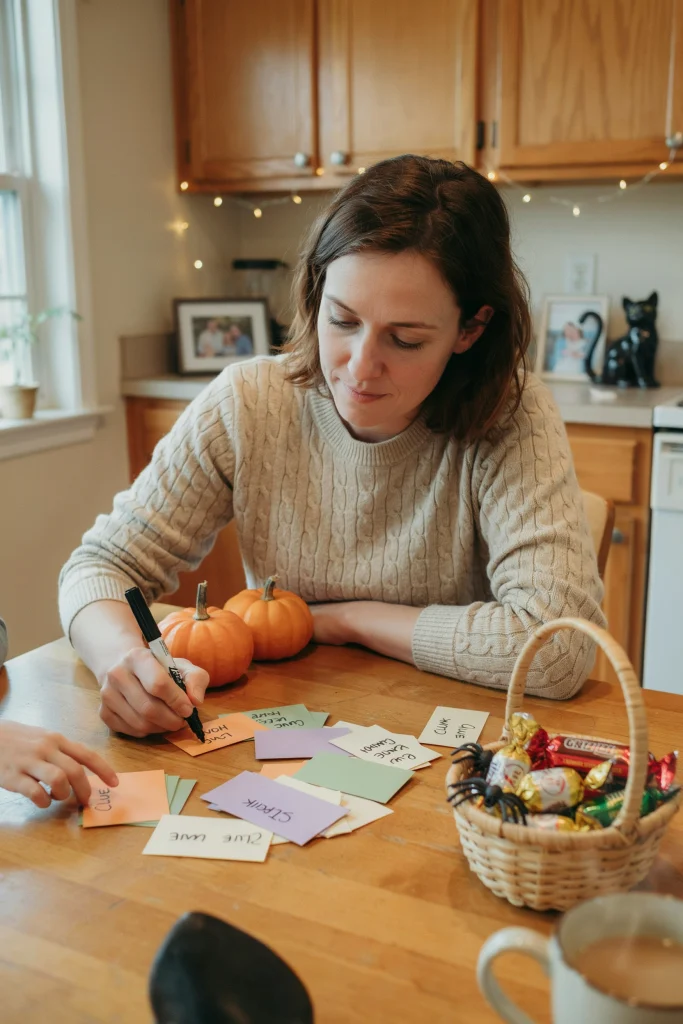
Start with a simple clue chain where each clue sends children to the location of the next one, eventually leading them to a hidden treasure. For a smooth setup, choose the prize location first and work backward through eight to ten hiding spots. Most hunts take about 20–40 minutes to prepare and 20–30 minutes to play.
Pro Tip: Keep the rules simple: children should leave each clue in place after reading it, walk rather than run indoors, and stay within the areas you have clearly marked for the hunt.
Indoor Halloween Scavenger Hunts
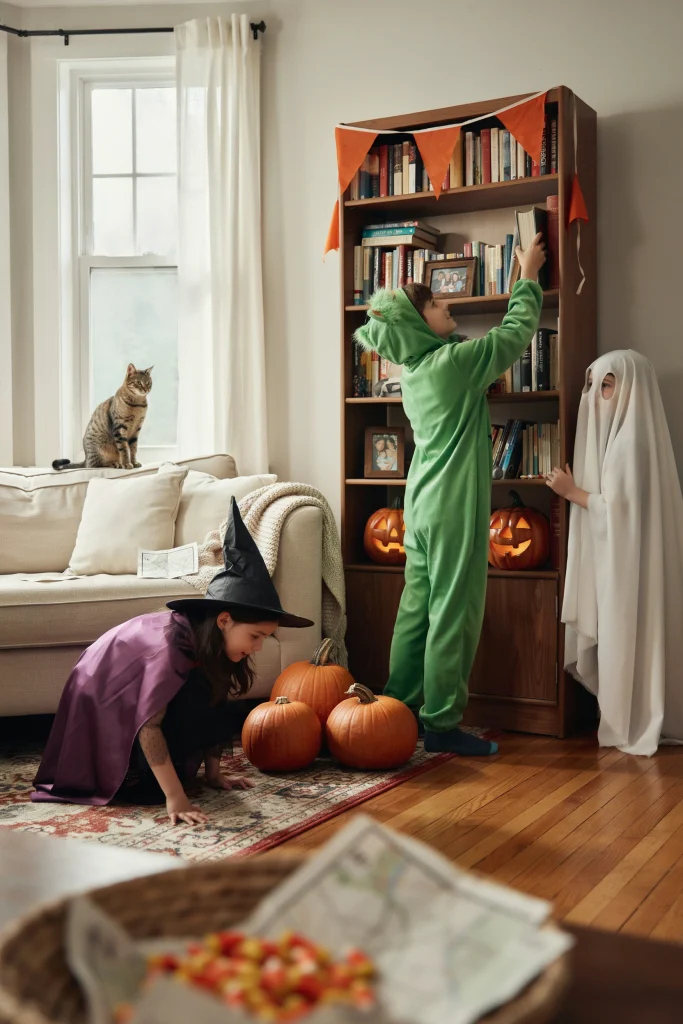
Indoor hunts are especially useful when the weather is cold, rainy, or unpredictable. You can use familiar places around the house, such as the refrigerator, couch, bookshelf, bathtub, or coat closet, so children can concentrate on solving the clues rather than figuring out where they are allowed to go.
Pro Tip: Choose one floor or a limited group of rooms for younger children so the hunt stays exciting without becoming tiring or confusing.
1. The Rhyming Clue Hunt for Ages 4–7
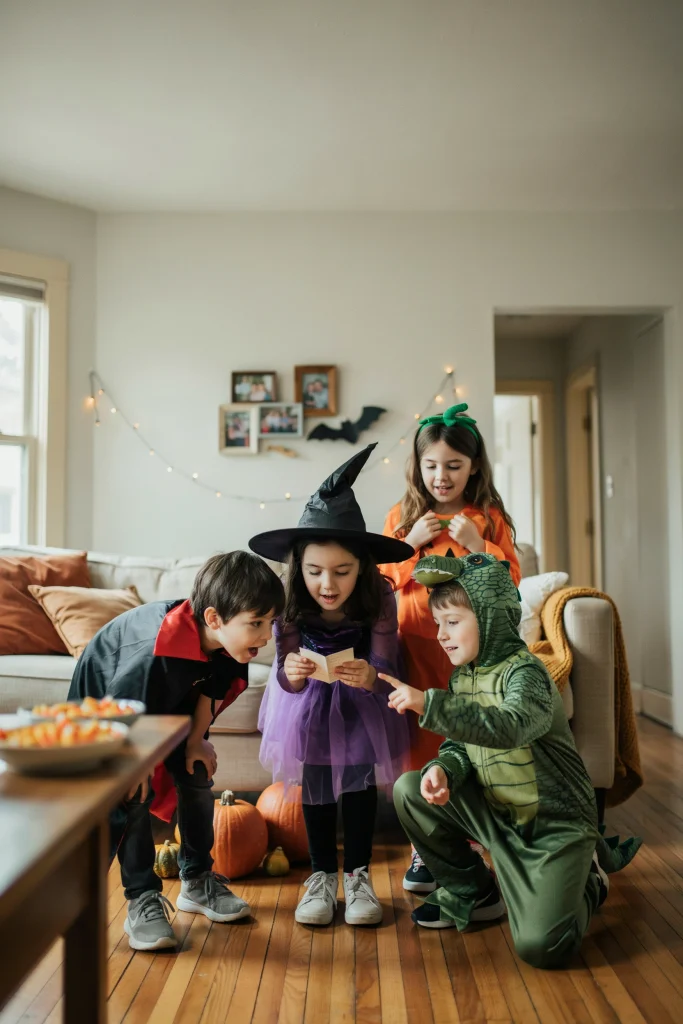
This classic Halloween scavenger hunt uses nine simple rhyming clues that lead children from one household location to another. It takes around 30 minutes to prepare, works well for 2–8 players, and can be paired with a $10–$15 prize. The clues are short enough to read aloud while still making children feel like they are solving a real mystery.
Here is a ready-to-use clue set:
- “I keep your milk and juice so cold — open my door, a clue you’ll hold!” (refrigerator)
- “I’m fluffy and soft, I cradle your head — your next clue is hiding right here on your bed!” (pillow)
- “Scrub-a-dub ghost, splish and splash — find the spot where bubbles crash!” (bathtub)
- “I have four legs but cannot walk; you sit on me to watch and talk.” (couch)
- “Round and round your clothes all spin — open my door, your clue’s within!” (washing machine)
- “I’m full of stories, tall and wide — between my pages clues can hide.” (bookshelf)
- “By the front door I wait for feet; inside me hides something sweet!” (shoe)
- “I get toasty hot to bake your treat — but I’m cool right now, so take a peek!” (oven — cool and supervised, with the clue taped to the door)
- “You made it, little ghost, you’re done! Look where the coats hang — you’ve WON!” (coat closet: the treasure)
Pro Tip: Number every clue in the corner and keep a separate list showing where each clue is hidden so you can quickly fix the chain if a child accidentally moves one.
2. The Picture-Clue Hunt for Pre-Readers Ages 3–5
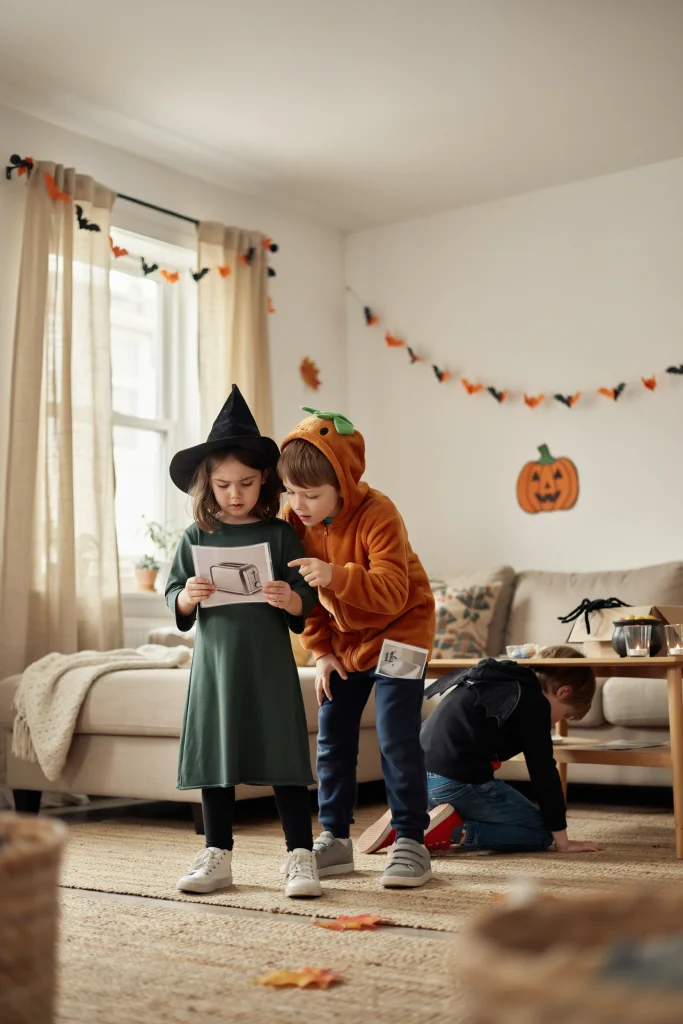
For preschoolers who cannot read yet, replace written clues with printed pictures showing the next hiding location. A photo of the couch can lead to the couch, while a picture of the bathtub can send little hunters toward the bathroom. Preparation takes about 25 minutes plus printing, with roughly $3 for printing supplies and a $10 prize.
Pro Tip: Use clear photos of familiar objects and avoid pictures containing several possible answers, because young children should be able to recognize the destination without adult help.
3. The Orange Halloween Hunt
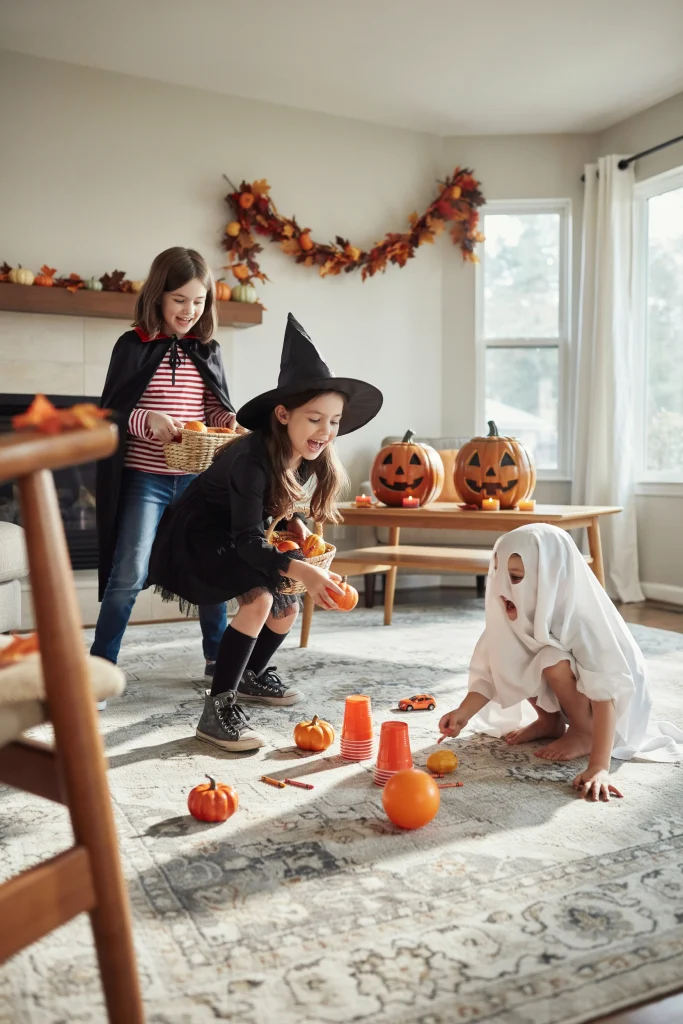
Skip the clue cards entirely and ask children to find ten orange objects around the house and place them in a bucket or basket. After counting the objects together, return everything to its original location. This version is free and can be prepared in about five minutes, making it ideal when you need a spontaneous Halloween activity.
Pro Tip: Tell children which rooms are included before starting so the game stays organized and nobody searches through areas that are off-limits.
4. The Hidden Ghost Count
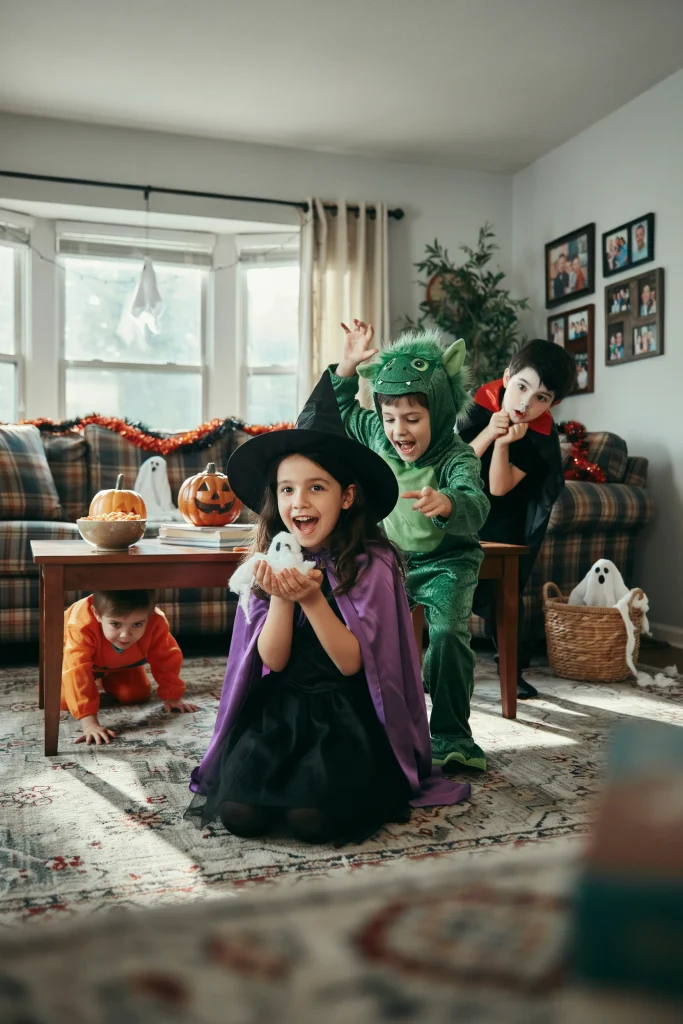
Cut out or make twelve small paper or cotton-ball ghosts and hide them around one floor of the house. Children work together to find all twelve rather than competing against one another, making this a good choice for mixed ages and children who are not reading yet. The activity costs about $3 and takes around 15 minutes to prepare.
Pro Tip: Write down every hiding place before the children begin because it is surprisingly easy to forget where the final paper ghost was placed.
5. The Lights-Out Glow Hunt
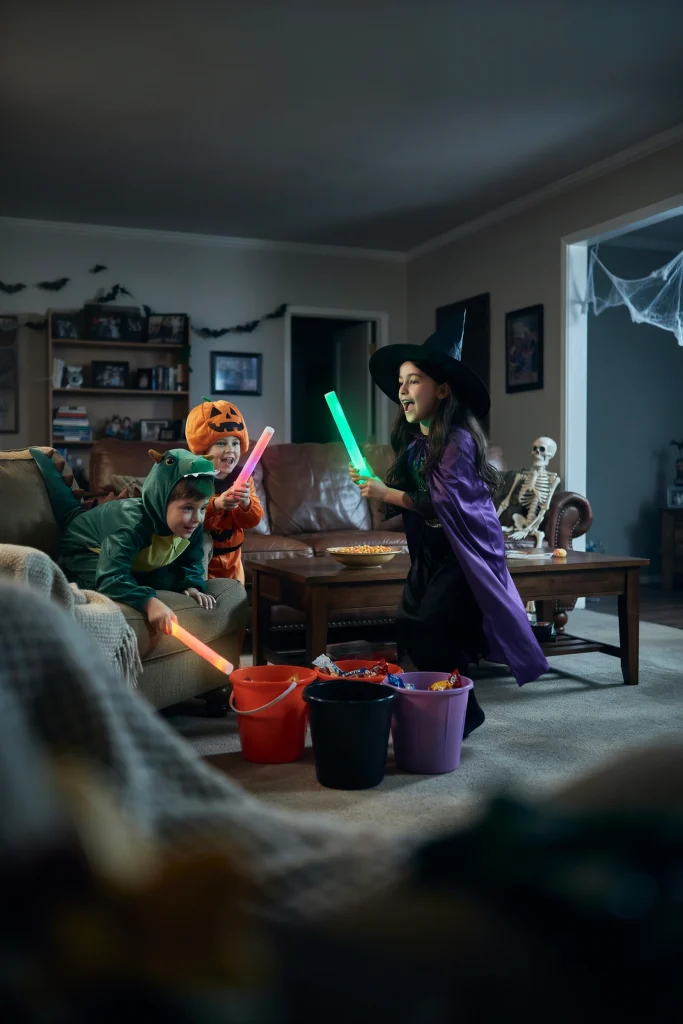
Turn down the lights in a safe room or basement and hide about twenty glow sticks around the space. Give each child a bucket and let them search for the glowing items, then exchange the collected sticks for a prize or simply let everyone keep what they found. The setup takes about five minutes and costs around $6 per round.
Pro Tip: Remove trip hazards, keep the search area clearly defined, and use enough ambient light for children to move safely even when the room is dark.
Outdoor and Neighborhood Halloween Hunts
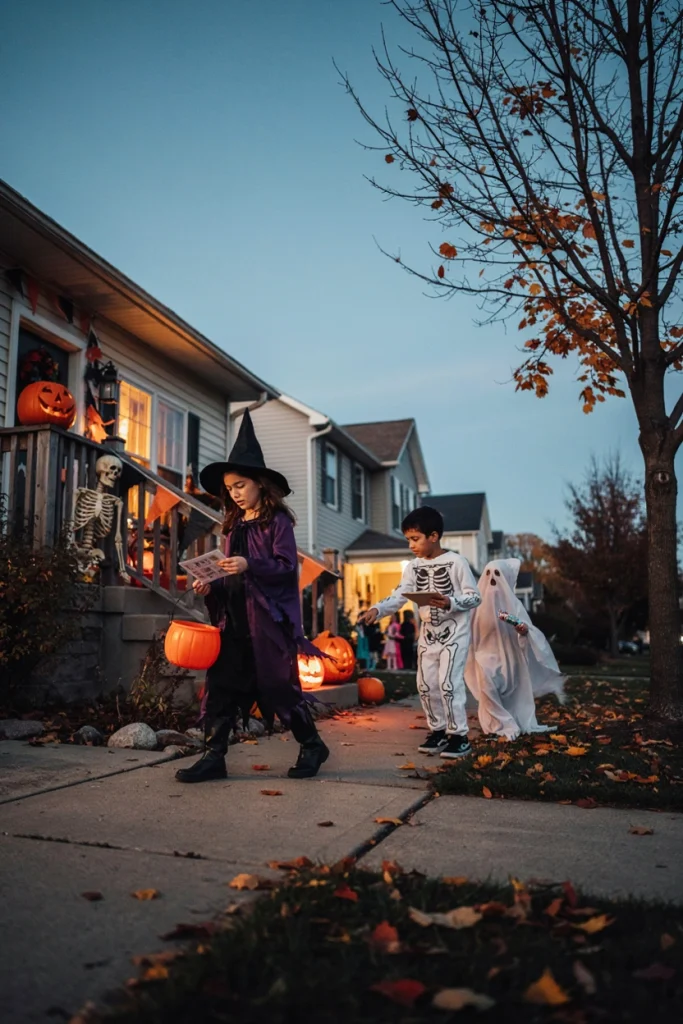
Outdoor scavenger hunts give children more room to move and make great activities before trick-or-treating or during a Halloween gathering. You can use decorated houses, pumpkins, leaves, glow sticks, chalk arrows, and other seasonal sights to create a hunt without needing elaborate props.
Pro Tip: For neighborhood activities, stay with the children, choose a familiar route, and establish clear boundaries before the hunt begins.
6. The Neighborhood Spot-It Walk
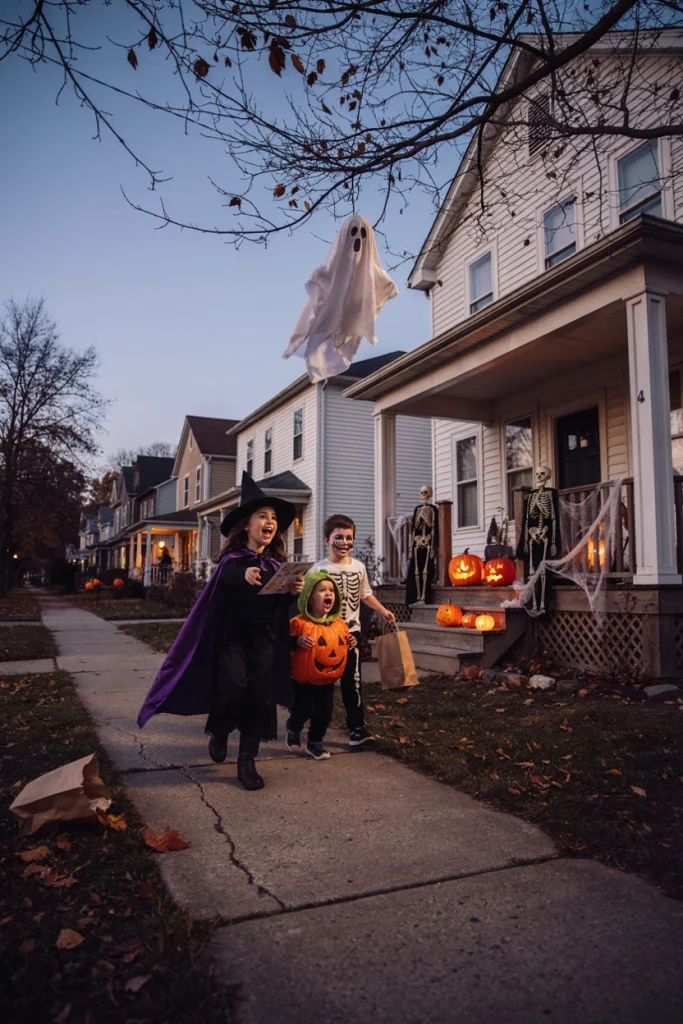
Turn a 20–30 minute neighborhood walk into a Halloween search using a simple checklist. Children can look for decorated houses and seasonal objects while walking together, making this a low-preparation activity suitable for different ages. Use this 15-item checklist: a carved pumpkin, skeleton, inflatable decoration, spider web, black cat decoration, witch, ghost, purple lights, gravestone, scarecrow, bat, “BOO” sign, hay bale, mum flowers, and a wreath on a door.
Pro Tip: Give every child a checklist and pencil, and make the goal finding twelve items rather than rushing to finish first so everyone has time to participate.
7. The Glow-Stick Night Yard Hunt
Scatter around thirty glow sticks throughout a darkened backyard and let children collect them in buckets. The child or team with the most glow sticks can receive a prize, while the glowing colors make the entire yard feel festive after dark. Expect about ten minutes of setup and approximately $8 in supplies for children ages 4–12.
Pro Tip: Check the yard in daylight before hiding anything, removing toys, branches, holes, or other obstacles that could become difficult to see at night.
8. The Numbered Pumpkin Hunt
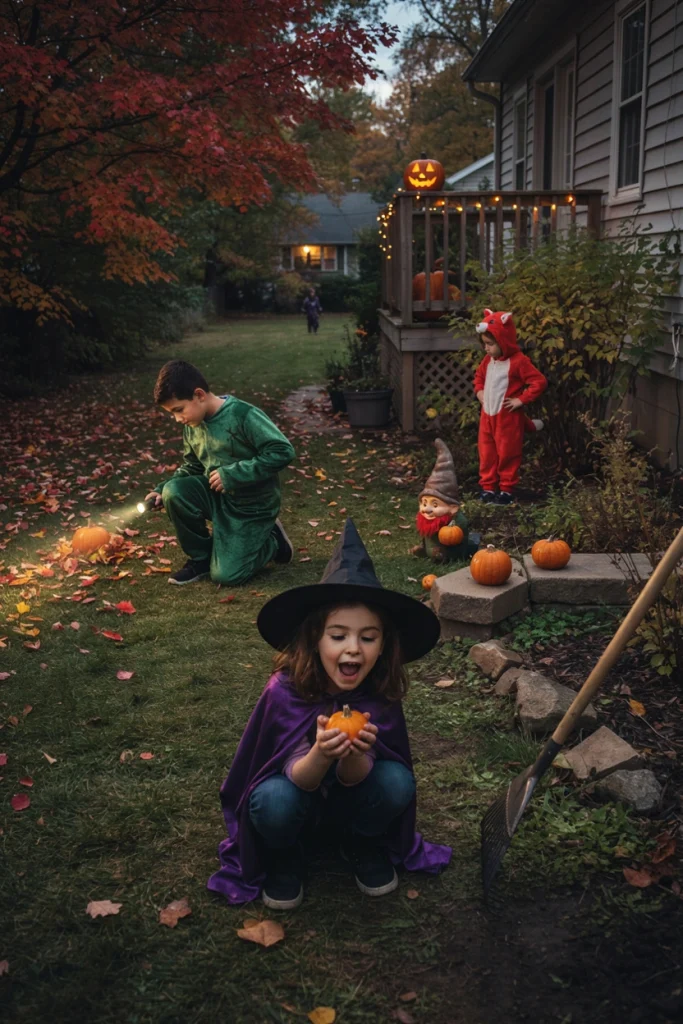
Write numbers one through ten on ten mini pumpkins and hide them around the yard. Instead of allowing children to grab everything they see, require them to find the pumpkins in numerical order, beginning with number one. This adds a simple rule that slows down faster hunters and keeps the game enjoyable for ages 5–10.
Pro Tip: Hide the pumpkins at different but reachable levels and avoid placing any behind gates, under heavy objects, or in locations that require climbing.
9. The Fall Nature Hunt
Give children a checklist of natural objects they can find in the yard or park, including an acorn, red leaf, yellow leaf, pinecone, smooth rock, Y-shaped twig, something fuzzy, and something that smells like fall. The activity is free and works especially well for children ages 3–8 during the daytime. Collected items can later become simple seasonal table decorations.
Pro Tip: Set a rule that children should collect only loose natural items and leave living plants, flowers, insects, and protected areas alone.
10. The Chalk Arrow Trail
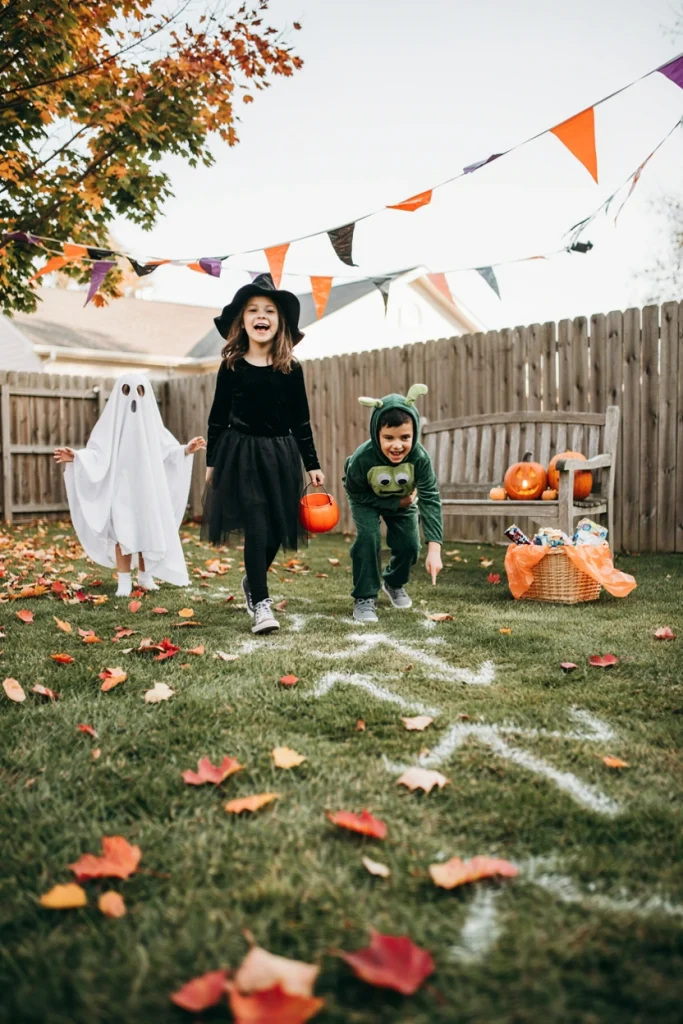
Create a trail using sidewalk chalk, drawing arrows, little ghosts, and simple messages that guide children toward a hidden Halloween treasure. The trail can wind around a backyard or along an appropriate sidewalk area and costs only about $2 in chalk. It is particularly effective for ages 3–7 because following a visible path feels like a genuine adventure.
Pro Tip: Keep the arrows large and easy to spot, and place the final treasure somewhere children can reach without crossing a driveway or road.
Themed and Older-Kid Halloween Hunts
Older children and teens usually need more than obvious location clues to stay interested. Adding riddles, puzzles, mystery pieces, or a more valuable prize can make a familiar scavenger hunt feel like a completely different game for ages 7 and up.
Pro Tip: Increase the difficulty by changing the type of clue rather than simply making the wording confusing; good challenges should make hunters think without leaving them frustrated.
11. The Teen Riddle Hunt for Ages 12–17
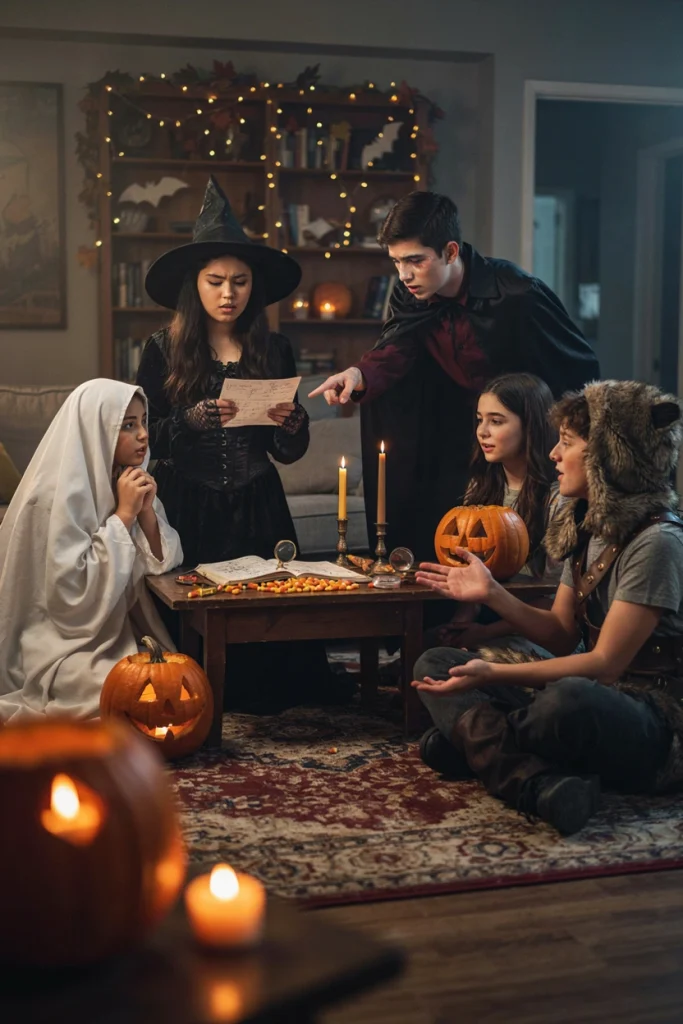
For teenagers, replace simple rhymes with five harder riddles where the answer points toward the next hiding location. This version takes around 30 minutes to prepare and works well with a $15–$25 prize, such as a gift card. The goal is to make teens stop, discuss the answer, and think carefully before moving to the next clue.
Use these riddles:
- “I follow you all day beneath the sun, then vanish when the day is done. I cannot live where light won’t go — your next clue waits where I can’t follow.” (the darkest closet)
- “I have a face but never frown, two hands that never put things down. I speak in ticks but never talk a walk — your clue hides under where I tock.” (the clock)
- “You look at me, I look at you; you raise your left, I raise my right on cue.” (the mirror)
- “I have teeth but never bite; I open doors without any might.” (the key hooks)
- “I weep while I work and shrink as I shine — your prize is behind where I stand in a line.” (the candle row on the mantel)
Pro Tip: Test every riddle yourself before the hunt and make sure the intended answer has only one obvious hiding location in your home.
12. The Mystery Envelope Hunt
Hide a series of envelopes, with each envelope containing the next clue plus one piece of a cut-up picture. As hunters progress, they collect the pieces until the completed picture reveals where the final treasure is hidden. The setup takes around 35 minutes and about $4 plus the prize, making it a strong option for puzzle-loving children ages 7–12.
Pro Tip: Number the backs of the puzzle pieces discreetly so you can quickly restore the picture if pieces become mixed up during the hunt.
13. The Candy-Free Prize Hunt
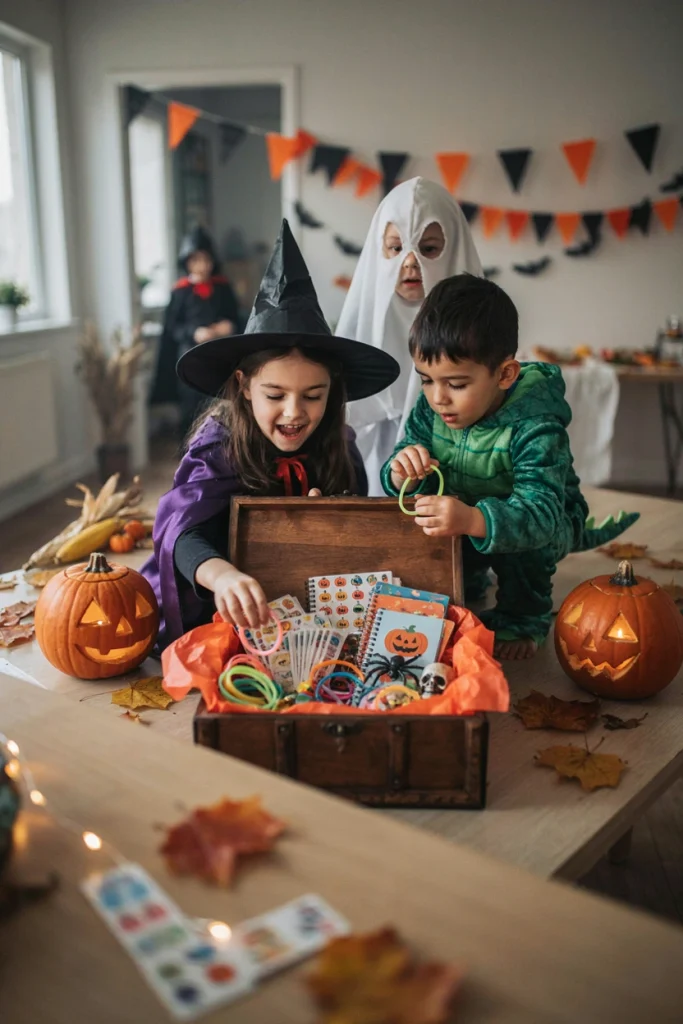
Use any of the scavenger hunt formats above but finish with a treasure that does not involve candy. Small options include glow bracelets, sticker packs, plush toys, novelty erasers, temporary tattoos, or a voucher that lets the child choose a movie for family movie night. A group treasure can usually be prepared for about $10–$15.
Pro Tip: Give every child an equal opportunity to choose a prize so the hunt feels rewarding for the entire group rather than creating one winner and several disappointed players.
14. The Kids-Hide-It Reverse Hunt
Reverse the usual setup by allowing children to create the scavenger hunt for the adults. Kids can write or draw five clues, hide the treasure, and then watch grown-ups search for it. The activity is free and works especially well for ages 5–10 after children have already completed their own Halloween hunt.
Pro Tip: Encourage children to make clues that adults can actually solve, then let them give one small hint if their grown-up hunter gets completely stuck.
Party and Event Scavenger Hunt Formats
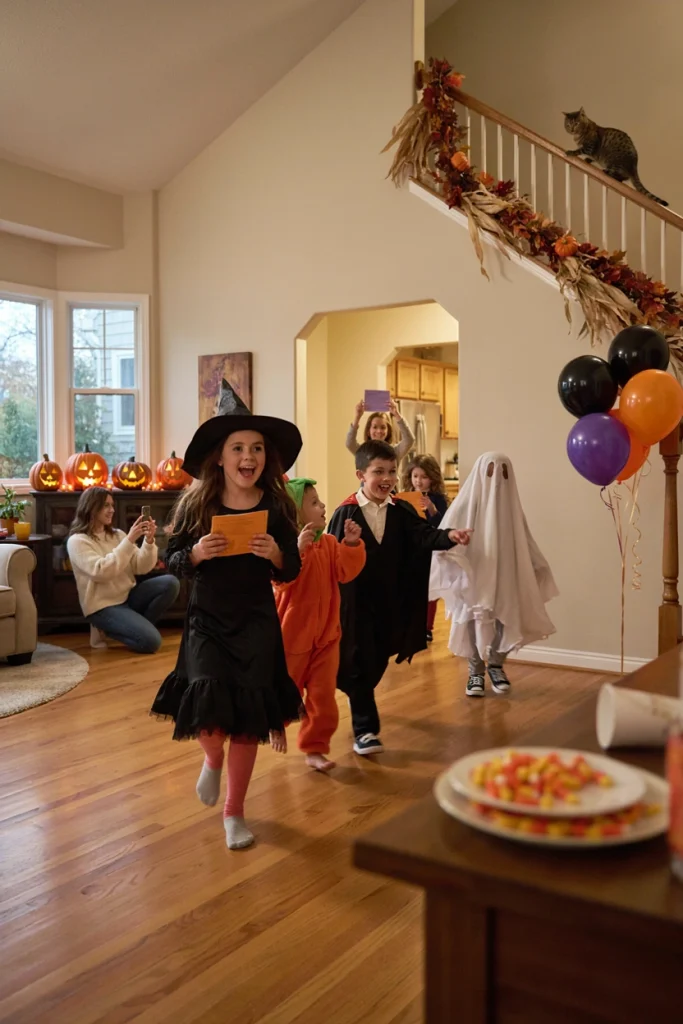
Scavenger hunts can also become structured party games when several children are participating at the same time. Team races, flashlight searches, and daily countdown clues give hosts options that work for birthdays, Halloween parties, family gatherings, or smaller celebrations at home.
Pro Tip: When hosting a large group, divide children into teams or waves so everyone gets enough time to search instead of having the fastest children collect everything immediately.
15. The Team Relay Hunt
Divide the children into two teams and create two color-coded clue chains that follow similar routes through the house. Each team races to complete its clues and reach its own treasure, creating a more energetic version of the traditional hunt. Allow around 40 minutes for preparation and about $20 for prizes when hosting 6–14 players ages 6–12.
Pro Tip: Keep the two routes balanced in difficulty and distance so one team does not gain an unfair advantage simply because its clues are easier to reach.
16. The Flashlight Hunt
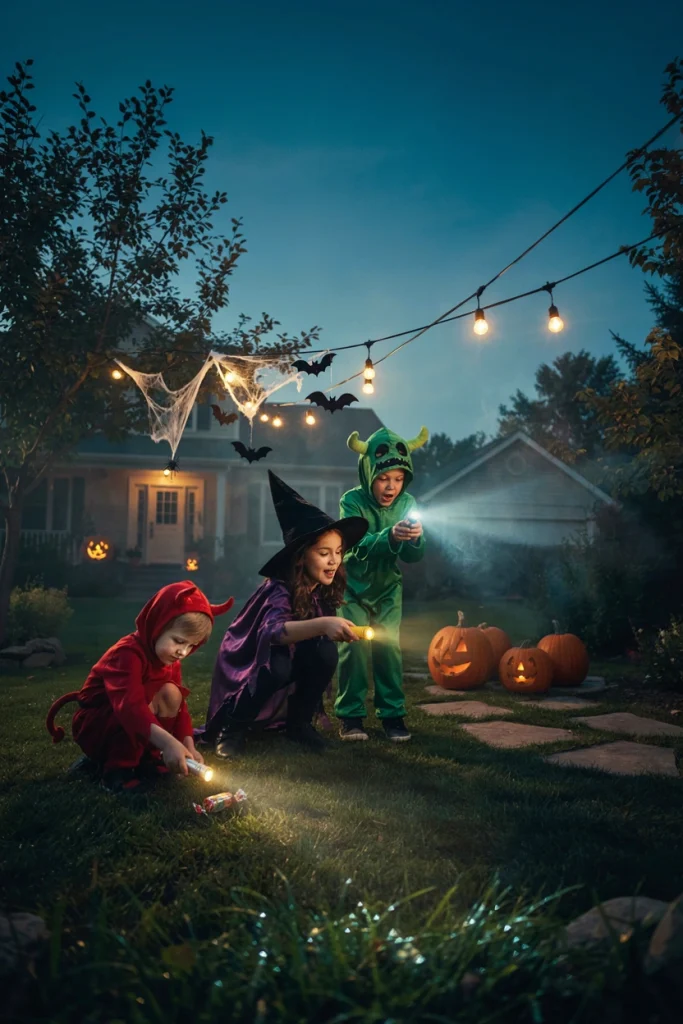
Turn off the main lights and give each hunter a flashlight before hiding fifteen small prizes around a safe darkened room or yard. Children search by sweeping their flashlight beams across the area, which creates a spooky atmosphere without requiring frightening decorations. With inexpensive flashlights and small prizes, the setup can cost around $12 and take about ten minutes.
Pro Tip: Use a clearly marked search zone and keep an adult nearby, especially when the hunt takes place outdoors after dark.
17. The Countdown Hunt
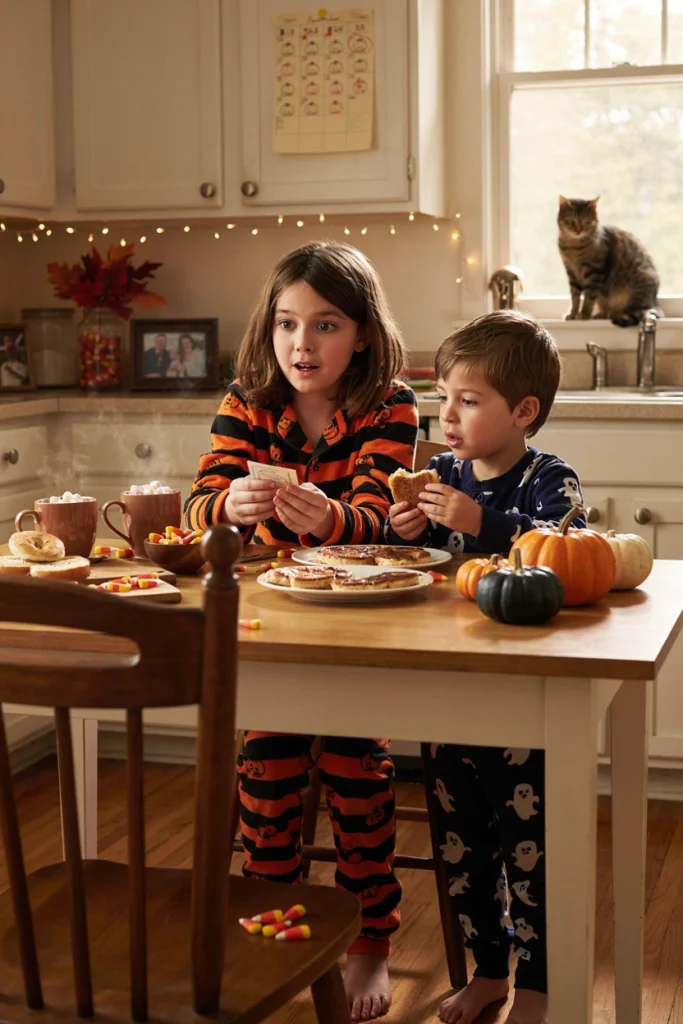
Instead of completing the entire scavenger hunt in one evening, hide one clue each day during the final week of October. Each clue leads to a tiny daily treat, gradually building excitement until a larger shared treasure is revealed on Halloween morning. The nightly preparation takes only about five minutes, with roughly $15 needed for the full week.
Pro Tip: Alternate which child gets to find and read the clue each day so every child has a turn being part of the countdown.
What Are Good Halloween Scavenger Hunt Clues?
Effective Halloween scavenger hunt clues describe what an object or location does before leading hunters toward the answer. For ages 4–7, keep rhymes short and familiar, while children ages 8–11 can handle wordplay and an occasional misleading line. Teens can work with object-based riddles involving answers such as a shadow, clock, mirror, or key.
Pro Tip: Build your clue chain backward from the final treasure, number every card, and read each clue aloud before hiding it; if the clue sounds confusing to you, it will probably confuse the children too.
How Long Does Setup and Play Take?
Most Halloween scavenger hunts take around 20–40 minutes to prepare, depending on how many clues and props are involved. Checklist and glow hunts can be ready in about 5–20 minutes, while a nine-clue chain takes closer to 30 minutes and a team relay can take around 40 minutes. Most clue hunts last 20–30 minutes, although glow hunts may be shorter and easy to repeat.
Pro Tip: Aim for a hunt that gives children plenty of searching without dragging on after the excitement fades; having a clear final prize helps maintain momentum.
Hunt Comparison
| Hunt Type | Ages | Location | Setup Time |
|---|---|---|---|
| Rhyming clue chain | 4–7 | Indoor | 30 min |
| Picture-clue hunt | 3–5 | Indoor | 25 min |
| Spot-it neighborhood walk | All ages | Neighborhood | 5 min (print) |
| Glow-stick night hunt | 4–12 | Yard or dark room | 10 min |
| Teen riddle hunt | 12–17 | Indoor | 30 min |
| Team relay hunt | 6–12 | Indoor, parties | 40 min |
The traditional rhyming clue chain is a reliable choice when you want a classic Halloween activity, while the glow-stick hunt offers a particularly memorable option when you need something fast to prepare. The right choice ultimately depends on the children, available space, and amount of preparation you want to handle.
Pro Tip: Match the hunt to your group first and the decorations second; a simple game that fits the children will usually be more successful than an elaborate setup that is too difficult.
Common Scavenger Hunt Mistakes
A few small planning mistakes can make a scavenger hunt harder to manage than necessary. The most common problems involve clues that are too difficult, hiding places that children cannot safely reach, or a host who forgets where an item was placed.
- Writing the chain forward: Begin with the treasure and work backward so every clue connects correctly to the next location.
- Making clues too difficult: A five-year-old who cannot solve a clue quickly may lose interest, so keep early clues straightforward.
- Skipping the master list: Record every hiding place because even the host can forget where the final ghost or clue was placed.
- Using one prize for everyone: A shared treasure box with one small choice per child usually feels fairer than having one winner take everything.
- Choosing difficult hiding spots: Keep every clue reachable for the shortest or youngest hunter and avoid heavy objects, high shelves, or unsafe locations.
Pro Tip: Walk through the entire hunt once before the children arrive and check every clue, hiding spot, boundary, and prize location.
People Also Ask
The questions below cover some of the most common planning details, from choosing hiding items to handling different ages and weather conditions. They can also help you quickly adjust one of the hunt formats to suit your own home or Halloween party.
Pro Tip: When adapting a scavenger hunt, change the clues and hiding locations to suit your space rather than trying to copy a setup that does not fit your home.
What Do You Hide in a Halloween Scavenger Hunt?
Most traditional hunts hide clue cards that lead from one location to another before finishing with a treasure. The final prize can be a treat bag, small toy bundle, glow accessories, or a candy-free collection of prizes. In non-chain hunts, the hidden objects themselves can be glow sticks, numbered pumpkins, paper ghosts, or other items that children collect.
Pro Tip: Use small, easy-to-handle prizes that can be divided equally when several children are participating.
How Many Clues Should a Scavenger Hunt Have?
For children ages 4–7, eight to ten clues usually provide enough activity without becoming exhausting. Children ages 8–11 can handle around ten to twelve clues, while teens often enjoy five or six more challenging riddles instead. Fewer than six clues can feel too short, while more than twelve may become tiring for younger hunters.
Pro Tip: Focus on the difficulty of the clues as much as the number; six challenging teen riddles can take longer than ten easy clues for preschoolers.
Can You Do a Halloween Scavenger Hunt at Night?
Yes, and glow sticks or flashlights make nighttime hunts especially fun. A glow-stick yard hunt or flashlight hunt can create a spooky Halloween feeling without making the activity genuinely frightening. Keep the search area clearly defined, use safe lighting around paths, and have an adult supervise younger children.
Pro Tip: Establish the boundaries before dark and avoid areas near streets, pools, stairs, driveways, or other hazards.
What’s a Good Scavenger Hunt for a Big Group?
A team relay works well for parties with around 6–14 children because color-coded clue chains keep the group organized. A neighborhood spot-it hunt can work for even larger groups because everyone can search for the same seasonal sights without competing for a limited number of hidden objects.
Pro Tip: For groups larger than about fifteen children, consider running a glow hunt in two age-based waves so younger hunters have enough time to search.
Quick Summary
✅ Best for: Ages 3–17, indoors, backyards, neighborhood walks, and Halloween parties
💰 Budget: About $10–$25 for many formats, with several options requiring little or no money
⏱ Time: Around 20–40 minutes of setup and 20–30 minutes of play
🌟 Top picks: The nine-clue rhyming hunt, glow-stick night hunt, and teen riddle hunt
📌 Do not skip: Writing the clue chain backward, numbering clues, and keeping a master list of hiding places
Pro Tip: Save your clue list after the hunt because you can reuse the same structure next Halloween and simply change the locations, riddles, or prizes.
Halloween Scavenger Hunt FAQ
These frequently asked questions cover cost, clue preparation, mixed-age groups, classrooms, nighttime timing, prizes, apartments, and rainy-day alternatives. With a few small adjustments, most of the hunt ideas above can work in very different settings.
Pro Tip: Choose the simplest format that meets your group’s needs, especially when you are already handling food, decorations, guests, and other Halloween activities.
How Much Does a Halloween Scavenger Hunt Cost?
A typical Halloween scavenger hunt can cost around $10–$25, depending on the prizes and supplies you choose. Index cards and tape cost very little, glow sticks may run about $6–$8 per round, mini pumpkins around $12, and a group prize box around $10–$15. The orange hunt, nature hunt, and neighborhood spot-it walk can be done for free.
Pro Tip: Check what you already have at home before shopping; household objects, paper, chalk, and leftover party supplies can cover most of the basic setup.
Can I Use the Clues in This Article as-Is?
Yes, the rhyming clue chain and teen riddles are designed to be copied and used with only minor adjustments. If your home has a different layout, simply replace a location with another familiar spot that serves the same purpose. For example, a missing washing machine can be replaced with a pantry or another safe household location.
Pro Tip: Read through every clue after making substitutions and make sure the answer points to one clear place in your home.
How Do I Run a Hunt for Mixed Ages at One Party?
Pair older readers with younger children so pre-readers have a buddy who can help with clues. You can also use numbered pumpkins or an in-order rule to slow faster hunters, while a shared treasure box ensures everyone receives something. For larger age differences, divide children into separate waves.
Pro Tip: Give younger children an active role, such as carrying the clue card or collecting the item, rather than letting older children do every part of the hunt.
What’s the Best Hunt for a School or Classroom Party?
The hidden ghost count works well in classrooms because children can cooperate to find twelve paper ghosts without leaving the room. A picture-clue hunt can also be adapted to classroom locations such as a bookshelf, teacher’s desk, supply area, or reading corner. Both formats can be completed relatively quickly and can finish with stickers or other small non-candy prizes.
Pro Tip: Count the hidden objects before the activity begins and avoid placing anything near electrical equipment, fragile supplies, or restricted teacher areas.
How Do I Keep the Fast Kid From Finding Everything?
Use rules that slow down the quickest hunters without taking the fun away from them. Numbered items can be found only in order, glow hunts can give each child a fixed collection limit, and buddy pairs can require the younger partner to physically collect the item. This turns fast children into helpful guides rather than allowing them to collect everything first.
Pro Tip: Give enthusiastic fast hunters a special job, such as reading clues aloud or helping their younger teammate, so their speed becomes part of the game.
What Goes in a Candy-Free Treasure Box?
A candy-free treasure box can include glow bracelets, sticker sheets, temporary tattoos, novelty erasers, mini notebooks, bouncy balls, small plush toys, and movie-night vouchers. Many inexpensive items can be purchased for around $1–$2 per child and combined into a colorful collection. This is especially useful when families prefer to limit additional candy during Halloween.
Pro Tip: Choose several different types of prizes so children can pick something that matches their interests instead of receiving identical items they may not want.
How Do I Adapt the Rhyming Hunt for a Small Apartment?
Use compact locations such as the refrigerator, pillow, couch, bookshelf, shoe, and coat closet while keeping the clue chain within the available rooms. You can create more hiding options by using different safe spots within the same room rather than spreading the hunt throughout the home. Around six clues can be enough when the territory is small.
Pro Tip: Avoid hiding clues in cramped or hard-to-reach places; in a small apartment, the fun should come from solving the clues rather than searching every inch of the space.
What Time Should an Outdoor Night Hunt Start?
Starting around twenty minutes after full darkness gives glow sticks and flashlight beams a stronger effect while still leaving enough time for younger children. In late October, the exact time depends on your location, but the goal is simply to wait until it is properly dark and finish before younger children become overtired.
Pro Tip: Check the yard and walking route before sunset so you can remove hazards while you still have good visibility.
How Do I Make the Teen Version Actually Challenging?
Use object-based riddles instead of straightforward location rhymes and make the answers less obvious. A shadow, clock, mirror, key, or candle can become the answer, while one misleading detail can make teens stop and reconsider. A visible timer and a worthwhile prize, such as a $15–$25 gift card, can add extra motivation.
Pro Tip: Make riddles clever rather than vague; teens enjoy solving a challenge when there is a logical answer they can work toward.
Can the Countdown Hunt Work With Multiple Kids?
Yes, and it can become a fun family Halloween tradition. Rotate which child finds and reads each nightly clue, provide equal daily treats, and make the final Halloween-morning treasure a shared prize. Keeping the rewards equal helps prevent arguments during a week-long activity.
Pro Tip: Prepare all seven clues in advance and store them somewhere secure so you are not trying to write the next clue late at night.
What’s the Rain Plan for Outdoor Hunts?
Almost every outdoor hunt can be moved indoors with a few changes. Glow sticks can be hidden in a dark basement or room, numbered pumpkins can be placed around the living room, and a neighborhood spot-it hunt can become a window-based search from inside. The goal is to preserve the same game structure while changing the setting.
Pro Tip: Have your indoor backup planned before the party begins so bad weather does not turn into a last-minute scramble.
Ready, Set, Hunt
Once the clues are prepared, the rest is surprisingly simple: hide the cards backward, place the treasure at the final location, establish the boundaries, and keep your master list nearby. A short setup can create twenty or thirty minutes of active Halloween fun for a family afternoon, classroom activity, backyard gathering, or larger party.
Pro Tip: Do not worry about making every clue or hiding spot perfect; children often remember the funny mistakes and unexpected moments just as much as the planned parts of the game.
The child who discovers a clue too early, the rhyme that comes out wrong, or the missing card that sends everyone searching can become part of the story. Halloween scavenger hunts work because they give children a reason to move, solve, laugh, and work together, while giving adults an activity that is affordable and easy to repeat.
Pro Tip: Keep your favorite clue sets after Halloween and reuse the basic structure next year with new hiding places, prizes, and riddles.